How to Hire AI Engineers: Scope, Test and Verify
By Keara Garrett. Updated November 9, 2026.
What does an AI engineer do, and when do you need one?
An AI engineer builds AI features into a product or process, using models that already exist. They connect a model to your data and systems, test whether its answers are good enough, and keep it working after launch. You need one when the model is a part you are adding, not something you have to invent.
The title is used loosely. Some job posts mean a researcher. Others mean a data engineer or a person who runs models in production. If you write the job post around "AI engineer" alone, the candidate profiles you get back will not match the work. Our guide on which AI role you need compares the neighbouring roles. This guide covers the AI engineer who builds features on existing models.
The hard part is not finding someone who sounds right. AI vocabulary is easy to learn without the delivery experience behind it. This guide is for HR and talent acquisition, procurement, and tech and AI leaders at Canadian and US companies. It covers what to scope before you search, what proof to ask for, a short live exercise to test skills, and what to verify before anyone starts.
Key takeaways
- Hire for the first feature, not the title. Name what the engineer will build in the first 90 days and how you will know it works.
- Ask for proof of evaluation. Anyone can list frameworks. A strong candidate can show how they tested a model's answers and what they changed when it failed.
- Test with a short live exercise. Use a real failure from your own kind of system. Take-home tests alone are easy to outsource.
- Check four things before anyone starts. Resume fraud, skills, work eligibility and background.
- Treat claims about the market with care. Salary tables and shortage figures in hiring guides often have no source. Ask where a number comes from.
When does a neighbouring role fit better?
Ask what is blocking the work today. The answer usually points to the role.
- The data is scattered or unreliable. A data engineer fits better. Modelling work stalls when the data under it cannot be trusted.
- You need a model trained or tuned on your own data. That is an ML engineer. An AI engineer calls models. An ML engineer builds them.
- A working pilot has to run reliably in production. That points to MLOps: deployment, monitoring and retraining.
- No known approach exists yet. That is a research role, and the first deliverable is a finding, not a feature.
- You do not yet know what to build. A consultant can help you scope the work first. Our guides to AI consulting services and AI and ML consulting cover that route.
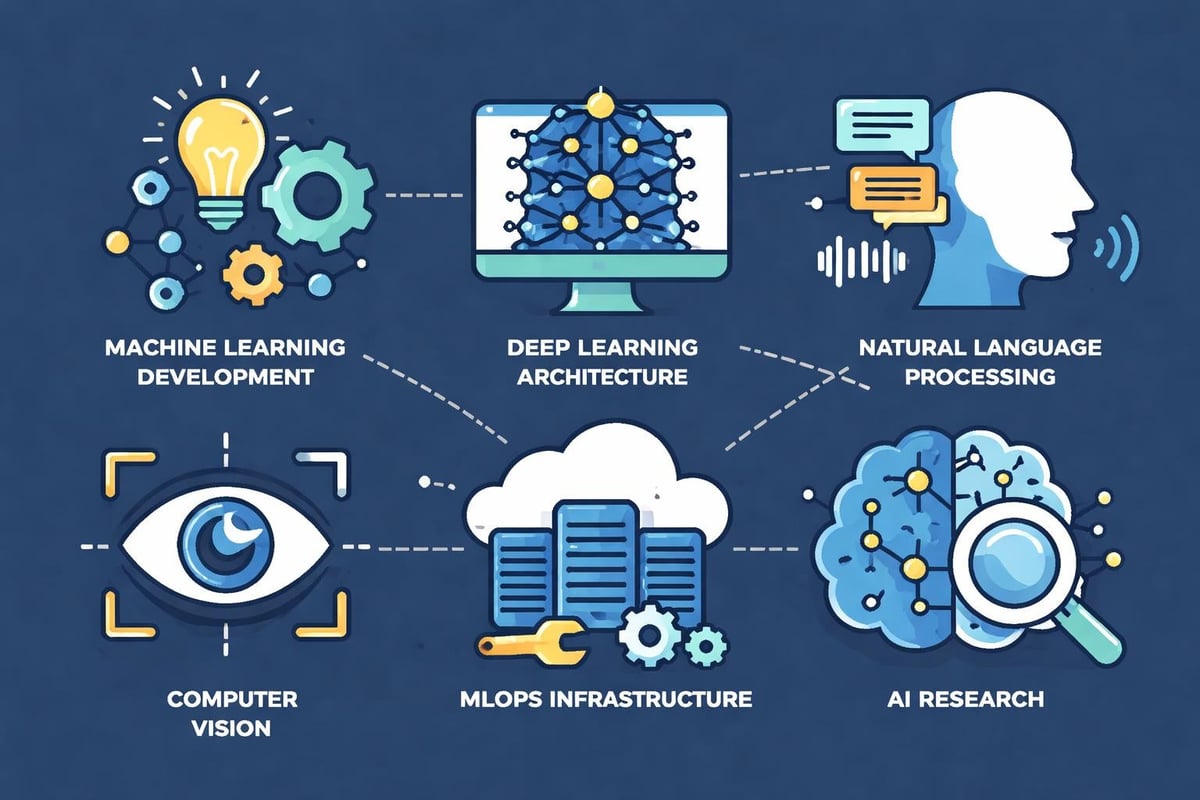
Many teams need two of these skills, not one. If your list asks for features, pipelines, model training and cloud operations in a single person, it is probably two or three roles. Write down which one you need most now, and treat the rest as a later hire or a short specialist engagement.
What should you scope before you search?
Write the outcome and a definition of done before you write the job post. "Cut the time support agents spend finding answers" is a scope. "Hire an AI engineer" is not. Loose scope also helps an inflated resume, because a claim can only be tested against a requirement that is clear.
Write down five things:
- The first feature, in one sentence. What will the engineer have built and shipped in the first 90 days?
- How you will know it works. Name the measure and who decides. A model that sounds right in a demo is not a result.
- The proof you will inspect. A repository, a test set with results, or a live endpoint in a non-production environment.
- The stack and the limits. Which cloud platform and model provider you use, what data the system may touch, and what must stay inside your network.
- The internal owner. The person who inherits the system, and who owns testing and monitoring after launch.
The fourth item matters more than it looks. Before anyone is hired, decide what data may be sent to an outside model provider. Get your security or privacy team to agree. Candidates who have shipped this work will ask, and a clear answer saves weeks.
| Vague requirement | Specific requirement |
|---|---|
| Experience with large language models | Built and shipped a feature that retrieves answers from our documents, with a test set |
| Strong Python and ML skills | Python services on our cloud platform, with automated tests |
| Understands AI safety | Has set rules for what data a model may see, and can show them |
| Fast learner | Delivers a working piece in a test environment by week four |
For engagements that run on a fixed term, put a checkpoint at the end of each phase. Our guide on how to hire a verified AI consultant shows how to build those checkpoints and how to name the delivering person in the contract.
What proof should you ask for?
A resume lists tools. Proof shows work. Ask each candidate for the items below, and ask the same questions of every candidate so you can compare answers.
| Proof to ask for | What a good answer looks like | Red flag |
|---|---|---|
| A walkthrough of one AI feature they shipped | They name the problem, the model, the data and what they built themselves, without notes | They describe the team's work but cannot say which part was theirs |
| An evaluation they built | A test set, a measure and results across versions of the feature | "It looked good in testing" with no test set |
| A failure and the fix | A specific bad output, the cause they found and the change they made | No failures at all, or a failure blamed on someone else |
| Cost and speed trade-offs | They tracked cost per request and response time, and made a choice between them | They have never measured either |
| How they handled data | Rules for what the model could see, and what they did with sensitive fields | No rules, or "the vendor handles it" |
| A person who can speak to the work | A recent manager or client who will take a call | A refusal to allow reference calls |
For the last row, find the contact details yourself. Do not rely on a number the candidate gives you.
Strong answers are specific and a little untidy. Real projects have dead ends. A smooth story with no trade-offs deserves a second question: what would you do differently? Our guide on how to verify an AI or data consultant has more interview questions and a pre-hire checklist.
How do you test AI engineering skills?
Use a short live exercise built from a real failure. Framework quizzes and take-home tests reward memory and can be outsourced. A live session shows how the person thinks when something is broken. Run it on camera with screen sharing, and let the candidate use the tools they would use on the job. If they use an AI coding assistant, ask them to explain each step they keep.
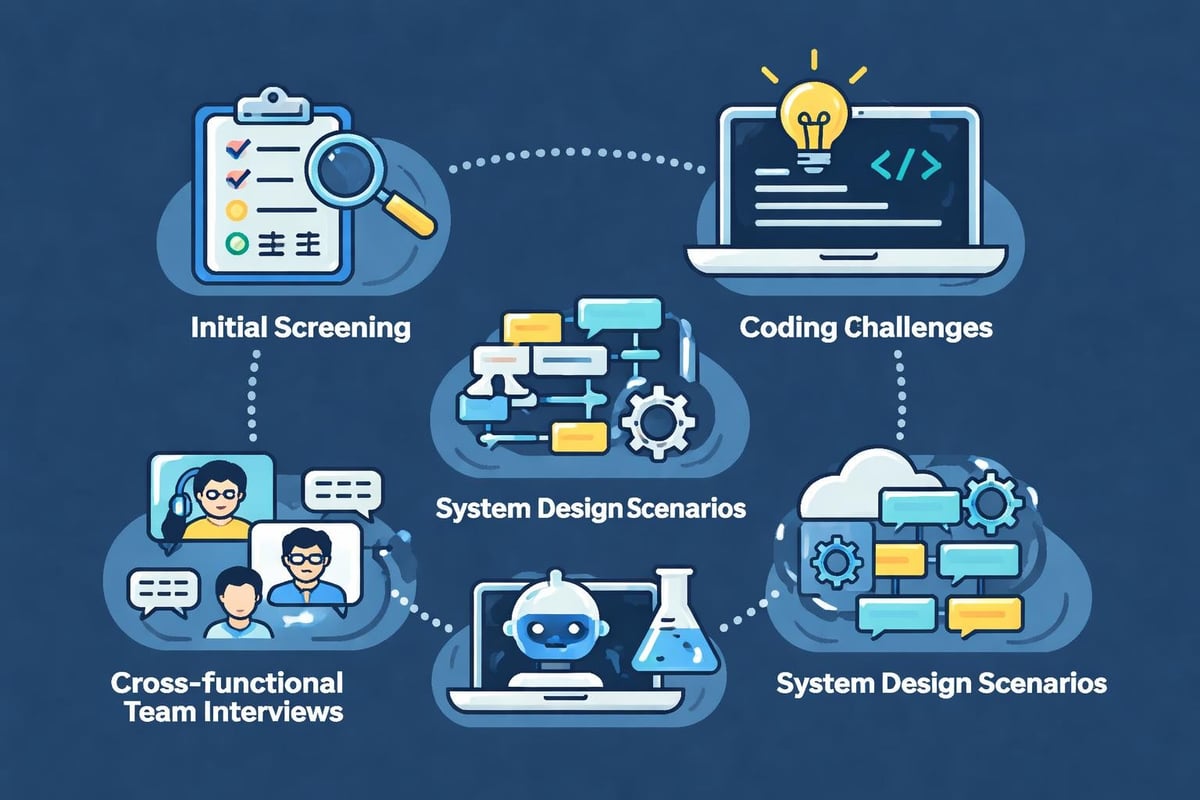
Here is a 60-minute format. Replace the example with a problem from your own system, with sensitive details removed.
The setup. A tool answers staff questions from a set of policy documents. It gets some answers wrong, and gives different answers to the same question on different days. Give the candidate the logs: the question, the passages the tool retrieved and the answer it gave.
- Find the cause (20 minutes). Ask what they would check first. Look for someone who reads what was retrieved before blaming the model.
- Build a test set (20 minutes). Ask for 10 to 15 questions with expected answers, including some whose answer is not in the documents. Ask how they would score the results.
- Plan the launch (15 minutes). Ask what they would measure for cost and response time, what data goes to the model provider, and what they would watch after release.
- Close (5 minutes). Ask what they would not ship yet, and why.
| What you see | Strong | Weak |
|---|---|---|
| First move | Checks the retrieved passages and the inputs | Rewrites the prompt and hopes |
| Test set | Includes unanswerable questions and says how to score them | Lists only easy questions |
| Failure handling | Wants the tool to say "I don't know" when the answer is missing | Wants it to always answer |
| Trade-offs | Names cost, speed and quality, and picks one to protect | Treats all three as free |
| Change on request | Edits the code or test live when you ask | Cannot change anything without notes |
The last row doubles as a check that the person on the call is the person who will do the work. Ask for one small live change, such as adding a case to the test set. Our guide on how to stop consultant bait and switch covers how to keep that person named in the contract.
What should you verify before you hire an AI engineer?
Check four things before anyone starts: resume fraud, skills, work eligibility and background. Most candidates are honest. The checks cost little compared with a wrong hire on a feature that is already scheduled.
The pressure on this role is real. In ManpowerGroup's 2026 survey of 39,000 employers in 41 countries, AI model and application development ranked first among hard-to-find skills at 20%, and 72% of employers reported difficulty filling roles (ManpowerGroup, February 26, 2026). When skills are scarce, more people position themselves into the role. In a second-quarter 2025 Gartner survey of 3,000 job candidates, 6% admitted to interview fraud, either posing as someone else or having someone pose as them (Gartner, July 31, 2025). Gartner also predicts that by 2028, one in four candidate profiles worldwide will be fake. That is a forecast about profiles, not a count of people.
Using AI to write a resume is not fraud on its own. In an earlier Gartner survey of 3,290 candidates, four in ten said they used AI during the application process, and 54% of those used it to generate resume text. So check what the resume claims, not how it reads.
| Check | What it means for an AI engineer | How to confirm it |
|---|---|---|
| Resume fraud | The AI features listed were shipped, and this person built the part they describe | Confirm employers, titles and dates at the source, using contact details you find yourself. Ask for a detailed walkthrough of one feature. Public code can help, but check that the work is theirs |
| Skills | They can find and fix a failing AI feature, and test it | The live exercise above, with a live change on request. Confirm any certification with the issuer |
| Work eligibility | They can legally do the work where it will be done | Confirm authorization for the country of work and read the conditions on any permit. Ask where the person will physically work |
| Background | A consented check and recent references | Written consent first, then a call with a former manager or client who saw the work |
Gartner's advice is to use steps that are hard to fake. Its examples include in-person interviews, tighter background checks and identity verification built into recruiting systems. For remote hires, a live video call with the camera on, matched against a government ID, is a practical start.
Work eligibility and background check rules differ by country, and by province or state. Contractors are not handled the same way as employees. Confirm your approach with legal counsel. Our guide on how to verify an AI or data consultant before you hire walks through each check in order.
Where do you find AI engineers, and what makes them say yes?
No single channel is best. Each one trades volume against how much checking you have to do yourself.
| Channel | Good for | Watch for |
|---|---|---|
| Referrals from your own engineers | Warm introductions and trust | A narrow pool, and friends vouching for work they did not see |
| Open-source projects, technical communities and meetups | Seeing real work in public | Activity that is not the person's own. Check commit history and ask what they wrote |
| Job boards and professional networks | Reach and speed | Many unchecked profiles. Your team screens everything |
| Specialist marketplaces and staffing providers | A shorter list of candidate profiles | What the provider actually checks. Ask for each check by name |
| Your own software engineers | Staff who already know your systems | Time to learn. Pair them with an experienced hire |
| University and research partnerships | Research-leaning roles and a long-term pipeline | Slow to pay off, and a poor fit for a near-term feature |
Two habits widen the pool without lowering the bar. First, write requirements around the work, not a degree. Strong engineers come from software, data, maths and science backgrounds, and a live exercise tests the skill directly. Second, tell candidates about the first feature, the stack and the data they will use. Many engineers decline roles where the tools or data would hold them back.
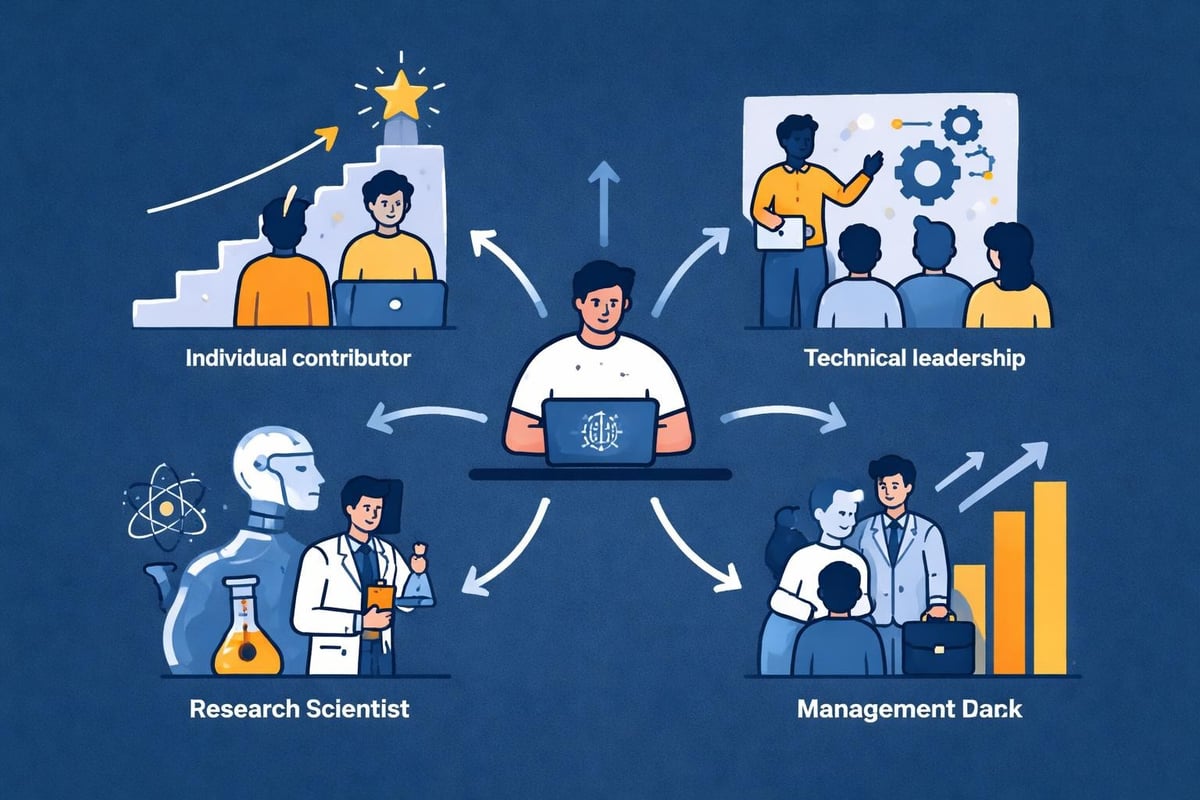
A clear process also helps you close. Three stages are usually enough: an intro conversation, the live exercise, and a session with the team and a reference. Long gaps between stages give candidates time to take other offers. Say plainly what each stage covers and when they will hear back.
This guide gives no salary figures. Published pay tables for AI roles vary widely by place and date, and most guides do not source them. Check pay against current postings and recent offers in your own market. Share the range early.
AI tools can help with scheduling and first drafts of messages. Keep a person in charge of decisions about candidates. Rules for automated hiring tools differ by country, province and state, so check with your legal team.
Should you hire full-time, contract or through staff augmentation?
The choice depends on how long the need lasts and who will direct the work.
| Route | Fits when | Watch for |
|---|---|---|
| Full-time hire | AI is central to your product for years, and you want the knowledge to stay | A longer search, and a hard exit if the roadmap changes |
| Contract engineer, hired directly | One feature or a fixed scope, and you can run the checks yourself | You carry the sourcing, the checks and the contract risk |
| Staff augmentation | You have a team and a manager, and need a specific skill for a set period | How the provider checks each person before you see a candidate profile |
A contract can also work as a long evaluation. If you may want to convert the engineer later, say so in the contract and agree the terms early. Our guide on how to hire a verified AI consultant covers the difference between a contractor and a consultant, and how to turn a contract into a hire.
When you direct a contractor's work, tax agencies may look closely at how the person is engaged. Ask any provider how each person is engaged and who their employer is. Have your legal or tax advisor review the contract. This guide is not legal advice.
How does Augmnt help?
Augmnt is a Toronto-based marketplace that connects businesses with verified AI, data and tech consultants. We are not a consulting firm and we do not own your project's result. You direct the work. We check the people before you meet them.
Every consultant is checked for resume fraud, skills, work eligibility and background. In practice, each resume goes through an automated scan, our team reviews each profile by hand, and we interview consultants ourselves once they are matched with a job. You still interview candidates and make the final call, and the checks in this guide still apply.
There are two ways to work with us.
- Staff augmentation service. Tell our team what you need. We source, verify and deliver onshore consultants based in the US and Canada. We aim to share up to three candidate profiles within 24 to 48 hours of receiving your brief. See the service.
- Software platform. Post a project and review verified candidate profiles yourself. It includes AI matching, ATS integrations and a dedicated Customer Success Manager. See the platform.
The ATS integrations let you sync verified consultants into the applicant tracking system your team already uses, such as Greenhouse, Lever or Bullhorn. IT services firms can also add verified contractors to their bench.
No process removes every risk. Keep interviewing candidates yourself, and ask every provider, ours included, the questions in this guide.
Tell us what you need and we will share verified candidate profiles.
Frequently asked questions
What does an AI engineer do?
An AI engineer builds AI features into a product or process, using models that already exist. They connect a model to your data and systems, test whether its answers are good enough, and keep it working after launch.
What is the difference between an AI engineer and a machine learning engineer?
An AI engineer builds on models that already exist. A machine learning engineer selects, trains, tunes and evaluates models. If you need a model trained or tuned on your own data, you want an ML engineer. If you are adding an existing model to a product, you want an AI engineer.
What should I scope before I hire an AI engineer?
Write down the first feature in one sentence, how you will know it works, the proof you will inspect, the stack and data limits, and the internal owner who inherits the system. Do this before you write the job post.
How do I test an AI engineer's skills?
Use a short live exercise built from a real failure. Ask the candidate to find why an AI feature gives wrong answers, build a small test set and plan the launch. Run it on camera, and ask for one small live change.
How can I tell if an AI engineer's resume is exaggerated?
Check the claims, not the writing. Confirm employers and dates at the source, ask for a detailed walkthrough of one shipped feature, and ask what the person built themselves. Vague answers to specific questions are worth a second look.
What should I verify before an AI engineer starts?
Check four things: resume fraud, skills, work eligibility and background. Confirm the right to work where the work will be done, get written consent for a background check and speak to a recent manager or client.
Should I hire an AI engineer full-time or on contract?
Hire full-time when AI is central to your product for years. Use a contract or staff augmentation when you need a skill for a fixed scope or period. Agree conversion terms early if you may want to hire the person later.
How much does it cost to hire an AI engineer?
It depends on location, seniority, and whether the role is full-time or contract. This guide does not quote figures, because published ranges vary widely and are often unsourced. Check current postings and recent offers in your own market, and ask any provider for the all-in rate and what it includes.
Sources
- Global Talent Shortage Reaches Turning Point as AI Skills Claim Top Spot, ManpowerGroup, February 26, 2026. Source for the 39,000 employers in 41 countries, the 72% difficulty figure and the 20% ranking of AI model and application development.
- Gartner Survey Shows Just 26% of Job Applicants Trust AI Will Fairly Evaluate Them, Gartner press release, July 31, 2025. Source for the 6% interview fraud figure, the 2028 forecast, the AI-use figures and the advice on harder-to-fake checks.