AI ML Consulting: Strategic Guide for Business Success
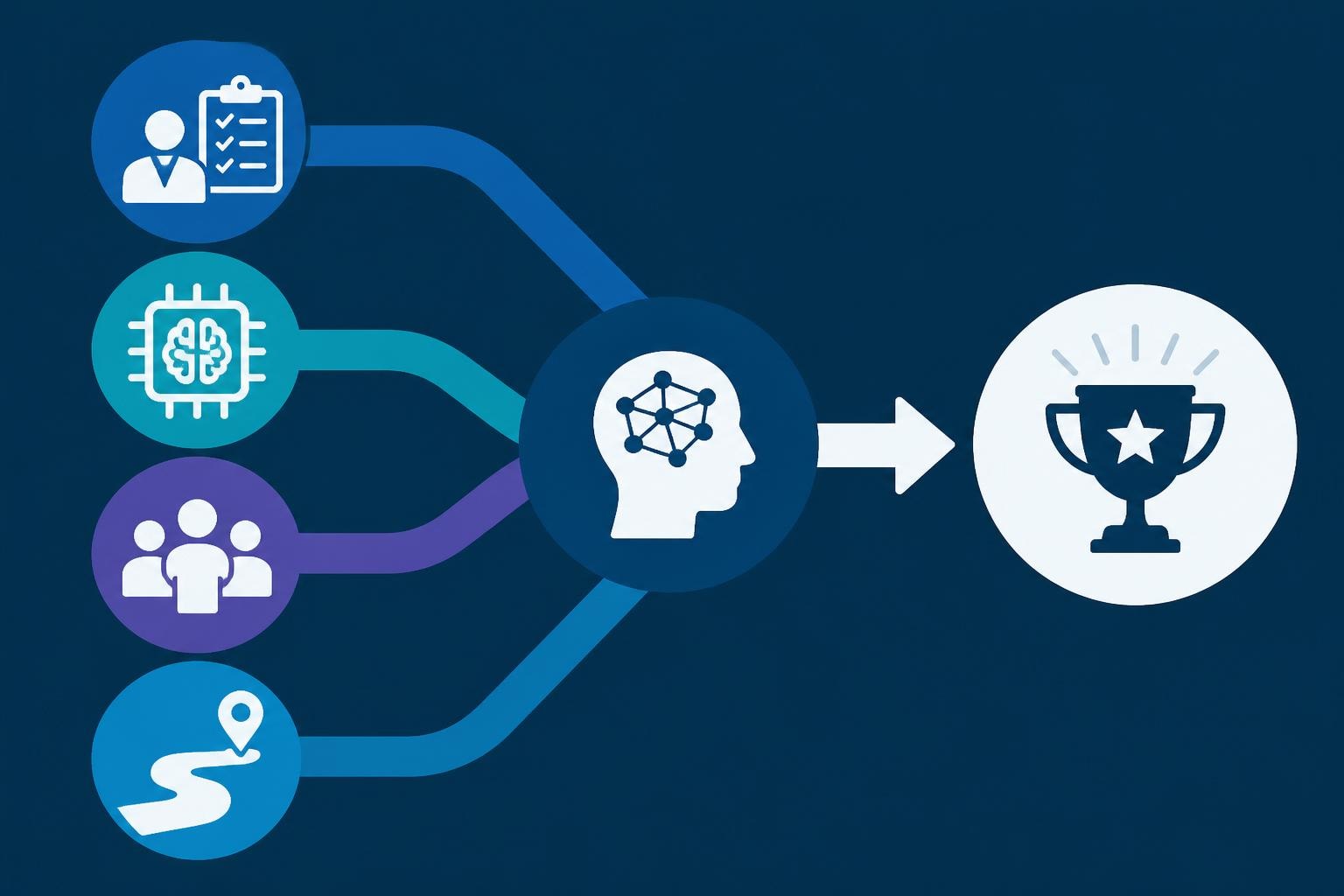
Organizations across industries recognize artificial intelligence and machine learning as transformative technologies, yet implementing these solutions successfully requires specialized expertise most companies lack internally. AI ML consulting bridges this critical gap by providing strategic guidance, technical implementation support, and talent enablement that accelerates business outcomes while minimizing costly missteps. As enterprises invest billions in AI initiatives, understanding how to leverage consulting partnerships effectively has become essential for competitive advantage.
Understanding the AI ML Consulting Landscape
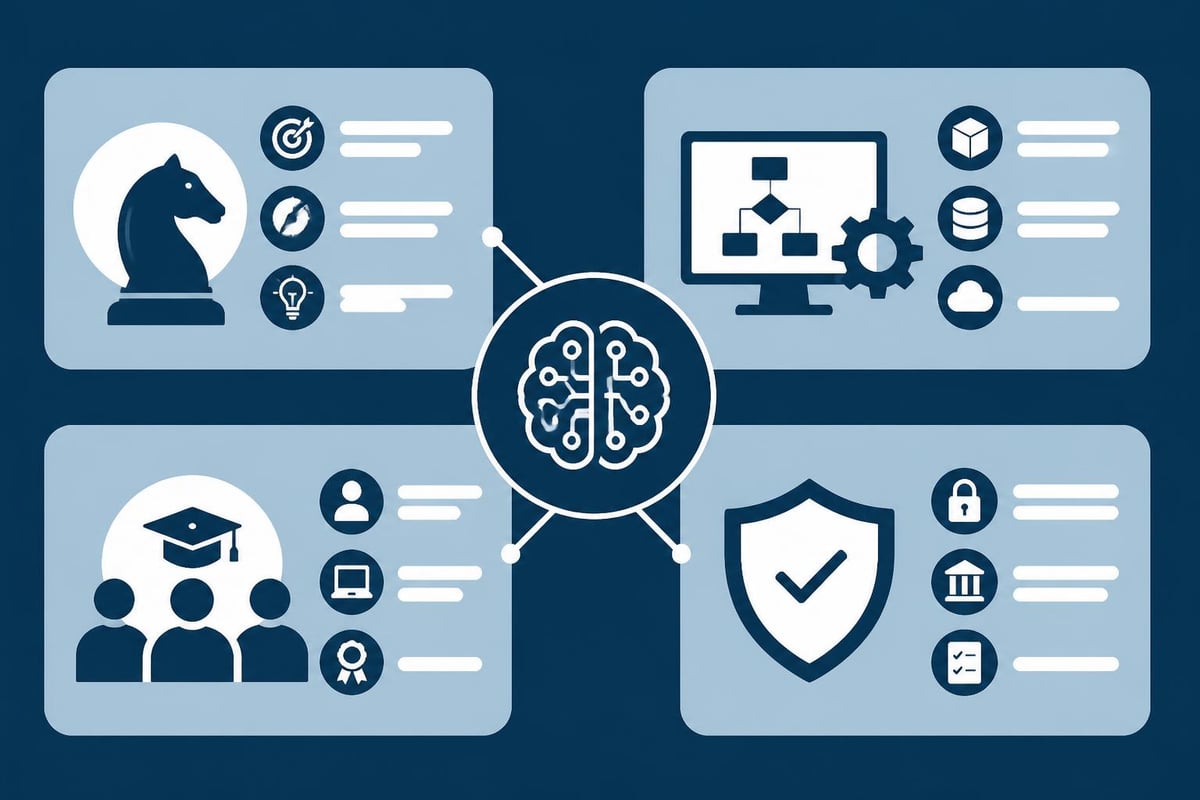
The AI ML consulting industry has matured significantly over the past five years, evolving from experimental proof-of-concept projects to mission-critical enterprise deployments. Today's consultants offer services spanning strategic advisory, technical architecture, model development, deployment infrastructure, and organizational change management.
Strategic consulting focuses on business alignment, helping organizations identify high-value use cases and build comprehensive AI roadmaps. These engagements typically assess current capabilities, define success metrics, and establish governance frameworks that ensure responsible AI development.
Technical implementation encompasses the heavy lifting of building, training, and deploying models. This includes:
- Data pipeline architecture and engineering
- Model selection and custom algorithm development
- Integration with existing technology stacks
- Performance optimization and monitoring
- Security and compliance implementation
Organizations frequently underestimate the complexity involved in moving from prototype to production. Transitioning AI/ML models to production-ready systems presents unique challenges that experienced consultants navigate through battle-tested methodologies and architectural patterns.
Evaluating Consulting Partnership Models
Different engagement models suit different organizational needs and maturity levels. Staff augmentation provides skilled professionals who integrate directly into internal teams, offering flexibility and knowledge transfer but requiring strong internal project management. Fixed-scope projects deliver defined outcomes within agreed timelines and budgets, ideal for specific initiatives with clear requirements.
Retainer arrangements establish ongoing advisory relationships, providing continuous guidance as AI strategies evolve. Hybrid models combine elements of each approach, adapting as projects progress through discovery, development, and deployment phases.
| Model Type | Best For | Typical Duration | Primary Benefit |
|---|---|---|---|
| Staff Augmentation | Teams needing specific skills | 3-12 months | Flexibility and knowledge transfer |
| Fixed-Scope Project | Well-defined initiatives | 2-6 months | Predictable outcomes and costs |
| Retainer Advisory | Ongoing strategic guidance | 6-24 months | Continuous expertise access |
| Hybrid Engagement | Complex, evolving programs | 6-18 months | Adaptive resource allocation |
Building Effective AI ML Consulting Engagements
Successful ai ml consulting partnerships begin with clear objective definition and success criteria establishment. Organizations must articulate specific business outcomes they seek rather than focusing purely on technology implementation. Revenue growth, cost reduction, customer satisfaction improvements, or operational efficiency gains provide measurable targets that guide project priorities and design decisions.
Discovery and Assessment Phases
Comprehensive discovery establishes the foundation for successful initiatives. Consultants evaluate existing data infrastructure, technical capabilities, organizational readiness, and cultural factors that influence adoption. This assessment identifies gaps between current state and requirements for target AI applications.
Data readiness often emerges as the most critical factor. AI and machine learning projects will fail without good data, making quality assessment and remediation planning essential early activities. Consultants examine data availability, accuracy, consistency, completeness, and accessibility across systems.
Technical architecture review determines whether existing infrastructure can support AI workloads or requires modernization. Cloud platforms, on-premises systems, or hybrid environments each present unique considerations for model training, deployment, and scaling.
Talent and Team Considerations
Building internal AI capabilities requires strategic talent acquisition and development. Organizations face intense competition for qualified professionals, with demand far exceeding supply in most markets. AI ML consulting engagements should include knowledge transfer components that build internal expertise over time.
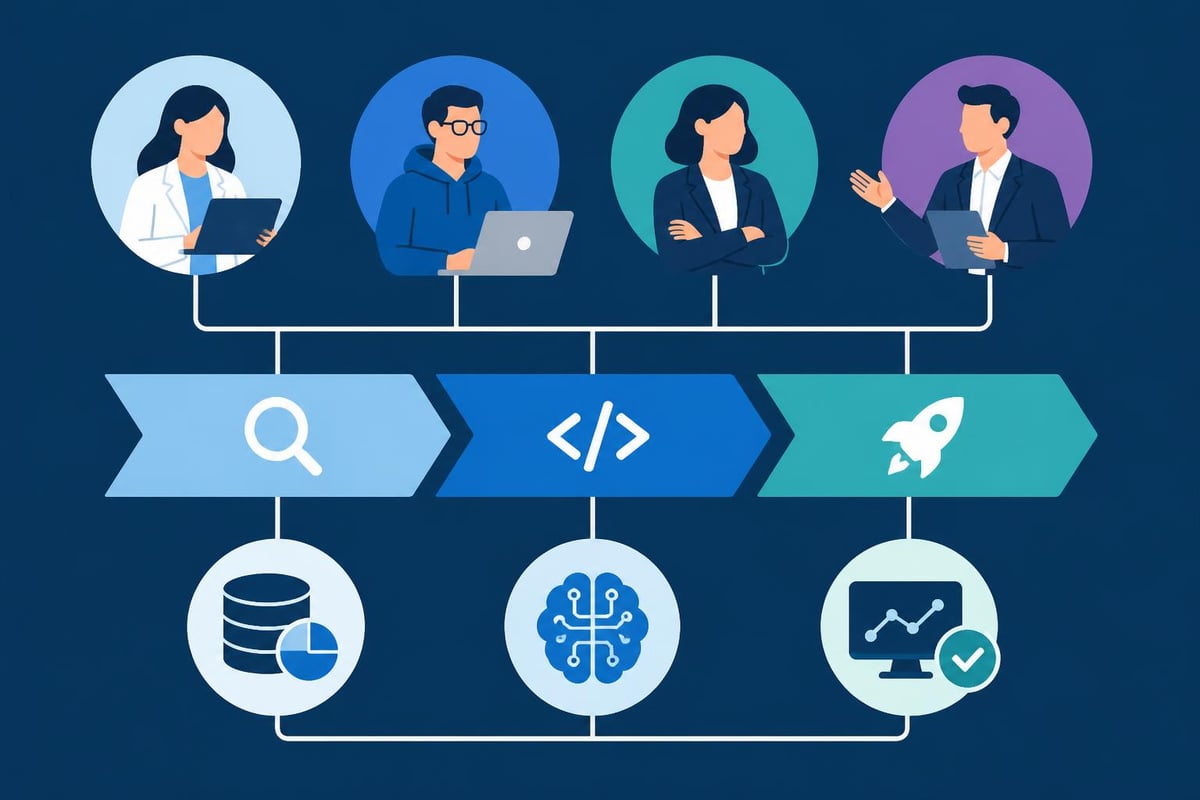
The most effective approach combines hiring specialized talent with upskilling existing team members. Data scientists, machine learning engineers, data engineers, and MLOps specialists each bring distinct skills to comprehensive AI programs. Finding verified AI professionals who possess both technical expertise and domain knowledge accelerates project timelines significantly.
Cross-functional collaboration proves equally important. AI initiatives impact multiple departments, requiring coordination between technology teams, business units, legal, compliance, and executive leadership. Consultants facilitate this alignment through structured communication frameworks and governance processes.
Critical Success Factors for AI ML Consulting Projects
Project outcomes depend heavily on several controllable factors that separate successful implementations from failed initiatives. Organizations that address these elements systematically achieve higher success rates and faster value realization.
Executive sponsorship and resource commitment rank among the most influential factors. AI transformations require sustained investment in technology, talent, and organizational change. Leadership must champion initiatives, allocate appropriate budgets, and maintain focus through inevitable challenges that arise during implementation.
Realistic timeline expectations prevent premature disappointment and project abandonment. Most valuable AI applications require 6-12 months minimum from initiation to production deployment, with complex solutions extending 18-24 months. Consultants help establish phased roadmaps that deliver incremental value while building toward comprehensive capabilities.
Governance and Risk Management
Robust governance frameworks address ethical considerations, regulatory compliance, model performance monitoring, and bias detection. Best practices in AI safety and governance inform policies around model development, testing, deployment approval, and ongoing oversight.
Risk management processes identify potential failure modes and establish mitigation strategies. Technical risks include model accuracy degradation, infrastructure failures, and security vulnerabilities. Business risks encompass adoption challenges, unintended consequences, and competitive dynamics.
- Establish clear accountability for AI system outputs and decisions
- Implement comprehensive testing including edge cases and adversarial scenarios
- Create monitoring dashboards tracking performance metrics and business KPIs
- Define escalation procedures for issues requiring human intervention
- Document model decisions to support auditability and compliance
Performance Measurement and Optimization
Defining appropriate metrics determines whether initiatives deliver promised value. Technical metrics like accuracy, precision, recall, and latency matter, but business outcomes ultimately determine success. Consultants help translate technical performance into business impact through careful metric selection and measurement frameworks.
Evaluating AI/ML model performance and robustness requires rigorous methodologies that account for real-world conditions beyond laboratory testing. Models must perform reliably across diverse inputs, edge cases, and changing environments encountered in production settings.
Continuous optimization maintains performance as data distributions shift and business requirements evolve. A/B testing, champion/challenger approaches, and automated retraining pipelines ensure models remain effective over time.
Selecting the Right AI ML Consulting Partner
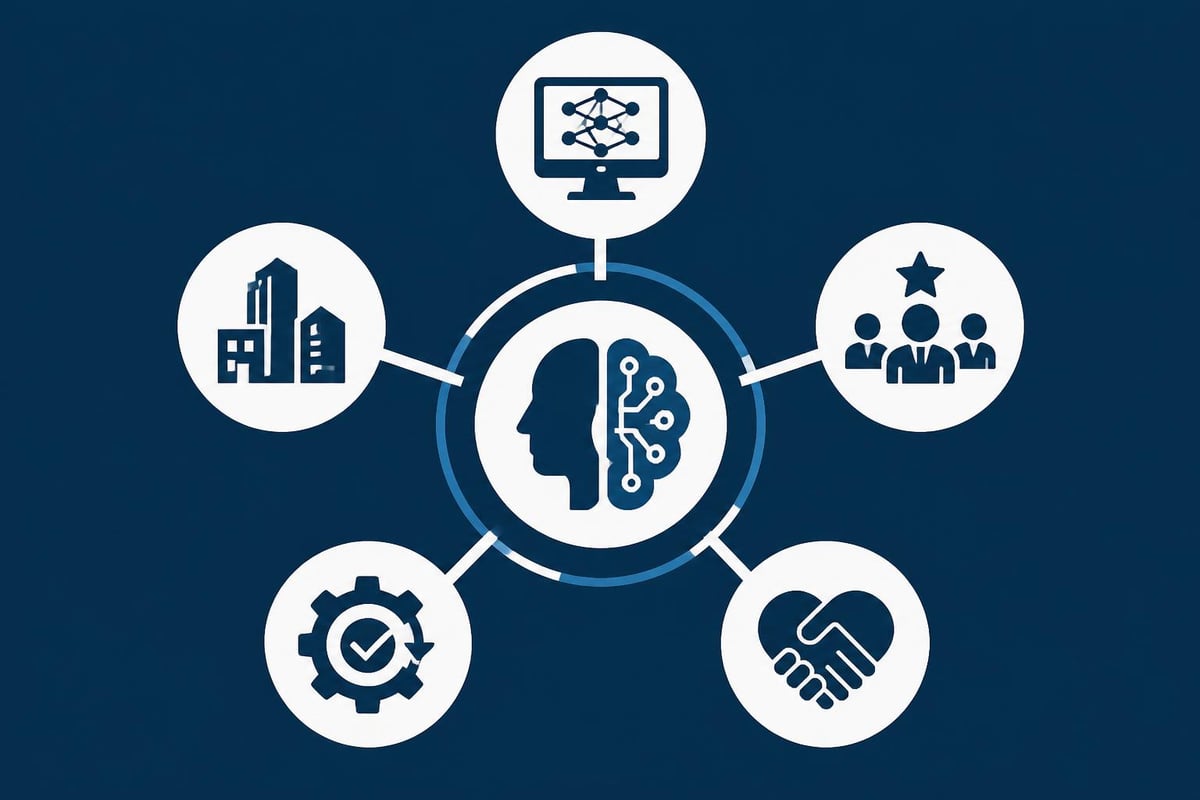
Consultant selection significantly impacts project outcomes, making thorough evaluation essential. Organizations should assess multiple dimensions beyond technical capabilities when choosing partners.
Industry experience and domain expertise enable consultants to understand business context, regulatory requirements, and practical constraints specific to each sector. Healthcare AI implementations differ fundamentally from financial services applications, requiring specialized knowledge that generic technology consultants may lack.
Technical depth across the AI stack ensures comprehensive solution design. This includes expertise in data engineering, model development, deployment infrastructure, and monitoring systems. Documented enterprise AI deployments provide valuable insights into consultant capabilities and approach quality.
Reference checking reveals how consultants perform under pressure, handle challenges, and collaborate with client teams. Speaking directly with past clients uncovers strengths, weaknesses, and working style factors that formal presentations may not reveal.
Evaluating Consultant Capabilities
| Capability Area | Assessment Questions | Success Indicators |
|---|---|---|
| Technical Expertise | What frameworks and tools do they use? | Current technologies, proven architectures |
| Industry Knowledge | Have they solved similar problems? | Relevant case studies, domain vocabulary |
| Talent Quality | What credentials do team members hold? | Advanced degrees, certifications, publications |
| Methodology | How do they structure engagements? | Defined processes, quality frameworks |
| Cultural Fit | Do communication styles align? | Collaborative approach, transparency |
Pricing structures and contract terms require careful negotiation. Value-based pricing aligns incentives around outcomes, while time-and-materials arrangements provide flexibility for evolving requirements. Understanding what's included in base fees versus additional costs prevents budget surprises mid-project.
Intellectual property ownership deserves explicit clarification upfront. Organizations should retain rights to custom models, data assets, and proprietary algorithms developed during engagements. Standard consultant IP around frameworks, tools, and general methodologies typically remains with the consulting firm.
Maximizing Value from AI ML Consulting Engagements
Organizations that extract maximum value from consulting relationships approach partnerships strategically rather than transactionally. Active participation accelerates progress and ensures solutions align with business realities.
Knowledge transfer planning should begin at project initiation. Documentation standards, training sessions, and shadowing opportunities enable internal teams to maintain and enhance solutions after consultants depart. This builds lasting capabilities rather than creating dependency on external resources.
Internal team members should work alongside consultants throughout implementation. This collaboration facilitates real-time learning while ensuring institutional knowledge remains within the organization. Building internal AI talent complements consulting engagements by creating sustainable competitive advantages.
Common Pitfalls and Avoidance Strategies
Several recurring mistakes undermine AI ML consulting projects despite best intentions. Recognizing these patterns enables proactive mitigation.
Scope creep expands projects beyond original parameters, consuming budgets and delaying deliverables. Formal change control processes with impact assessment requirements maintain discipline around requirement modifications. Minor adjustments may be accommodated, but significant scope changes should trigger explicit replanning.
Insufficient stakeholder engagement creates alignment gaps that surface late in projects when corrections prove expensive. Regular reviews with business sponsors, end users, and technical teams maintain shared understanding and course-correct misalignments quickly.
Technology-first thinking prioritizes sophisticated techniques over business value. The most advanced algorithms don't always deliver the best outcomes. Consultants should recommend solutions matching problem complexity, sometimes favoring simpler approaches that are easier to implement, maintain, and explain.
Implementation Approaches and Methodologies
AI ML consulting firms employ various methodologies reflecting different philosophies and priorities. Understanding these approaches helps organizations select partners whose methods align with their culture and objectives.
Agile AI development adapts software engineering practices for machine learning contexts. Sprint-based iterations with regular demonstrations enable rapid feedback incorporation and incremental progress. This approach suits exploratory projects where requirements evolve as teams learn what's possible.
Waterfall approaches work better for well-defined projects with stable requirements and regulatory constraints. Sequential phases with formal approval gates ensure thorough documentation and control but sacrifice flexibility for predictability.
Hybrid methodologies combine elements of both approaches, using iterative development for model experimentation while maintaining structured processes for deployment and governance. Optimizing machine learning systems requires balancing innovation velocity with quality assurance and risk management.
Most modern ai ml consulting engagements follow frameworks that emphasize:
- Rapid prototyping to validate feasibility and business value
- Continuous integration and deployment for efficient iteration
- Automated testing ensuring reliability and performance
- Monitoring and observability enabling proactive issue detection
- Feedback loops connecting business outcomes to model improvements
Organizations implementing on-premises AI solutions face additional considerations around infrastructure, security, and operational management. Best practices for on-premises AI agents address governance, tool control, and observability requirements specific to these deployment models.
Industry-Specific AI ML Consulting Applications
While core AI principles apply universally, implementation details vary significantly across industries. Consultants with vertical expertise navigate sector-specific regulations, data characteristics, and use case nuances more effectively than generalists.
Financial services applications emphasize fraud detection, risk assessment, algorithmic trading, and customer personalization. Regulatory compliance, model explainability, and real-time performance requirements shape solution architectures. Financial sector AI case studies demonstrate how institutions leverage machine learning for competitive advantage.
Healthcare and life sciences deploy AI for diagnosis support, drug discovery, treatment optimization, and operational efficiency. HIPAA compliance, clinical validation requirements, and integration with electronic health records create unique technical challenges requiring specialized expertise.
Manufacturing and supply chain organizations optimize production processes, predict equipment failures, manage inventory, and improve quality control through AI applications. Real-time sensor data, industrial protocols, and operational technology integration distinguish these implementations.
Retail and e-commerce companies enhance customer experiences through personalization, demand forecasting, dynamic pricing, and computer vision applications. High transaction volumes and seasonal variations require scalable architectures that maintain performance under variable loads.
When selecting an AI ML consulting partner, organizations benefit from evaluating their track record in relevant industries. Domain knowledge accelerates projects by eliminating learning curves and applying proven patterns to new contexts. Reviewing AI case studies across sectors provides perspective on what's achievable and typical implementation timelines.
Future Trends Shaping AI ML Consulting
The consulting landscape continues evolving as technologies mature and new capabilities emerge. Forward-looking organizations consider these trends when planning AI strategies and selecting partners.
Generative AI and large language models have transformed what's possible in natural language processing, content creation, and knowledge work automation. Consultants help organizations navigate foundation model selection, fine-tuning approaches, prompt engineering, and responsible deployment of these powerful capabilities.
MLOps and automation reduce the manual effort required for model deployment, monitoring, and retraining. Mature practices around version control, testing, and deployment pipelines enable organizations to scale AI initiatives without proportional team expansion. Consultants who implement robust MLOps foundations create sustainable advantages.
Edge AI and federated learning address latency, bandwidth, and privacy requirements by processing data closer to its source. These approaches suit IoT applications, mobile devices, and scenarios requiring real-time decisions without cloud connectivity.
Explainable AI grows increasingly important as regulatory scrutiny intensifies and applications touch sensitive decisions affecting people's lives. Techniques that make model reasoning transparent build trust and satisfy compliance requirements across industries.
The talent shortage driving demand for ai ml consulting services shows no signs of abating. Organizations increasingly rely on specialized talent marketplaces for verified AI professionals to supplement consulting engagements with embedded expertise that integrates directly into project teams. This hybrid approach combines strategic consulting guidance with hands-on implementation capacity.
Platforms offering comprehensive candidate validation through resume fraud detection and skill verification help organizations build high-performing AI teams by ensuring they hire genuinely qualified professionals. This becomes particularly critical as the competition for talent intensifies and the consequences of bad hires increase.
Organizations that invest in both consulting partnerships and internal capability building position themselves for sustained success as AI technologies continue advancing and business applications multiply across functions and industries.
Successfully implementing AI ML consulting engagements requires clear objectives, appropriate partner selection, active organizational participation, and realistic expectations about timelines and outcomes. Organizations that approach these partnerships strategically while building complementary internal capabilities achieve the most sustainable competitive advantages. Augmnt connects businesses with verified AI professionals who possess the specialized skills needed to execute ambitious AI initiatives, combining intelligent matching technology with comprehensive candidate validation to ensure you build teams capable of turning consulting recommendations into business results.