Staff Augmentation Guide: Strategies for Success in 2026
In 2026, businesses face an unprecedented pace of change due to rapid advances in technology and evolving workforce expectations. Organizations must adapt quickly to stay ahead, but how can they do this without sacrificing efficiency or innovation?
This guide explores staff augmentation as a strategic solution for companies seeking operational agility and access to specialized talent. By leveraging staff augmentation, leaders can navigate shifting market demands, respond to new challenges, and maintain a competitive edge in a dynamic global landscape.
You will discover the essentials of staff augmentation, emerging trends shaping its future, proven strategies for success, and actionable best practices to maximize your return on investment. Let's dive in and prepare your organization for the opportunities and challenges of 2026.
Understanding Staff Augmentation in 2026
In 2026, staff augmentation is evolving from a simple staffing solution into a strategic workforce model. Organizations are moving beyond traditional temp staffing, choosing agile, on-demand access to specialized professionals. This approach lets companies adapt quickly to market demands, scale projects efficiently, and inject fresh expertise without the long-term commitment of hiring full-time employees.
What sets staff augmentation apart? Unlike outsourcing, where control over projects may shift to external vendors, staff augmentation keeps core processes and intellectual property within the organization. Managed services, on the other hand, hand over entire functions to a provider. With staff augmentation, businesses supplement their teams with external talent, maintaining oversight and flexibility.
Why is staff augmentation surging in popularity in 2026? The rise of remote work has unlocked global talent pools, making it easier to find niche skills regardless of geography. AI-powered platforms now streamline the matching process, vetting candidates for both technical abilities and cultural fit. Organizations leverage staff augmentation to stay competitive, fill skill gaps quickly, and respond to ever-changing project requirements.
Market data underscores this shift. The global IT staff augmentation sector is projected to grow at a robust compound annual growth rate through 2026. According to Global IT Staff Augmentation Market Growth Projections, businesses are increasingly relying on flexible workforce models to drive innovation and efficiency. This trend reflects a broader movement toward agile, project-based staffing across industries.
Staff augmentation is making an impact in technology, healthcare, finance, and more. In tech, companies use it to rapidly scale development teams for software launches. Healthcare providers rely on augmented professionals for specialized roles in telemedicine and data security. Financial institutions tap into global talent to meet regulatory and cybersecurity demands. Even manufacturing and retail sectors are adopting staff augmentation for digital transformation and supply chain optimization.
There are several staff augmentation models to consider. Short-term augmentation addresses urgent needs like covering employee leave or handling seasonal spikes. Long-term models support ongoing initiatives, such as cloud migrations or compliance projects. Project-based augmentation brings in experts for a defined scope and timeline, while skill-based models focus on acquiring deep expertise in areas like AI, blockchain, or cybersecurity.
The benefits of staff augmentation are clear. Flexibility lets organizations adjust team size as projects evolve. Cost efficiency comes from avoiding the expenses of full-time hires. Rapid scaling enables businesses to seize new opportunities, while access to niche expertise drives innovation and quality. This approach also reduces the risk of talent shortages and accelerates time-to-market.
Consider a leading Fortune 500 company embarking on a digital transformation. Facing tight deadlines and a shortage of cloud architects, the firm turned to staff augmentation. By partnering with a global provider, they quickly onboarded specialized professionals, maintained project momentum, and successfully launched their new platform ahead of schedule. This example demonstrates how staff augmentation empowers organizations to achieve ambitious goals while controlling risks and costs.

Key Trends Shaping Staff Augmentation in 2026
The landscape of staff augmentation is shifting rapidly in 2026, driven by new technologies, global workforce changes, and evolving business needs. Organizations are reimagining talent strategies to stay ahead of the curve. Understanding the latest trends is essential for leaders who want to leverage staff augmentation effectively and remain competitive. Let’s explore the four most significant trends shaping this space.

The Rise of AI and Automation
Artificial intelligence is revolutionizing staff augmentation in 2026. AI-powered platforms are now standard for talent matching, vetting, and forecasting workforce needs. Organizations use machine learning algorithms to identify candidates, assess skills, and even predict future gaps. Automation streamlines onboarding, compliance checks, and document management, reducing manual effort.
For example, advanced AI systems can detect resume fraud, verify credentials, and flag skill mismatches, ensuring only the most qualified professionals join project teams. These platforms help organizations save time, cut hiring costs, and raise candidate quality. In fact, the mainstream adoption of AI in recruitment is transforming how companies approach staff augmentation, as noted in Key IT Staff Augmentation Trends for 2026.
Embracing AI and automation makes staff augmentation more efficient, scalable, and reliable, setting a new industry standard for 2026.
Globalization and Remote Work
The globalization of staff augmentation is accelerating as businesses tap into remote talent worldwide. Virtual collaboration tools are now more robust, making it easier to build cross-border teams. This shift enables access to a larger and more diverse talent pool, addressing local skill shortages.
However, global staff augmentation brings new challenges. Organizations must navigate legal, tax, and compliance issues across jurisdictions. Data shows a significant increase in remote staff augmentation contracts since 2024, reflecting this expanding trend. For instance, a global software project might be staffed entirely through remote professionals from different continents, all collaborating seamlessly online.
By embracing remote work, companies gain agility and cost savings while ensuring their staff augmentation strategies remain future-ready and globally integrated.
Demand for Specialized Skills
The demand for specialized skills is at an all-time high in staff augmentation. Companies are actively seeking experts in AI, cybersecurity, cloud computing, and data science. This surge is fueled by rapid digital transformation and evolving project needs.
Niche talent is often scarce, making staff augmentation a critical solution for filling these gaps quickly. Recent statistics highlight that roles like AI engineers, cloud architects, and cybersecurity analysts are among the most in-demand for staff augmentation in 2026. For example, an AI project may require data scientists with advanced experience, who can be sourced efficiently through targeted augmentation.
Staff augmentation empowers organizations to access specialized expertise on demand, ensuring projects stay on track and competitive.
Emphasis on Compliance and Security
Compliance and security are now central to staff augmentation strategies. As data privacy regulations like GDPR and CCPA evolve, organizations must enforce strict verification, background checks, and training for all augmented staff. Enhanced processes help mitigate risks of data breaches and regulatory violations.
Modern tools support continuous compliance monitoring, secure data access, and automated audit trails. For instance, healthcare organizations using staff augmentation ensure that all temporary professionals meet HIPAA requirements through rigorous screening and documentation.
Prioritizing compliance and security in staff augmentation not only protects sensitive information but also builds trust with clients and stakeholders.
Step-by-Step Staff Augmentation Strategy for 2026
Scaling with staff augmentation in 2026 requires a structured, strategic approach. Organizations that follow a clear roadmap can maximize efficiency, minimize risk, and unlock the full potential of flexible talent solutions. Let’s break down each step to ensure your staff augmentation journey is both successful and sustainable.
Assessing Organizational Needs
The first step in staff augmentation is a thorough assessment of your organization’s current workforce and future project requirements. Begin by identifying any skill gaps, upcoming initiatives, or capacity shortfalls. Engage department leaders, IT managers, and HR professionals to gather insights and secure internal buy-in for your staff augmentation strategy.
List all critical skill sets needed, the anticipated duration of assignments, and your available budget. For example, an IT department planning a cloud migration should map out which technical skills are missing, estimate the time required, and forecast costs. By aligning stakeholders and defining clear objectives, you set a strong foundation for staff augmentation success.
Selecting the Right Staff Augmentation Model
Choosing the optimal staff augmentation model is crucial for achieving your goals. Organizations can select from direct hire, agency-based, or online marketplace approaches. Each model offers unique benefits and challenges. Direct hire provides more control, agencies offer curated talent pools, and marketplaces enable rapid scaling with global reach.
Consider the following factors:
- Cost and budget constraints
- Time zone differences
- Language proficiency
- Cultural compatibility
For example, a startup developing a mobile app might favor nearshore staff augmentation to balance cost and communication efficiency. Use a table to compare models:
| Model | Control | Speed | Cost | Best For |
|---|---|---|---|---|
| Direct Hire | High | Slow | High | Long-term, core roles |
| Agency | Medium | Fast | Medium | Specialized projects |
| Marketplace | Low | Fastest | Low | Short-term, rapid scale |
By evaluating each option, you ensure your staff augmentation aligns with business priorities.
Sourcing and Vetting Talent
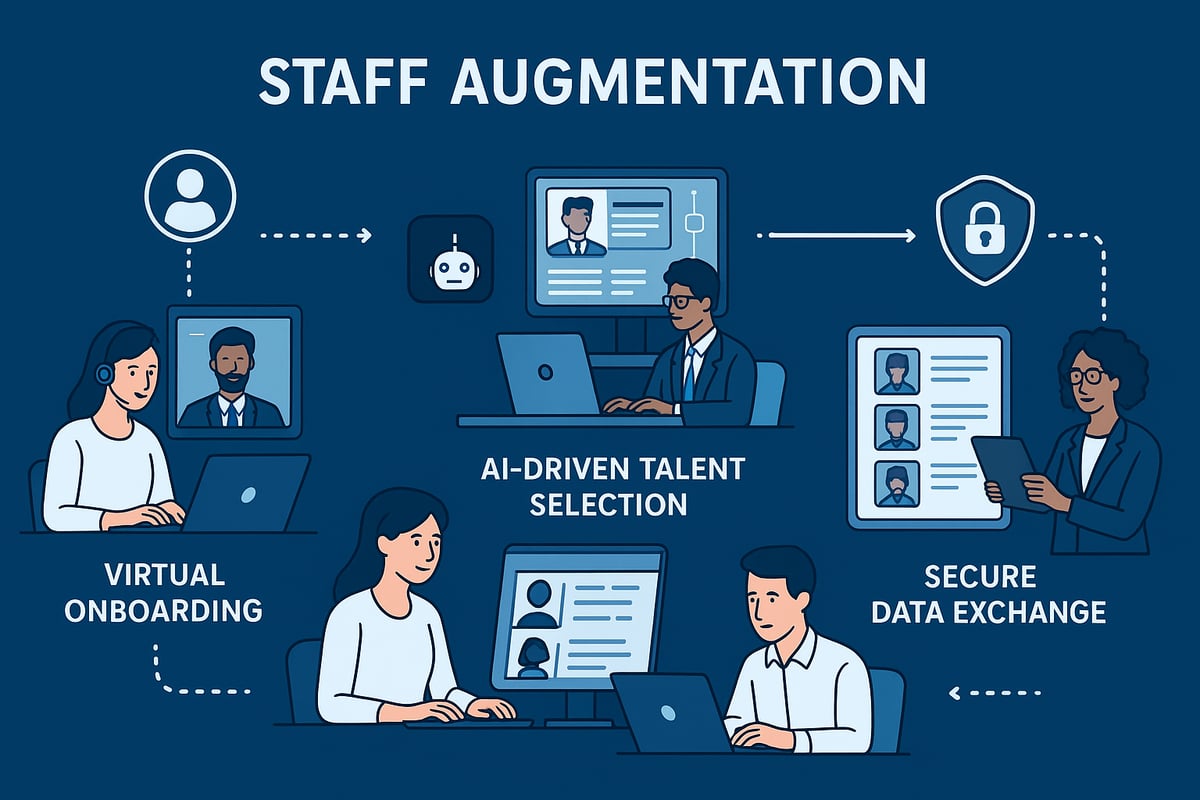
Securing the right talent is central to staff augmentation. Leverage AI-powered platforms and reputable agencies to access diverse talent pools. Multi-layered verification is essential: conduct resume checks, technical assessments, and multiple interviews to confirm expertise.
Watch for common pitfalls like misrepresentation or bait-and-switch tactics. For instance, some candidates may exaggerate skills or submit fraudulent credentials. Use advanced AI tools to screen for inconsistencies and flag potential risks. A company that implemented AI-driven vetting reduced hiring risks while ensuring only qualified professionals joined their staff augmentation projects.
Onboarding and Integration
A seamless onboarding process accelerates productivity and fosters engagement. Digital onboarding platforms can automate paperwork, training modules, and compliance checks. Share detailed documentation and project briefs to ensure knowledge transfer.
To integrate augmented staff effectively, create virtual onboarding checklists and assign mentors for remote engineers. Encourage open communication from day one, using collaboration tools for daily stand-ups and regular check-ins. By prioritizing onboarding, your staff augmentation efforts lead to faster ramp-up times and better performance.
Managing and Retaining Augmented Staff
Effective management and retention are vital for long-term staff augmentation success. Set clear goals, KPIs, and feedback loops from the outset. Use project management tools to track progress and ensure accountability.
Motivation strategies include recognition, performance bonuses, and professional development opportunities. Building engagement reduces turnover and fosters loyalty, even among temporary team members. For deeper insights, explore Staff Augmentation Benefits and Best Practices to enhance performance management and cultural alignment.
Regular reviews and transparent communication help address issues early. By investing in your augmented staff, you maximize ROI and maintain a high-quality workforce.
Ensuring Compliance and Data Security
Compliance and security are non-negotiable in staff augmentation. Draft robust legal agreements, including NDAs and clear data access controls. Regularly monitor compliance with regulations such as GDPR and CCPA.
Conduct periodic audits and provide training on security protocols for all augmented staff. For example, a finance firm can implement secure remote access systems to protect sensitive data while enabling augmented analysts to work efficiently. Prioritizing security safeguards your organization’s reputation and assets throughout the staff augmentation process.
Measuring Success and ROI
Measuring the effectiveness of staff augmentation ensures continuous improvement. Define clear success metrics, such as cost savings, project delivery timelines, and quality benchmarks. Gather feedback from both internal teams and augmented staff to identify strengths and areas for growth.
Conduct post-project reviews to optimize future processes. For instance, a comprehensive review after a major deployment can reveal bottlenecks and inform better practices. By tracking key performance indicators, you refine your staff augmentation strategy for even greater impact.
Overcoming Challenges in Staff Augmentation
Navigating the landscape of staff augmentation in 2026 presents a unique set of challenges for organizations. Success requires anticipating obstacles and deploying proactive strategies to ensure seamless collaboration, security, and project outcomes.

Communication Across Borders and Cultures
One of the most persistent challenges in staff augmentation is bridging communication gaps. Remote teams often span multiple time zones and cultural backgrounds, making real-time collaboration and mutual understanding more complex.
Clear communication protocols, regular check-ins, and the use of collaboration tools are essential. Investing in cultural sensitivity training can also foster trust and reduce misunderstandings, helping remote teams thrive.
Protecting Data and Intellectual Property
Security is a top concern in staff augmentation, especially when working with third-party talent across borders. The risk of data breaches and intellectual property (IP) theft increases when sensitive information is shared beyond the organization.
Establishing robust data access controls, using encrypted communication channels, and ensuring all augmented staff sign NDAs can mitigate these risks. Regular security audits and compliance checks should be part of your ongoing strategy.
Managing Expectations: Scope and Roles
Scope creep and role confusion can derail staff augmentation projects. Clear documentation of responsibilities, deliverables, and timelines helps prevent misunderstandings and keeps everyone aligned.
Regular status updates and feedback loops ensure that augmented staff understand expectations and can address changes quickly. Transparent communication is key to maintaining project momentum.
Ensuring Accountability and Quality
Remote staff augmentation requires robust performance management to ensure accountability and maintain quality. Setting measurable goals, defining KPIs, and using project management tools enable both internal teams and augmented staff to track progress.
Performance reviews and timely feedback help identify issues early and support continuous improvement. Building a culture of accountability is essential for long-term success.
Preventing Fraud and Misrepresentation
Thorough vetting is critical to prevent fraud in staff augmentation. Companies should implement multi-layered verification, including skills assessments and background checks. Leveraging AI-driven platforms can further reduce risks by detecting fraudulent credentials or mismatches.
For a deeper dive on how AI is transforming the vetting process and enhancing trust in staff augmentation, explore AI's Impact on Staff Augmentation in 2026.
Navigating Legal and Tax Complexities
Cross-border staff augmentation introduces legal and tax challenges. Organizations must comply with local labor laws, tax regulations, and data privacy requirements in each jurisdiction where augmented staff operate.
Partnering with legal advisors and using compliance management tools can help mitigate risks and ensure all contractual obligations are met.
Learning from Failure: A Real-World Example
In 2025, a global financial firm faced setbacks when its staff augmentation project failed due to unclear role definitions and poor communication. The result was missed deadlines and increased costs.
A survey of projects in 2025-2026 found that the most common reasons for staff augmentation failure included:
- Lack of clear communication channels
- Insufficient vetting of candidates
- Inadequate security protocols
- Unmanaged scope changes
- Non-compliance with local laws
By addressing these pitfalls, organizations can significantly improve their outcomes and maximize the value of staff augmentation initiatives.
Best Practices for Successful Staff Augmentation
Achieving success with staff augmentation requires a strategic approach grounded in proven best practices. By following a structured framework, organizations can maximize value, minimize risk, and build high-performing teams that deliver measurable results.
Building Strong Partnerships
Start by selecting the right staff augmentation provider. Prioritize those with a transparent track record, robust talent pools, and a consultative approach. A strong partnership ensures alignment on goals, clear communication, and proactive problem-solving.
Regularly assess provider performance and encourage open dialogue. This fosters mutual trust and long-term collaboration, laying the foundation for staff augmentation success.
Investing in Onboarding and Training
Effective onboarding is essential for integrating augmented staff quickly. Provide clear documentation, access to tools, and introductions to key team members. Supplement onboarding with ongoing training to address evolving project needs.
By prioritizing skill development, companies using staff augmentation can ensure consistent performance and adapt to new challenges as they arise.
Leveraging Technology Effectively
Utilize collaboration platforms, project management tools, and secure communication channels to keep teams connected. Technology streamlines workflows, enhances transparency, and supports remote staff augmentation models.
Automated reporting, real-time dashboards, and integrated feedback systems make it easier to monitor progress and address issues promptly.
Prioritizing Communication and Feedback
Establish regular check-ins, feedback loops, and clear escalation paths. Open communication helps bridge gaps between internal and augmented staff, reducing misunderstandings.
With staff augmentation, transparency is vital for maintaining engagement, aligning expectations, and fostering a positive team culture.
Reviewing Contracts and Ensuring Compliance
Regularly review service agreements, NDAs, and compliance requirements to reduce legal and operational risks. Stay informed about data privacy laws and industry regulations that impact staff augmentation arrangements.
Implement audit processes and periodic policy updates to ensure ongoing alignment with both internal standards and external mandates.
Focusing on Long-Term Relationships
View staff augmentation as a partnership, not a transactional hire. Invest in relationship-building, recognize contributions, and offer growth opportunities to high-performing augmented staff.
Organizations that nurture long-term connections with their staff augmentation providers see improved loyalty, deeper expertise, and more consistent project outcomes.
Case Study: Accelerating Project Delivery
A global fintech company adopted these staff augmentation best practices and achieved a 30% faster project delivery rate within one year. By leveraging technology, investing in onboarding, and fostering strong partnerships, they improved ROI and reduced turnover. According to Deloitte's global human capital trends, companies focused on best practices in staff augmentation report up to 25% higher ROI compared to peers.
Applying these principles consistently empowers organizations to unlock the full potential of staff augmentation, driving sustainable growth and innovation in 2026.
The Future of Staff Augmentation: Predictions for 2026 and Beyond
The future of staff augmentation is rapidly taking shape as new technologies and workforce expectations redefine how companies operate. As we look ahead to 2026 and beyond, staff augmentation is set to become a cornerstone for organizations seeking agility, innovation, and access to global talent.
Emerging Technologies: AI, Blockchain, and Talent Marketplaces
Artificial intelligence is already transforming staff augmentation by automating talent matching, streamlining onboarding, and predicting workforce needs with precision. Blockchain is gaining traction for secure credential verification and transparent contract management. Advanced talent marketplaces now leverage both AI and blockchain, making it easier for businesses to find and manage top professionals. According to recent studies, AI-driven platforms are expected to facilitate over 60% of staff augmentation placements by 2028. For a deeper look, read about how AI is reshaping talent acquisition.
AR and VR: Redefining Remote Team Integration
Augmented reality and virtual reality are revolutionizing remote collaboration within staff augmentation models. These technologies enable immersive onboarding, virtual team meetings, and real-time project walkthroughs. Teams can interact in shared virtual spaces, reducing the barriers of distance and creating a sense of presence. As AR and VR tools become more accessible, companies are using them to build stronger connections and improve knowledge sharing across borders.
Regulatory Changes and Workforce Expectations
The regulatory landscape for staff augmentation is also evolving. New data privacy laws, such as updates to GDPR and emerging frameworks in Asia and the Americas, are prompting organizations to enhance compliance protocols. At the same time, the workforce is demanding more flexibility, purpose-driven roles, and ongoing upskilling. Staff augmentation providers are responding by offering tailored training programs and flexible engagement models to attract top talent.
Ethical Hiring, Diversity, and the Fully AI-Managed Lifecycle
Looking ahead, ethical hiring and diversity will be central to staff augmentation strategies. Companies are prioritizing inclusive hiring practices and leveraging AI to minimize bias in candidate selection. The vision for the future includes a fully AI-managed staff augmentation lifecycle, where sourcing, vetting, onboarding, and performance management are seamlessly integrated. Market projections indicate that the global staff augmentation market will reach $140 billion by 2028, with adoption rates climbing across technology, healthcare, and finance sectors.
Staff augmentation is poised to be an essential driver of digital transformation, empowering companies to scale, innovate, and thrive in a dynamic world.
As we look ahead to 2026, it’s clear that staying competitive means tapping into new talent strategies like staff augmentation. If you’re ready to connect with skilled AI professionals and eliminate the headaches of candidate vetting, you don’t have to navigate it alone. Augmnt makes hiring easier by blending powerful AI with human expertise to ensure you only meet qualified, fraud-free candidates. Curious how this could work for your team? You can see the platform in action and get your questions answered—just Request a Demo to explore how Augmnt can streamline your hiring process.