Machine Learning Consulting Companies: A 2026 Guide
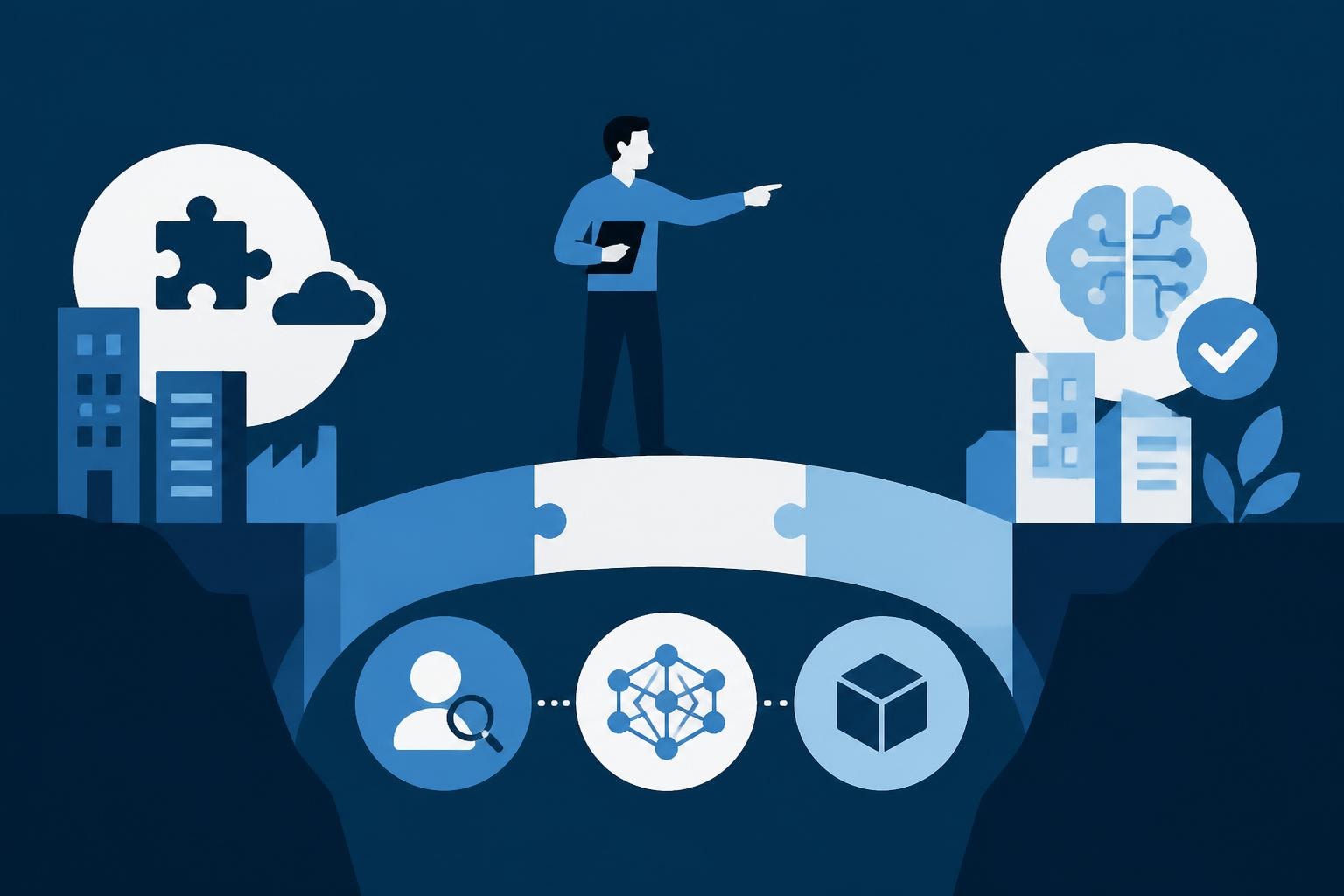
Organizations across industries are racing to integrate artificial intelligence into their operations, yet many lack the specialized expertise required to execute successfully. Machine learning consulting companies have emerged as critical partners in this transformation, offering the technical knowledge, strategic guidance, and implementation capabilities that businesses need to compete in an AI-driven marketplace. These firms bridge the gap between ambitious business goals and complex technical realities, transforming data into actionable insights and competitive advantages.
Understanding the Machine Learning Consulting Landscape
Machine learning consulting companies specialize in helping organizations implement AI solutions tailored to specific business challenges. Unlike generic IT consultancies, these firms maintain deep expertise in algorithms, data science, model deployment, and the unique requirements of production-grade machine learning systems.
The consulting landscape has evolved significantly since 2020. Today's machine learning consulting companies offer comprehensive services that span the entire AI lifecycle, from initial strategy development through model deployment and ongoing optimization. This holistic approach reflects the maturity of the industry and the recognition that successful AI implementation requires more than just technical expertise.
Core Service Offerings
Machine learning consulting companies typically provide a structured portfolio of services designed to address different stages of AI adoption:
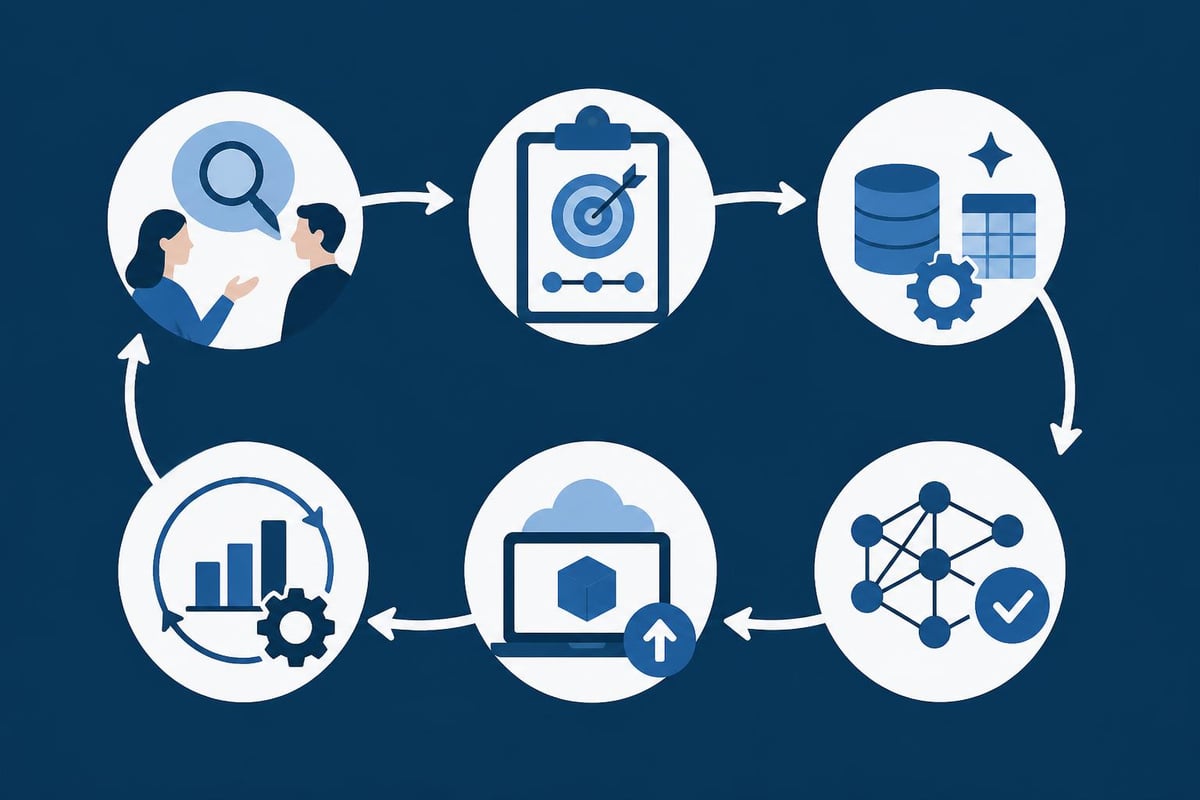
- Strategy and assessment: Evaluating organizational readiness, identifying high-value use cases, and developing AI roadmaps aligned with business objectives
- Data infrastructure: Designing and implementing data pipelines, storage solutions, and governance frameworks that support machine learning workflows
- Model development: Building custom algorithms, training models, and optimizing performance for specific business applications
- Deployment and integration: Implementing models in production environments and integrating AI capabilities with existing systems
- Training and enablement: Transferring knowledge to internal teams and building organizational AI competency
The breadth of these offerings reflects the complexity of enterprise AI adoption. Research on knowledge management in consulting firms demonstrates that successful implementation requires both technical skills and effective knowledge transfer mechanisms.
Selecting the Right Consulting Partner
Choosing among machine learning consulting companies requires careful evaluation of technical capabilities, industry experience, and cultural fit. The stakes are high as AI projects demand significant investment and failed implementations can set organizations back years.
Technical Expertise and Specialization
Not all machine learning consulting companies possess equal technical depth. Organizations should evaluate potential partners based on specific criteria:
| Evaluation Factor | Key Considerations | Red Flags |
|---|---|---|
| Technical Stack | Modern frameworks, cloud platforms, MLOps tools | Outdated technologies, proprietary lock-in |
| Team Composition | PhD-level data scientists, ML engineers, domain experts | Lack of senior practitioners, high turnover |
| Methodology | Agile development, iterative improvement, validation protocols | Waterfall approaches, no testing framework |
| Research Contributions | Published papers, open-source contributions, conference presentations | No external validation of expertise |
The best consulting partners maintain active research programs and contribute to the broader machine learning community. This engagement ensures they remain current with rapidly evolving technologies and methodologies.
Industry-Specific Experience
Domain expertise matters significantly in machine learning implementations. A consulting firm with healthcare experience understands regulatory requirements like HIPAA, while retail specialists grasp inventory optimization and customer segmentation nuances that generic consultants might miss.
When evaluating machine learning consulting companies, request case studies from your specific industry. Look for evidence of successful deployments that solved similar problems to those you face. The ability to demonstrate domain-specific knowledge often differentiates successful projects from failed ones.
Talent Quality and Verification
The effectiveness of any consulting engagement depends on the quality of professionals assigned to your project. With the explosion of AI interest, the market has seen an influx of practitioners with varying skill levels and questionable credentials.
Forward-thinking organizations are addressing this challenge by partnering with platforms that provide verified AI talent. Solutions like Augmnt ATS offer comprehensive candidate validation, including resume fraud detection and skill verification, ensuring that only qualified professionals work on critical AI initiatives.
Implementation Approaches and Methodologies
Machine learning consulting companies employ different methodologies based on project scope, organizational maturity, and specific business objectives. Understanding these approaches helps organizations set realistic expectations and select partners aligned with their needs.
Proof of Concept vs. Production Deployment
Many engagements begin with proof-of-concept projects that validate technical feasibility and business value before committing to full-scale implementation:
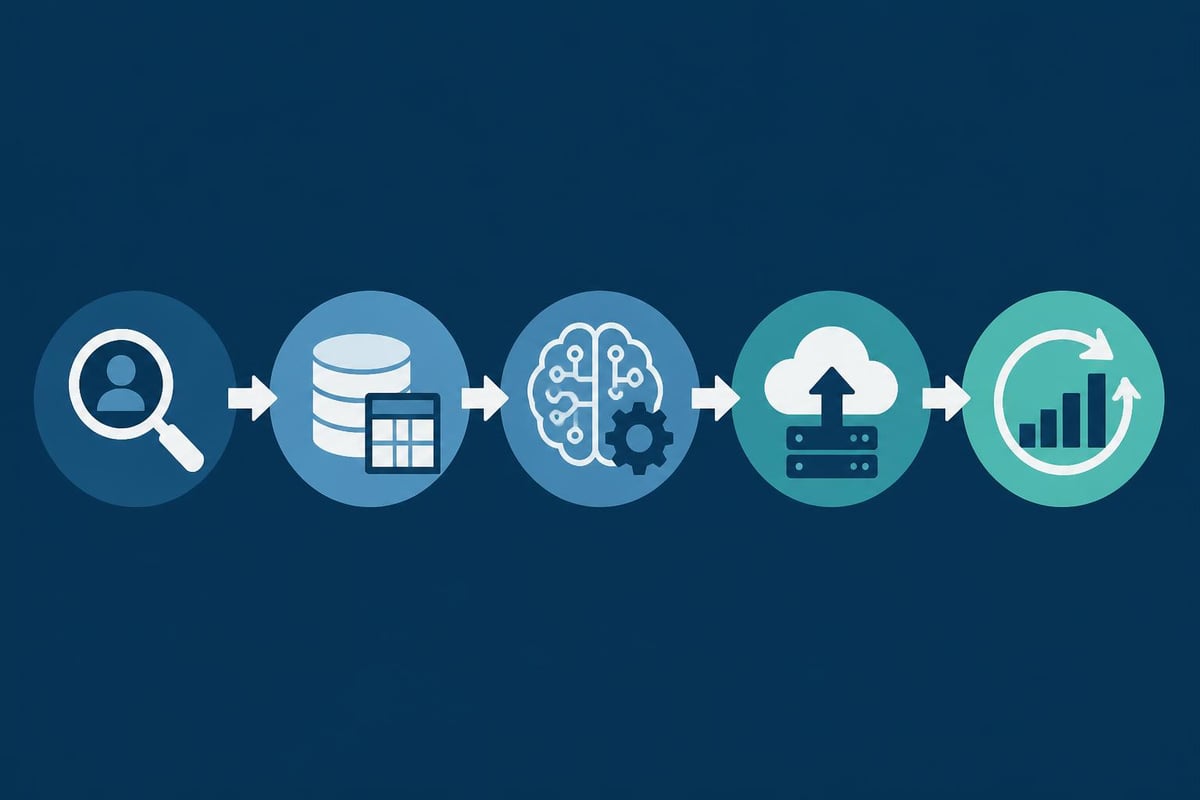
- Problem definition and scoping: Clearly articulating the business problem, success metrics, and constraints
- Data assessment and preparation: Evaluating data quality, availability, and readiness for model training
- Baseline model development: Creating initial models to establish performance benchmarks
- Validation and testing: Assessing model accuracy, bias, and real-world applicability
- Business case refinement: Calculating ROI based on proof-of-concept results
This staged approach minimizes risk while providing empirical evidence for investment decisions. However, organizations must ensure that proof-of-concept success translates into production viability, which often requires different technical considerations.
Data-Centric vs. Model-Centric Approaches
The machine learning field has witnessed a philosophical shift toward data-centric AI, which prioritizes data quality over algorithmic sophistication. Leading consulting companies now emphasize systematic data improvement over endless model tweaking.
Data-centric strategies focus on:
- Systematic data collection and curation
- Consistent labeling protocols and quality control
- Data augmentation and synthetic data generation
- Active learning to identify high-value training examples
This approach often delivers better results than pursuing marginal model improvements. Research on rapid training data creation demonstrates how weak supervision techniques can accelerate the data preparation bottleneck that often constrains machine learning projects.
MLOps and Sustainable Deployment
The gap between experimental models and production systems has historically plagued AI initiatives. Modern machine learning consulting companies address this through MLOps practices that treat models as software products requiring continuous integration, deployment, and monitoring.
Key MLOps components include:
- Version control: Tracking models, data, and code to ensure reproducibility
- Automated testing: Validating model performance across diverse scenarios and edge cases
- Deployment pipelines: Streamlining the path from development to production
- Monitoring and alerting: Detecting model drift, performance degradation, and data quality issues
- Feedback loops: Incorporating production insights into model improvement cycles
Organizations should evaluate whether prospective consulting partners have demonstrated MLOps expertise, as this capability significantly influences long-term project success.
Cost Structures and Investment Considerations
Machine learning consulting companies employ various pricing models that reflect different risk allocations and engagement structures. Understanding these models helps organizations budget appropriately and align incentives with desired outcomes.
Common Pricing Approaches
| Pricing Model | Description | Best For | Considerations |
|---|---|---|---|
| Time and Materials | Hourly or daily rates for consulting resources | Exploratory projects, unclear scope | Variable total cost, potential overruns |
| Fixed Price | Predetermined cost for defined deliverables | Well-defined projects, specific outcomes | Requires detailed scoping, limited flexibility |
| Retainer | Ongoing monthly fee for continuous support | Long-term partnerships, iterative development | Predictable costs, sustained engagement |
| Value-Based | Fees tied to business outcomes or performance metrics | High-confidence projects, measurable ROI | Complex contracting, aligned incentives |
Each model presents trade-offs between cost predictability, flexibility, and risk sharing. Organizations should select pricing structures that match project characteristics and their risk tolerance.
Hidden Costs and Budget Considerations
Beyond consulting fees, machine learning projects incur additional expenses that organizations must anticipate:
- Infrastructure costs: Cloud computing, storage, and specialized hardware like GPUs
- Data acquisition: Purchasing datasets, labeling services, or data cleaning tools
- Software licenses: Commercial machine learning platforms, monitoring tools, or specialized libraries
- Internal resource allocation: Time commitments from subject matter experts and technical staff
- Ongoing maintenance: Model retraining, monitoring, and continuous improvement
A comprehensive budget should account for total cost of ownership over a three-to-five-year horizon, not just initial development expenses.
Emerging Trends Reshaping Consulting Services
The machine learning consulting industry continues evolving as new technologies, methodologies, and business models emerge. Organizations selecting partners should consider how consultancies are adapting to these trends.
Foundation Models and Transfer Learning
Large language models and foundation models have fundamentally changed how machine learning consulting companies approach solution development. Rather than building models from scratch, consultants increasingly fine-tune pre-trained models for specific applications.
This shift reduces development time and data requirements while improving performance across many use cases. However, it also requires new expertise in prompt engineering, model adaptation, and managing relationships with foundation model providers. OpenAI's expansion into consulting services illustrates how model providers themselves are entering the consulting space.
Responsible AI and Ethics Integration
Organizations face increasing scrutiny regarding AI fairness, transparency, and accountability. Leading machine learning consulting companies now integrate responsible AI practices throughout project lifecycles.
Key responsible AI considerations include:
- Bias detection and mitigation in training data and model outputs
- Explainability frameworks that make model decisions interpretable
- Privacy-preserving techniques like differential privacy and federated learning
- Governance structures ensuring human oversight of automated decisions
Consulting partners should demonstrate concrete methodologies for addressing these concerns, not just philosophical commitments to ethical AI.
Democratization and Internal Capability Building
Forward-thinking organizations view consulting engagements as opportunities to build internal AI capabilities rather than creating permanent dependencies. The best machine learning consulting companies prioritize knowledge transfer and enablement.
This approach involves:
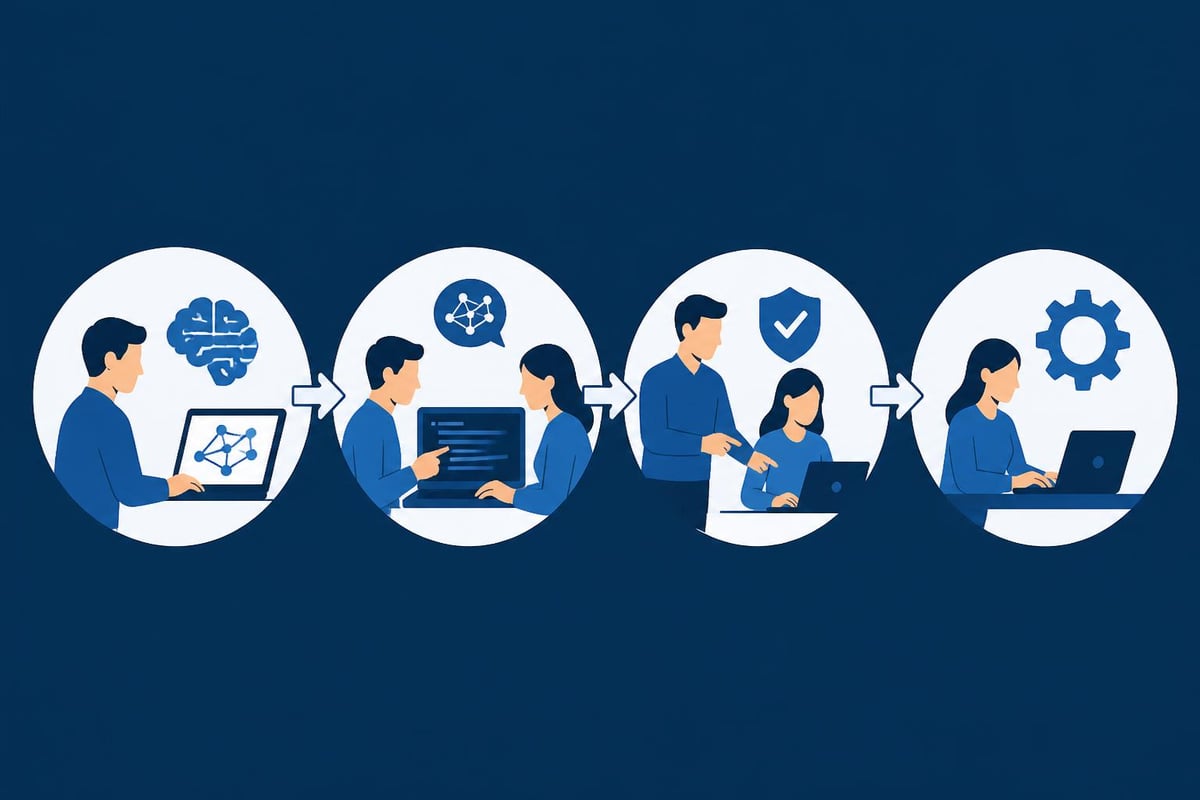
- Embedded training: Consultants work alongside internal teams, transferring skills through collaboration
- Documentation and playbooks: Creating resources that support independent project execution
- Tool selection: Prioritizing accessible platforms that internal teams can operate
- Gradual responsibility transfer: Shifting project ownership from consultants to internal staff over time
Organizations should evaluate whether potential consulting partners demonstrate commitment to building client capabilities or prefer perpetual engagement models.
Measuring Success and ROI
Machine learning consulting companies should be evaluated based on measurable outcomes rather than activity metrics. Establishing clear success criteria before engagement commencement ensures accountability and enables objective assessment.
Technical Performance Metrics
Model performance provides the foundation for evaluating technical success:
- Accuracy metrics: Precision, recall, F1 score, or area under the ROC curve appropriate to the problem
- Business-relevant metrics: Custom measures that directly reflect business objectives
- Latency and throughput: Operational performance in production environments
- Resource efficiency: Computational costs and infrastructure requirements
However, technical metrics alone provide insufficient evaluation frameworks. A highly accurate model that never deploys creates no business value.
Business Impact Measures
Ultimate consulting success must be measured through business outcomes:
- Revenue impact: Increased sales, customer acquisition, or pricing optimization
- Cost reduction: Process automation, efficiency improvements, or waste elimination
- Risk mitigation: Fraud detection, compliance improvements, or error reduction
- Customer experience: Satisfaction scores, retention rates, or engagement metrics
Establishing baseline measurements before project commencement enables rigorous before-and-after comparisons that quantify consulting value.
Building Long-Term AI Capabilities
While individual projects deliver specific outcomes, the most valuable consulting relationships help organizations develop sustainable AI capabilities that extend beyond single engagements.
Strategic Roadmap Development
Rather than pursuing isolated AI projects, organizations should work with machine learning consulting companies to develop comprehensive AI strategies that prioritize initiatives, sequence investments, and build complementary capabilities over time.
A well-constructed AI roadmap addresses:
- Quick wins: High-value, low-complexity projects that build momentum and demonstrate value
- Foundation building: Infrastructure, data, and process improvements that enable future projects
- Transformative initiatives: Complex, high-impact projects that fundamentally reshape operations
- Capability development: Training, hiring, and organizational changes that institutionalize AI competency
This strategic perspective ensures that consulting investments compound over time rather than producing disconnected point solutions.
Talent Development and Retention
Organizations must eventually build internal AI teams to sustain and expand their capabilities. Academic research on consulting for social good highlights how consulting relationships can accelerate organizational learning when structured appropriately.
Effective talent development involves:
- Selective hiring: Recruiting qualified AI professionals with verified credentials and demonstrated expertise
- Structured onboarding: Integrating new team members into existing projects and knowledge bases
- Continuous learning: Supporting professional development through training, conferences, and research time
- Career pathing: Creating advancement opportunities that retain top talent
Organizations struggling to identify qualified AI candidates should consider platforms that provide comprehensive validation and fraud detection to ensure hiring quality.
Risk Mitigation and Common Pitfalls
Machine learning projects carry inherent risks that consulting relationships can either amplify or mitigate. Understanding common failure patterns helps organizations structure engagements that avoid predictable problems.
Technical Risk Factors
Several technical challenges frequently derail machine learning initiatives:
- Data quality issues: Insufficient volume, poor labeling, or systematic biases in training data
- Scope creep: Expanding requirements that delay delivery and inflate costs
- Integration complexity: Difficulties connecting machine learning systems with existing infrastructure
- Performance gaps: Models that work in development but fail in production environments
Mitigating these risks requires rigorous project scoping, realistic timeline estimation, and clear communication between consulting teams and internal stakeholders.
Organizational and Change Management Challenges
Technical excellence alone cannot ensure project success. Organizational factors often determine whether AI initiatives create lasting value:
- Stakeholder alignment: Ensuring executive support and cross-functional buy-in
- Process adaptation: Modifying workflows to incorporate AI-generated insights
- User adoption: Training end users and demonstrating tangible value
- Expectation management: Educating stakeholders about AI capabilities and limitations
Machine learning consulting companies should bring change management expertise alongside technical skills, helping organizations navigate the human dimensions of AI adoption.
Machine learning consulting companies provide essential expertise for organizations pursuing AI transformation, but success requires careful partner selection, realistic expectations, and commitment to building internal capabilities. The most effective engagements balance immediate project delivery with long-term strategic value, ensuring that consulting investments compound over time. Augmnt helps organizations bridge the talent gap by connecting businesses with verified AI professionals through intelligent matching and comprehensive fraud detection, enabling confident hiring decisions that support sustainable AI capability development.