Candidate Matching Software for Staffing Agencies
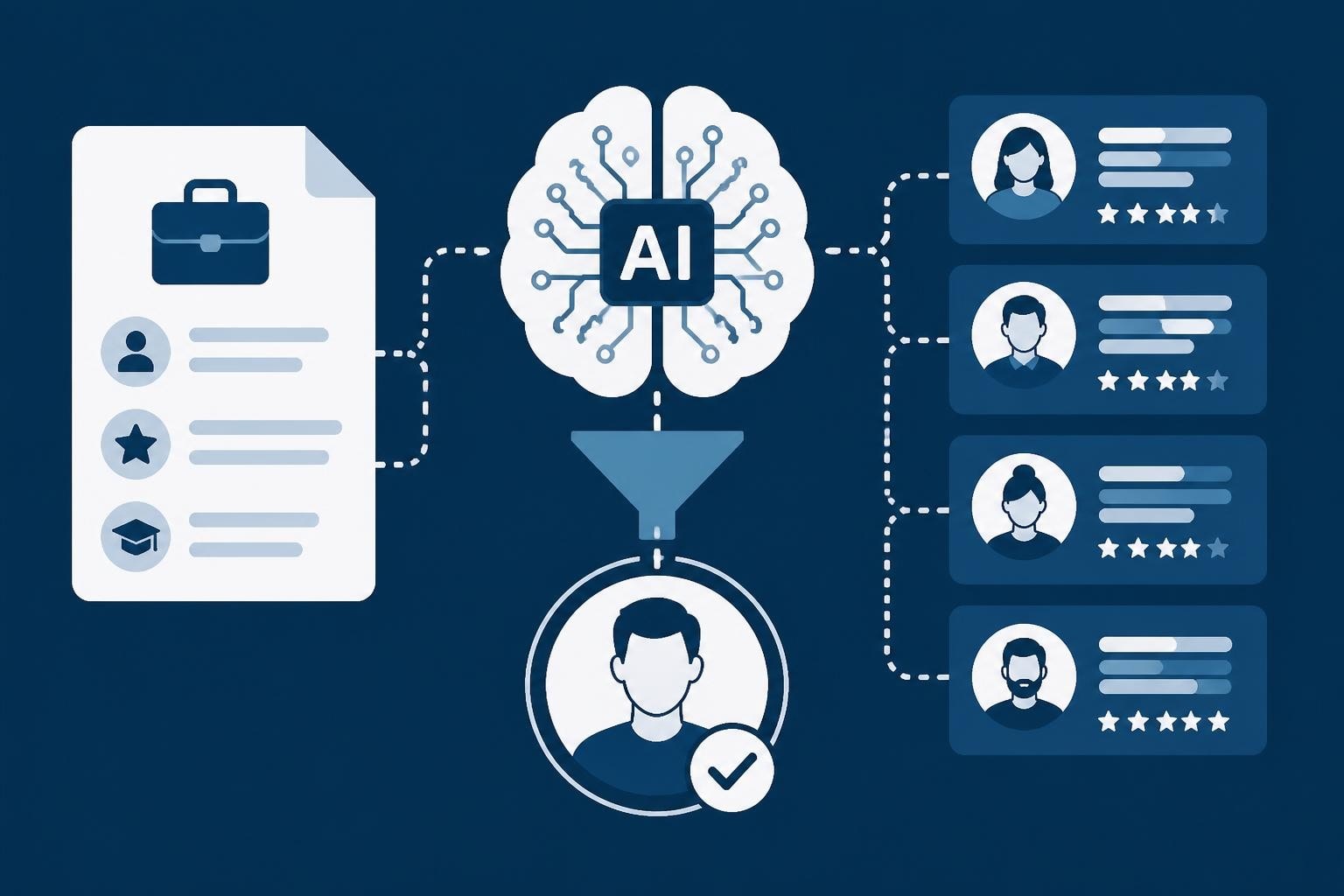
Staffing agencies face mounting pressure to fill positions faster while maintaining placement quality. Traditional manual screening processes consume countless hours as recruiters sift through hundreds of resumes for each opening. Candidate matching software for staffing agencies has emerged as a transformative solution, leveraging artificial intelligence and advanced algorithms to automate the time-intensive work of identifying qualified candidates. This technology analyzes job requirements, candidate profiles, and historical placement data to surface the best matches in seconds rather than days.
The Evolution of Recruitment Technology in Staffing
The staffing industry has undergone a dramatic transformation over the past decade. What began as simple applicant tracking systems has evolved into sophisticated platforms capable of understanding nuanced job requirements and candidate qualifications.
Modern candidate matching software for staffing agencies goes far beyond keyword searches. These platforms employ machine learning models trained on thousands of successful placements to understand which candidate attributes predict job success. They analyze factors ranging from technical skills and certifications to work history patterns and career trajectories.

The shift toward AI in recruitment has accelerated significantly since 2024. Agencies that once relied entirely on recruiter intuition now augment human expertise with data-driven insights. This combination delivers superior results while freeing recruiters to focus on relationship-building and strategic activities.
Key Drivers Behind Technology Adoption
Several market forces have pushed staffing agencies toward automated matching solutions:
- Volume challenges: The average corporate job posting receives 250 applications, making manual review impractical
- Speed expectations: Clients demand candidate presentations within 24-48 hours of posting requirements
- Quality pressures: Placement failures damage agency reputations and client relationships
- Cost constraints: Manual screening processes create unsustainable overhead as agencies scale
- Talent shortages: Competitive markets require faster identification of qualified candidates
These pressures have made candidate matching software for staffing agencies not just a competitive advantage but a business necessity. Agencies operating without these tools struggle to compete on speed and efficiency metrics that clients increasingly prioritize.
Core Capabilities of Modern Matching Platforms
Effective matching software delivers a comprehensive suite of features designed to streamline the entire recruitment workflow. Understanding these capabilities helps agencies evaluate potential solutions and maximize their technology investments.
Intelligent Profile Analysis
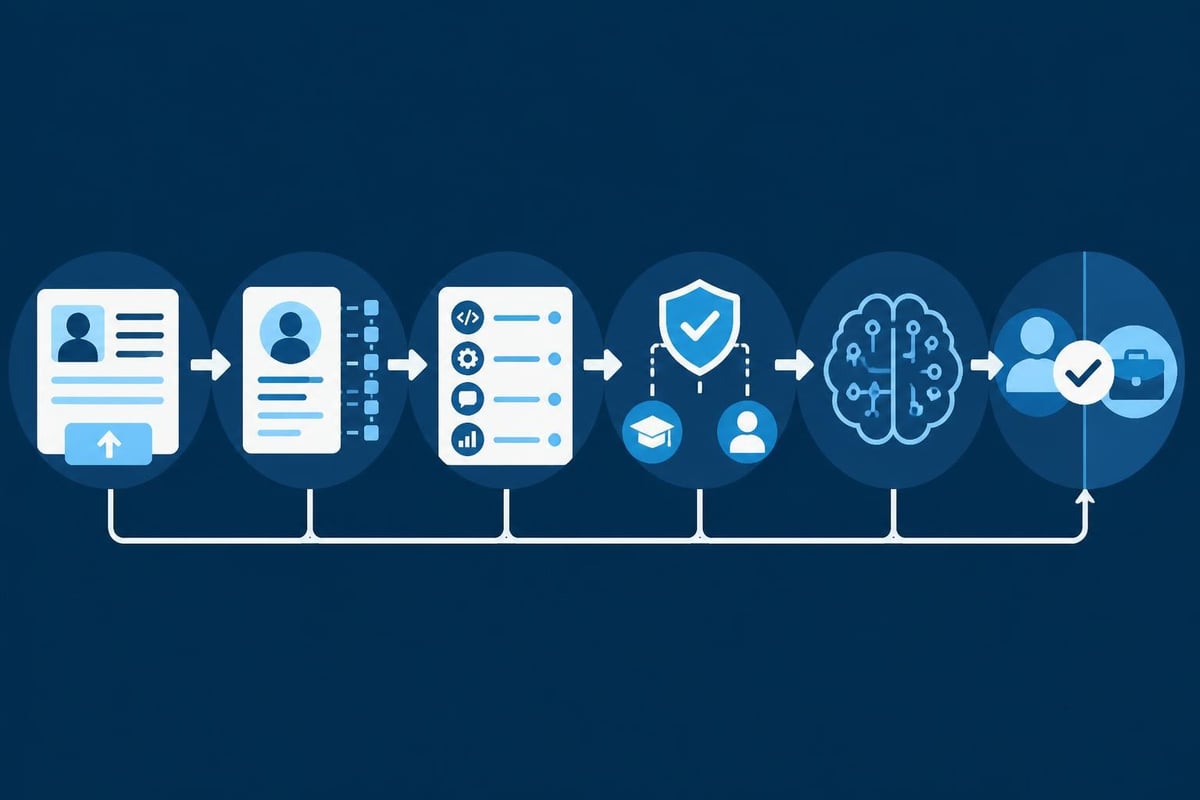
Advanced platforms parse candidate profiles to extract and categorize relevant information automatically. Natural language processing identifies skills, certifications, education credentials, and experience levels without manual data entry. The software creates structured profiles that enable rapid comparison against job requirements.
Resume fraud detection has become increasingly critical as AI-generated deepfakes and impostors proliferate in the hiring landscape. Leading platforms verify claimed credentials, detect inconsistencies in employment timelines, and flag suspicious patterns that may indicate fraudulent applications.
Multi-Dimensional Matching Algorithms
The most sophisticated candidate matching software for staffing agencies evaluates candidates across multiple dimensions simultaneously:
| Matching Dimension | What It Evaluates | Impact on Placement Quality |
|---|---|---|
| Technical Skills | Hard skills, tools, technologies, certifications | High - Essential for role competency |
| Experience Level | Years in role, seniority, project complexity | High - Determines readiness |
| Industry Background | Sector experience, domain knowledge | Medium - Varies by position |
| Cultural Alignment | Work style preferences, values, team dynamics | Medium - Affects retention |
| Geographic Factors | Location, remote preferences, relocation willingness | Low - Often binary qualifier |
| Availability | Start date, contract preferences, hourly rates | Low - Qualifying factor |
This multidimensional approach produces matches that satisfy both obvious requirements and subtle fit factors that influence long-term placement success.
Continuous Learning Systems
Machine learning capabilities enable platforms to improve match quality over time. The software analyzes which placements succeed and which fail, identifying patterns that predict outcomes. These insights refine matching algorithms automatically, creating a feedback loop that enhances performance with every placement.
Research on AI-assisted recruitment demonstrates measurable improvements in hiring efficiency and candidate selection quality when platforms incorporate learning mechanisms. Agencies benefit from increasingly accurate matches without manual algorithm adjustments.
Implementation Strategies for Maximum ROI
Successfully deploying candidate matching software requires thoughtful planning and execution. Agencies that treat implementation as a technical project rather than a business transformation often fail to realize the full value of their investment.
Data Quality Foundation
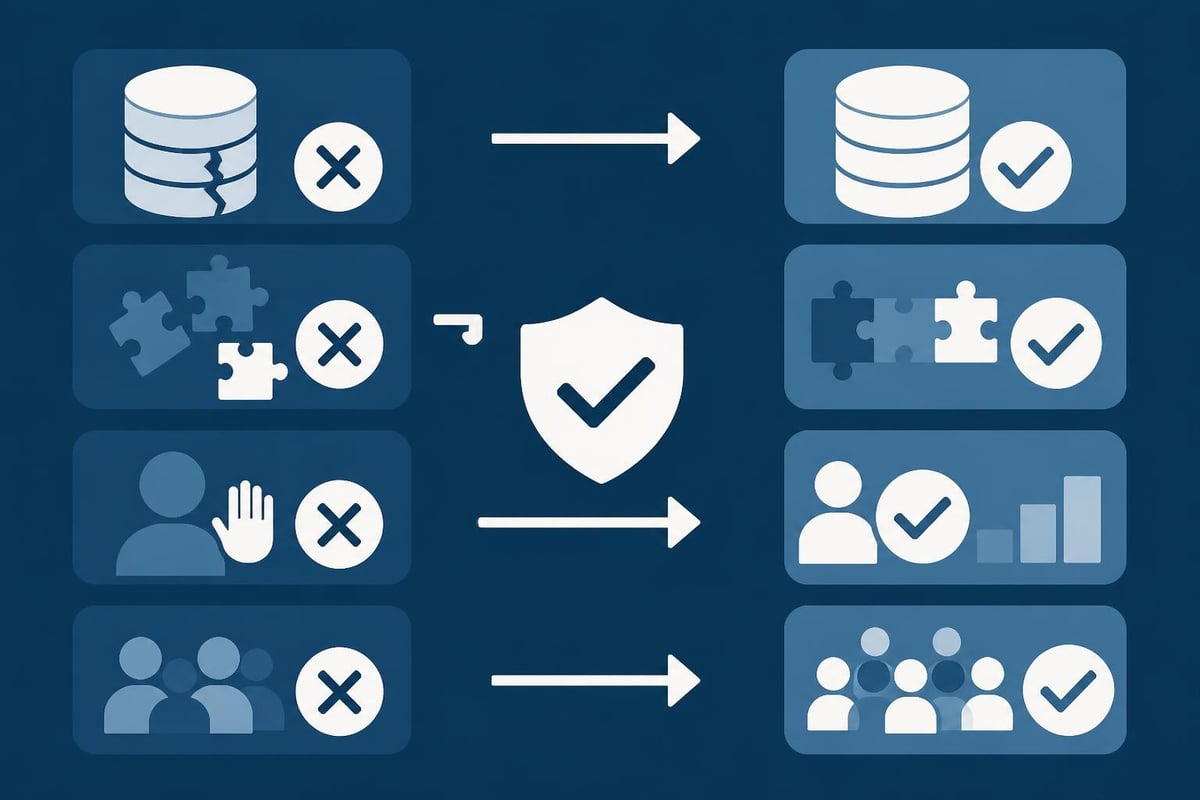
Matching algorithms are only as good as the data they analyze. Before implementation, agencies should:
- Audit existing candidate databases for completeness, accuracy, and consistency
- Standardize job description formats to ensure the software can parse requirements reliably
- Establish data governance policies defining how information is collected and maintained
- Cleanse historical records to remove duplicates, outdated profiles, and incomplete entries
- Create skill taxonomies that map industry terminology to standard competency frameworks
This foundational work prevents the "garbage in, garbage out" problem that undermines many technology initiatives. Clean, structured data enables matching algorithms to perform optimally from day one.
Integration With Existing Systems
Candidate matching software for staffing agencies delivers maximum value when integrated with other recruitment technologies. Seamless connections between platforms eliminate redundant data entry and enable information flow across the entire tech stack.
Critical integration points include:
- Applicant tracking systems (ATS) for centralized candidate management
- Customer relationship management (CRM) platforms for client communication
- Job board aggregators for automated candidate sourcing
- Background check services for verification workflows
- Payroll and onboarding systems for placement processing
Many agencies find that ATS integrations serve as the cornerstone of their recruitment technology ecosystem. These connections ensure candidate data flows smoothly between matching, tracking, and placement management functions.
Change Management and Recruiter Adoption
Technology only creates value when people use it effectively. Successful implementations prioritize user adoption through:
Comprehensive training programs that demonstrate how the software enhances rather than replaces recruiter expertise. Many recruiters initially resist automated matching, fearing it diminishes their role. Training should emphasize how the technology handles routine screening while freeing recruiters for high-value activities like candidate coaching and client relationship building.
Gradual rollout strategies that introduce features incrementally rather than overwhelming users with complex functionality. Start with basic matching capabilities, demonstrate value, then expand to advanced features like predictive analytics and automated candidate engagement.
Performance metrics alignment that rewards recruiters for leveraging the software effectively. If compensation structures continue to emphasize activity metrics like calls made or resumes reviewed, recruiters will resist tools that reduce these activities even when they improve outcomes.
Advanced Features Driving Competitive Advantage
While basic matching capabilities have become table stakes, leading platforms offer advanced features that separate top-performing agencies from the competition.
Predictive Success Modeling
Next-generation candidate matching software for staffing agencies predicts not just whether candidates meet requirements but how likely they are to succeed in specific roles. These models analyze historical placement data to identify subtle patterns correlating with long-term success.
For example, the software might discover that candidates with specific career progression patterns outperform peers with similar skills but different trajectories. Or that certain certification combinations predict success better than others. These insights enable recruiters to prioritize candidates with the highest probability of placement success and client satisfaction.
Bias Detection and Mitigation
Algorithmic fairness has become a critical concern as AI recruiting tools face scrutiny for perpetuating historical biases. Leading platforms include features that:
- Monitor matching decisions for demographic disparities
- Identify requirements that may exclude qualified diverse candidates unnecessarily
- Flag language in job descriptions associated with bias
- Provide alternative candidate slates to broaden consideration
These capabilities help agencies meet diversity goals while reducing legal risks associated with discriminatory hiring practices.
Automated Candidate Engagement
Modern platforms don't just identify matches; they initiate and manage candidate communications automatically. Features include:
- Personalized outreach messages tailored to each candidate's background and the specific opportunity
- Automated interview scheduling that coordinates calendars without recruiter intervention
- Drip campaigns that nurture passive candidates over time
- Chatbot interactions that answer common candidate questions 24/7
This automation ensures no qualified candidate falls through the cracks due to delayed follow-up or recruiter bandwidth constraints.
Measuring Success and Optimizing Performance
Implementing candidate matching software represents a significant investment. Agencies need clear metrics to assess ROI and identify optimization opportunities.
Primary Performance Indicators
| Metric | What It Measures | Target Improvement |
|---|---|---|
| Time to shortlist | Hours from job posting to candidate presentation | 50-70% reduction |
| Match quality score | Percentage of submitted candidates that clients interview | 30-50% increase |
| Placement rate | Percentage of submitted candidates ultimately hired | 20-40% increase |
| Cost per placement | Total recruiting costs divided by successful placements | 25-35% reduction |
| Recruiter productivity | Placements per recruiter per quarter | 40-60% increase |
| Client satisfaction | Net promoter score from client surveys | 15-25 point increase |
Benchmarking against industry standards provides context for performance metrics. The average staffing agency fills positions in 42 days and submits 6.2 candidates per placement. Leading agencies using advanced matching software reduce time to fill by half while submitting fewer, higher-quality candidates.
Continuous Improvement Frameworks
Top-performing agencies treat their matching software as an evolving asset requiring ongoing optimization. This involves:
Regular algorithm tuning based on placement outcomes. Most platforms allow administrators to adjust matching weights, emphasize specific criteria, or modify scoring models. Agencies should review these settings quarterly and adjust based on recent performance data.
Feedback loop establishment between recruiters, clients, and the matching system. When placements succeed or fail, that information should flow back to the algorithm to refine future matches. Similarly, recruiter feedback about match quality helps identify areas where the software needs improvement.
A/B testing different matching approaches for similar roles. By presenting different candidate slates for comparable positions and tracking outcomes, agencies can identify which matching strategies produce superior results.
Addressing Common Implementation Challenges
Despite clear benefits, many agencies encounter obstacles when deploying candidate matching software for staffing agencies. Understanding these challenges and their solutions improves implementation success rates.
Candidate Pool Limitations
Matching algorithms can only surface candidates that exist in the database. Agencies with limited candidate pools may see marginal improvements until they expand their talent networks. Solutions include:
- Automated sourcing that continuously identifies and adds potential candidates from job boards, social networks, and professional platforms
- Passive candidate cultivation through content marketing and talent community building
- Partnership networks that provide access to candidate databases from complementary agencies
The AI in recruiting landscape increasingly emphasizes continuous candidate pipeline development rather than reactive sourcing for specific openings.
Balancing Automation With Human Judgment
While candidate matching software dramatically improves efficiency, complete automation often produces suboptimal outcomes. The most successful implementations leverage technology to augment rather than replace recruiter expertise.
Hybrid workflows where algorithms handle initial screening but recruiters make final decisions typically outperform either pure automation or pure manual processes. This approach combines computational speed and consistency with human intuition about cultural fit and subtle candidate qualities.
Some agencies worry that AI is making hiring worse by creating impersonal experiences that frustrate candidates. Platforms like Augmnt ATS address this concern through Verified Matching and Candidate Fraud Detection for Modern Hiring, combining AI efficiency with human insight to ensure only qualified, fraud-free candidates reach employers while maintaining positive candidate experiences.
Integration Complexity
Many staffing agencies operate complex technology stacks assembled over years. Adding new matching software can create integration challenges that delay implementation and reduce value realization.
Successful agencies prioritize:
- API-first platforms that support flexible integrations with diverse systems
- Implementation partners with expertise in staffing agency technology ecosystems
- Phased rollouts that start with standalone functionality before tackling complex integrations
- Vendor collaboration leveraging software provider implementation teams who have solved similar challenges
Planning for a 6-9 month implementation timeline for complex deployments prevents rushed rollouts that compromise adoption and performance.
Future Trends Reshaping Candidate Matching
The candidate matching landscape continues to evolve rapidly as new technologies and methodologies emerge. Forward-thinking agencies monitor these trends to maintain competitive advantages.
Large Language Model Integration
Recent research on Large Language Models for candidate assessment demonstrates how advanced AI can understand nuanced job requirements and candidate qualifications in ways previous technologies could not. These models analyze unstructured information like cover letters, portfolio descriptions, and recommendation letters to extract insights traditional parsing misses.
Expect matching software to increasingly leverage these capabilities, producing matches based on deeper understanding of both candidate potential and role requirements.
Real-Time Market Intelligence
Next-generation platforms will incorporate live market data to inform matching decisions. This includes:
- Current compensation benchmarks for specific skills and locations
- Emerging skill demands signaling market shifts
- Competitive intelligence about which companies are hiring similar profiles
- Economic indicators affecting hiring velocity in specific industries
This market awareness enables more strategic candidate-client matching that considers broader context beyond simple requirement fulfillment.
Skill-Based Rather Than Credential-Based Matching
The industry is shifting from emphasizing degrees and job titles toward focusing on demonstrable skills and competencies. Candidate matching software for staffing agencies increasingly evaluates candidates based on verified capabilities rather than credentials that may not predict job performance.
This trend aligns with broader labor market changes as alternative education pathways and skills-based hiring gain prominence. Agencies leveraging skill-focused matching access broader talent pools and improve placement quality.
As businesses adapt to these changes, many recognize they need support navigating the evolving landscape. Resources like hiring manager guides help organizations understand how to work effectively with modern recruitment technologies and processes.
Enhanced Candidate Experience Features
Future matching platforms will prioritize candidate experience alongside client service. Features likely to emerge include:
- Transparent matching explanations showing candidates why they were or weren't selected for opportunities
- Proactive career guidance suggesting skills to develop or certifications to pursue based on market demand
- Personalized job alerts using sophisticated matching to surface truly relevant opportunities
- Feedback loops providing candidates with closure and actionable insights after unsuccessful applications
These enhancements address candidate frustrations with opaque recruitment processes while helping agencies build stronger talent communities.
Selecting the Right Platform for Your Agency
With dozens of candidate matching software options available, choosing the right platform requires careful evaluation. Different solutions serve different agency sizes, specializations, and strategic priorities.
Critical Evaluation Criteria
When assessing platforms, prioritize these factors:
Matching accuracy for your specific verticals. General-purpose platforms may underperform specialized solutions for niche industries like healthcare, IT, or engineering. Request case studies from agencies serving similar markets.
Scalability to support growth plans. A platform perfect for 20 recruiters may buckle under the load when your agency reaches 100. Understand performance at various scales and pricing structures as volume increases.
Vendor stability and product roadmap. The recruitment technology landscape features frequent acquisitions and consolidations. Choose vendors with strong financial backing and clear long-term vision.
Implementation support and ongoing training. Software capabilities matter less than your team's ability to use them effectively. Evaluate vendor support quality, documentation depth, and training resources.
Build vs. Buy Considerations
Some large staffing agencies consider building proprietary matching systems rather than licensing commercial platforms. This approach offers customization advantages but requires substantial investment.
Custom development makes sense when:
- Your matching requirements are highly specialized and poorly served by existing platforms
- You possess in-house data science and engineering talent to build and maintain the system
- Competitive advantage from matching technology justifies the investment
- You plan to potentially license your technology to other agencies
For most agencies, commercial platforms deliver faster time to value, lower risk, and access to continuously evolving capabilities without maintaining development teams.
Candidate matching software for staffing agencies has evolved from a nice-to-have efficiency tool into a competitive necessity that fundamentally reshapes how agencies operate. The combination of intelligent automation, fraud detection, and data-driven insights enables recruiters to work smarter while delivering superior results for clients and candidates alike. Augmnt provides an intelligent marketplace that connects businesses with verified AI professionals, leveraging both AI and human insight to ensure fraud-free, qualified candidate matches. Experience how comprehensive candidate validation and streamlined recruitment processes can transform your hiring outcomes.