
Biggest IT Staffing Firms: Industry Leaders in 2026
The information technology staffing industry has evolved into a multi-billion-dollar sector that connects businesses with critical technical talent. As companies accelerate digital transformation initiatives and face persistent skill shortages, understanding which firms dominate this landscape becomes essential for strategic hiring decisions. The biggest IT staffing firms not only provide access to vast talent networks but also offer sophisticated matching capabilities, industry expertise, and comprehensive workforce solutions that smaller agencies cannot match.
Market Leaders Shaping the IT Staffing Landscape
The IT staffing sector has consolidated significantly over recent years, with a handful of major players controlling substantial market share. According to industry analysis of the U.S. IT staffing market, the sector reached approximately $58.3 billion in 2023 and continues expanding as enterprises prioritize technology investments.
TEKsystems: Enterprise-Scale Technology Solutions
TEKsystems operates as one of the largest IT staffing firms globally, with operations spanning North America, Europe, and Asia. The firm specializes in placing professionals across infrastructure, application development, data analytics, and cybersecurity domains.
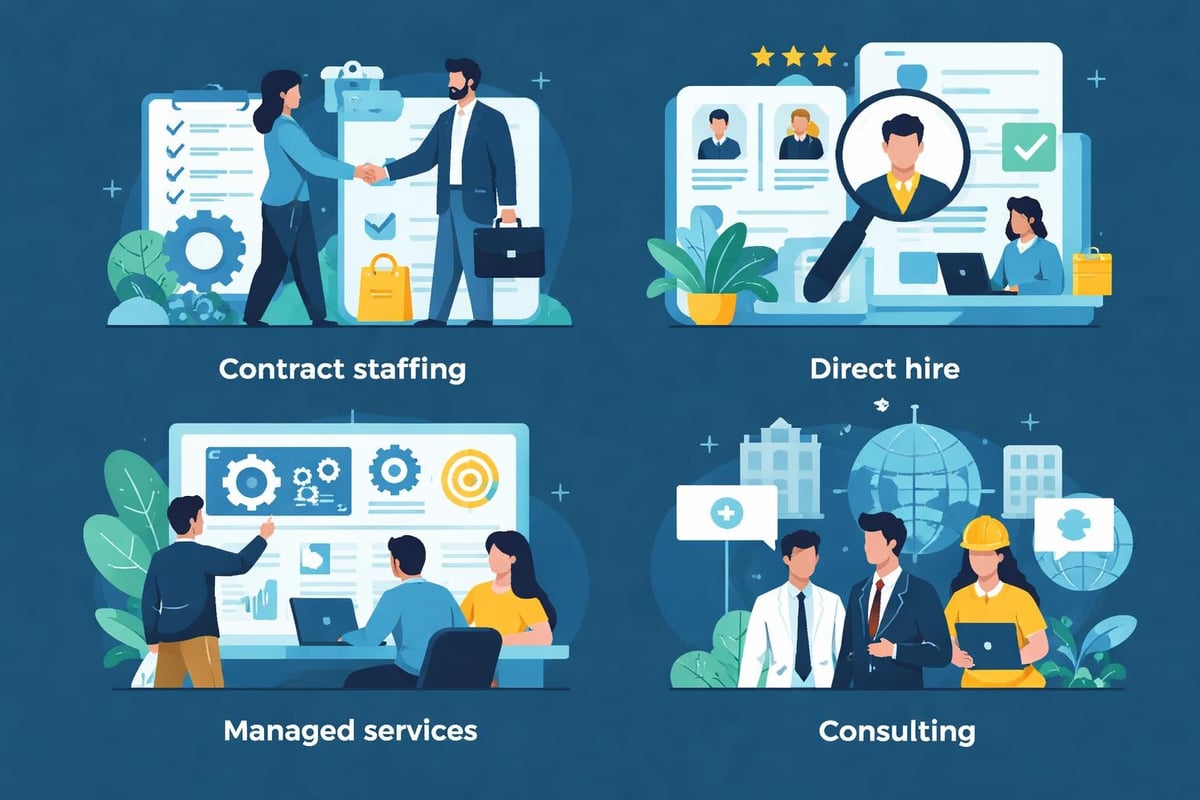
Their service portfolio includes:
- Contract staffing for project-based technology initiatives
- Direct hire placement for permanent positions
- Managed services programs for large-scale workforce management
- IT consulting and solution delivery
TEKsystems distinguishes itself through vertical industry specialization, maintaining dedicated teams for healthcare, financial services, manufacturing, and government sectors. This focused approach enables deeper understanding of regulatory requirements and technical specifications unique to each industry.
ASGN Incorporated: Diversified Talent Solutions
ASGN Incorporated represents a diversified holding company that operates multiple IT staffing brands under its umbrella. Through acquisitions and organic growth, ASGN has positioned itself among the biggest IT staffing firms in North America.
The company's operating segments include:
Commercial Segment: Delivers IT staffing through brands like Apex Systems and ECS, focusing on contract and contract-to-hire placements across technology disciplines.
Federal Government Segment: Provides specialized staffing and solutions to federal agencies requiring security clearances and compliance expertise.
Consulting Segment: Offers higher-level strategic consulting services beyond traditional staffing arrangements.
This multi-brand strategy allows ASGN to serve different market segments while maintaining specialized expertise within each division. Their scale provides access to comprehensive candidate databases and sophisticated matching technologies.
Specialized Firms with Technical Depth
While the largest firms compete on breadth and scale, several specialized organizations have established themselves among the biggest IT staffing firms through technical expertise and niche positioning.
Insight Global: Rapid Growth Through Service Excellence
Insight Global has achieved remarkable growth since its founding, becoming recognized as one of the fastest-growing staffing firms in America. The company maintains a generalist approach across IT, accounting, finance, and engineering staffing while investing heavily in recruiter training and client relationship management.
| Service Area | Specialization | Typical Engagement |
|---|---|---|
| Application Development | Full-stack developers, mobile engineers | 6-12 month contracts |
| Infrastructure | Cloud architects, network engineers | 3-18 month contracts |
| Data & Analytics | Data scientists, BI analysts | 6-12 month contracts |
| Cybersecurity | Security analysts, penetration testers | 3-12 month contracts |
Their success stems from a consultative sales approach where recruiters develop deep understanding of client technical environments and cultural requirements before presenting candidates.
Randstad Technologies: Global Reach with Local Expertise
As part of the Randstad global network, Randstad Technologies leverages international infrastructure while maintaining local market expertise. This combination positions them among the biggest IT staffing firms for multinational corporations requiring consistent service delivery across geographies.
Randstad Technologies excels in several key areas:
- Cross-border staffing coordination for global technology projects
- Compliance management across multiple regulatory jurisdictions
- Workforce analytics providing insights into hiring trends and market compensation
- Diversity sourcing initiatives addressing inclusion requirements
Their global candidate database enables rapid sourcing for specialized skills that may be scarce in specific regional markets.
Industry Trends Reshaping IT Staffing
The biggest IT staffing firms continuously adapt their service models to address evolving workforce dynamics and technological change. Several significant trends are transforming how these organizations operate in 2026.
Flexible Talent Models Gain Prominence
Traditional full-time employment continues declining as a percentage of total IT workforce arrangements. Current IT staffing trends indicate accelerating adoption of contract, project-based, and fractional arrangements that provide enterprises with greater flexibility.
This shift benefits both employers and technical professionals. Companies gain ability to scale teams rapidly in response to project demands without long-term overhead commitments. Professionals enjoy autonomy to select projects aligned with their skills and interests while potentially commanding premium compensation rates.
The biggest IT staffing firms have responded by developing sophisticated engagement models that accommodate these preferences. Platforms now offer payrolling services, benefits portability, and career development resources that make contract work more attractive to high-caliber candidates.

Technology-Enabled Matching Processes
Leading staffing firms increasingly deploy artificial intelligence and machine learning to improve candidate matching accuracy. These technologies analyze job requirements, candidate skills, work history, and cultural preferences to identify optimal fits more efficiently than manual screening alone.
However, technology presents both opportunities and risks in recruitment. While AI can accelerate candidate identification and reduce unconscious bias when properly implemented, it also creates new vulnerabilities around resume fraud and credential misrepresentation. Progressive firms now incorporate comprehensive candidate validation including resume fraud detection and skill verification to maintain hiring quality while leveraging automation benefits.
Cybersecurity Talent Shortage Intensifies
Among all technical disciplines, cybersecurity professionals remain the most challenging to source and retain. The biggest IT staffing firms report unprecedented demand for security engineers, penetration testers, compliance specialists, and chief information security officers as organizations respond to escalating cyber threats.
This talent shortage has created several market dynamics:
- Compensation escalation significantly outpacing other IT disciplines
- Credential inflation as candidates pursue certifications to differentiate themselves
- Remote work prevalence enabling access to global talent pools
- Retention challenges as professionals receive frequent solicitations
- Training investments by firms developing their own certification programs
Staffing firms addressing this shortage develop specialized cybersecurity recruitment teams with technical backgrounds enabling meaningful assessment of candidate capabilities beyond credential verification.
Regional Market Characteristics
The IT staffing industry exhibits significant regional variation based on local economic conditions, talent concentrations, and industry clusters. Understanding these geographic nuances helps explain how the biggest IT staffing firms structure their operations.
Technology Hub Concentration
Major metropolitan areas with established technology sectors generate disproportionate staffing activity. San Francisco, Seattle, Austin, Boston, and New York collectively represent substantial portions of total IT staffing revenue.
| Metro Area | Primary Specializations | Typical Rate Premium |
|---|---|---|
| San Francisco Bay Area | Cloud architecture, AI/ML, fintech | 35-50% above national average |
| Seattle | Cloud infrastructure, e-commerce platforms | 25-35% above national average |
| Austin | Software development, semiconductor | 15-25% above national average |
| Boston | Healthcare IT, robotics, biotech | 20-30% above national average |
| New York | Financial services technology, digital media | 30-40% above national average |
These concentrations create competitive recruiting environments where the biggest IT staffing firms maintain substantial local presence and specialized industry knowledge.
Emerging Secondary Markets
Beyond traditional technology hubs, secondary markets are experiencing rapid growth as companies pursue geographic diversification strategies and remote work enables talent dispersion. Cities like Denver, Charlotte, Nashville, and Phoenix have developed thriving technology sectors supported by favorable business climates and quality of life factors attracting professionals.
Staffing firms expanding into these markets benefit from less saturated candidate pools and lower compensation benchmarks while serving clients pursuing cost optimization alongside talent access.
Service Differentiation Strategies
As competition intensifies among the biggest IT staffing firms, differentiation becomes critical for maintaining market position and premium pricing. Leading firms employ various strategies to distinguish their offerings beyond basic candidate placement.
Managed Service Programs
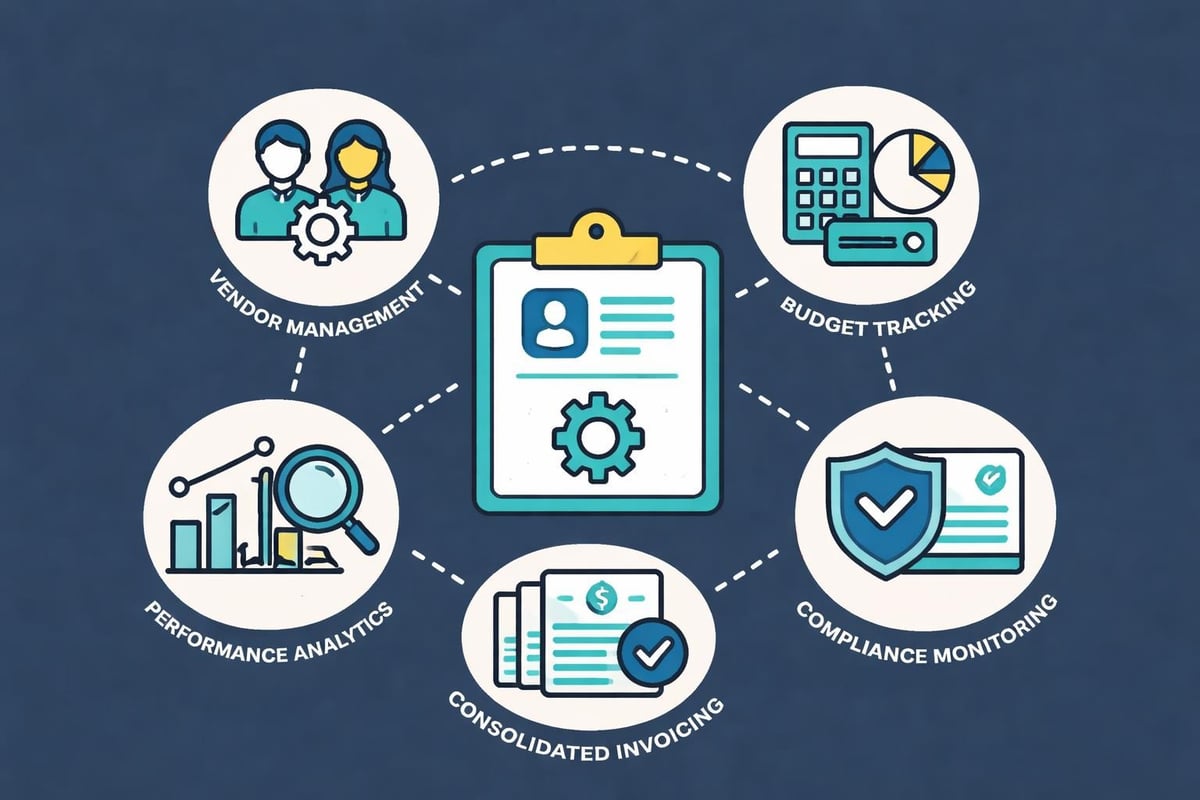
Large enterprises often consolidate their contingent workforce management with a single provider operating as a managed service provider (MSP). This arrangement shifts administrative burden from internal teams to the staffing firm while providing centralized visibility into contractor populations.
MSP services typically include:
- Vendor management coordinating multiple staffing suppliers
- Budget tracking and cost optimization
- Compliance monitoring ensuring regulatory adherence
- Performance analytics measuring contractor productivity
- Consolidated invoicing simplifying accounts payable
The biggest IT staffing firms compete aggressively for MSP relationships because they generate recurring revenue streams and create barriers to competitor entry once established.
Employer of Record Services
Global expansion creates complexity around international employment regulations, taxation, and benefits administration. Employer of record (EOR) services address these challenges by legally employing workers on behalf of client companies, managing all compliance obligations while the client directs day-to-day work activities.
This service category has experienced significant growth as remote work normalizes and companies access talent regardless of geographic boundaries. The biggest IT staffing firms leverage existing international infrastructure to deliver EOR capabilities that smaller competitors cannot economically replicate.
Quality Assurance and Candidate Vetting
Maintaining placement quality represents a persistent challenge across the staffing industry. As the IT and engineering staffing industry evolves, leading firms invest significantly in candidate assessment methodologies that verify skills and screen for fraudulent credentials.
Technical Assessment Approaches
The biggest IT staffing firms employ multiple verification layers before presenting candidates to clients:
Skills Testing: Candidates complete practical exercises demonstrating proficiency in relevant technologies. Cloud engineers provision infrastructure, developers write code solving specific problems, and data analysts interpret datasets.
Behavioral Interviewing: Trained recruiters conduct structured interviews assessing problem-solving approaches, communication effectiveness, and cultural alignment beyond pure technical capabilities.
Reference Verification: Thorough background checks confirm employment history, educational credentials, and professional achievements claimed on resumes.
Work Sample Review: For senior positions, candidates present portfolios demonstrating previous project contributions and technical decision-making.
These comprehensive vetting processes reduce mis-hire risk while building client confidence in presented candidates. Firms that maintain rigorous standards command premium fees justified by reduced hiring friction and improved retention outcomes.
Addressing Credential Fraud
The proliferation of remote hiring has unfortunately enabled increased resume fraud and credential misrepresentation. Sophisticated candidates fabricate employment histories, exaggerate technical skills, and claim nonexistent certifications with growing frequency.
Progressive staffing firms combat this trend through enhanced verification technologies including automated background screening, certification validation with issuing organizations, and skills assessment platforms measuring actual competency rather than self-reported proficiency. This investment in quality assurance protects both client relationships and market reputation.
Competitive Positioning for 2026 and Beyond
The biggest IT staffing firms continue consolidating market share through a combination of organic growth and strategic acquisitions. However, emerging competitors leveraging technology-enabled platforms and specialized expertise create ongoing competitive pressure.
Traditional Firms Adapting to Disruption
Established staffing organizations face challenges from marketplace platforms that directly connect companies with independent contractors, potentially disintermediating traditional agency relationships. Recent market trends suggest these platforms will capture increasing share of commodity staffing arrangements where differentiation relies primarily on speed and cost rather than specialized expertise.
In response, the biggest IT staffing firms emphasize value-added services including workforce planning consultation, skills development programs, and embedded recruiting teams that build deeper client relationships resistant to platform disruption.
Specialization versus Generalization
A fundamental strategic choice facing staffing firms involves breadth versus depth in service offerings. Some organizations pursue comprehensive capabilities spanning all technology disciplines and engagement models, while others concentrate on specific niches where specialized knowledge creates competitive advantage.
Neither approach guarantees success. Generalist firms benefit from diversification reducing dependence on cyclical technology segments, while specialists command premium pricing through demonstrated expertise in high-value domains. The biggest IT staffing firms often pursue hybrid strategies maintaining broad capabilities while developing centers of excellence in selected specializations.
Financial Performance and Market Outlook
The IT staffing sector demonstrates resilience through economic cycles as technology investments remain prioritized even during broader downturns. Global IT staffing market analysis projects continued growth driven by digital transformation initiatives, cloud migration projects, and emerging technology adoption including artificial intelligence and quantum computing.
Revenue Growth Drivers
Several factors contribute to positive industry outlook:
Skills Gap Persistence: Universities cannot produce technical graduates at rates matching industry demand, ensuring continued reliance on staffing firms for talent access.
Project-Based Work Normalization: Organizations increasingly structure technology initiatives as discrete projects rather than ongoing operations, favoring flexible staffing approaches.
Regulatory Complexity: Compliance requirements around data privacy, security, and employment classification create value for staffing firms managing these obligations.
Globalization: Cross-border technology projects require coordination capabilities that the biggest IT staffing firms provide through international networks.
These tailwinds support premium valuations for publicly traded staffing companies and attract ongoing private equity investment in the sector.
Margin Pressure Considerations
Despite favorable demand conditions, profitability faces headwinds from several sources. Candidate scarcity enables technical professionals to command higher compensation, compressing margins when bill rates cannot increase proportionally. Digital platforms reduce search friction, making candidate switching easier and shortening average placement durations.
The biggest IT staffing firms address margin pressure through operational efficiency initiatives, technology investments reducing per-placement costs, and service mix shifts toward higher-margin offerings like managed services and consulting.
The IT staffing industry continues evolving as workforce preferences shift, technology enables new engagement models, and demand for specialized technical skills intensifies. While the biggest IT staffing firms maintain advantages in scale, candidate databases, and comprehensive service portfolios, success ultimately depends on matching quality and client relationship depth rather than size alone. For organizations seeking verified AI professionals without the complexity of traditional staffing arrangements, Augmnt offers an intelligent marketplace that combines technology-enabled matching with rigorous candidate validation, ensuring businesses connect efficiently with qualified, fraud-free technical talent.