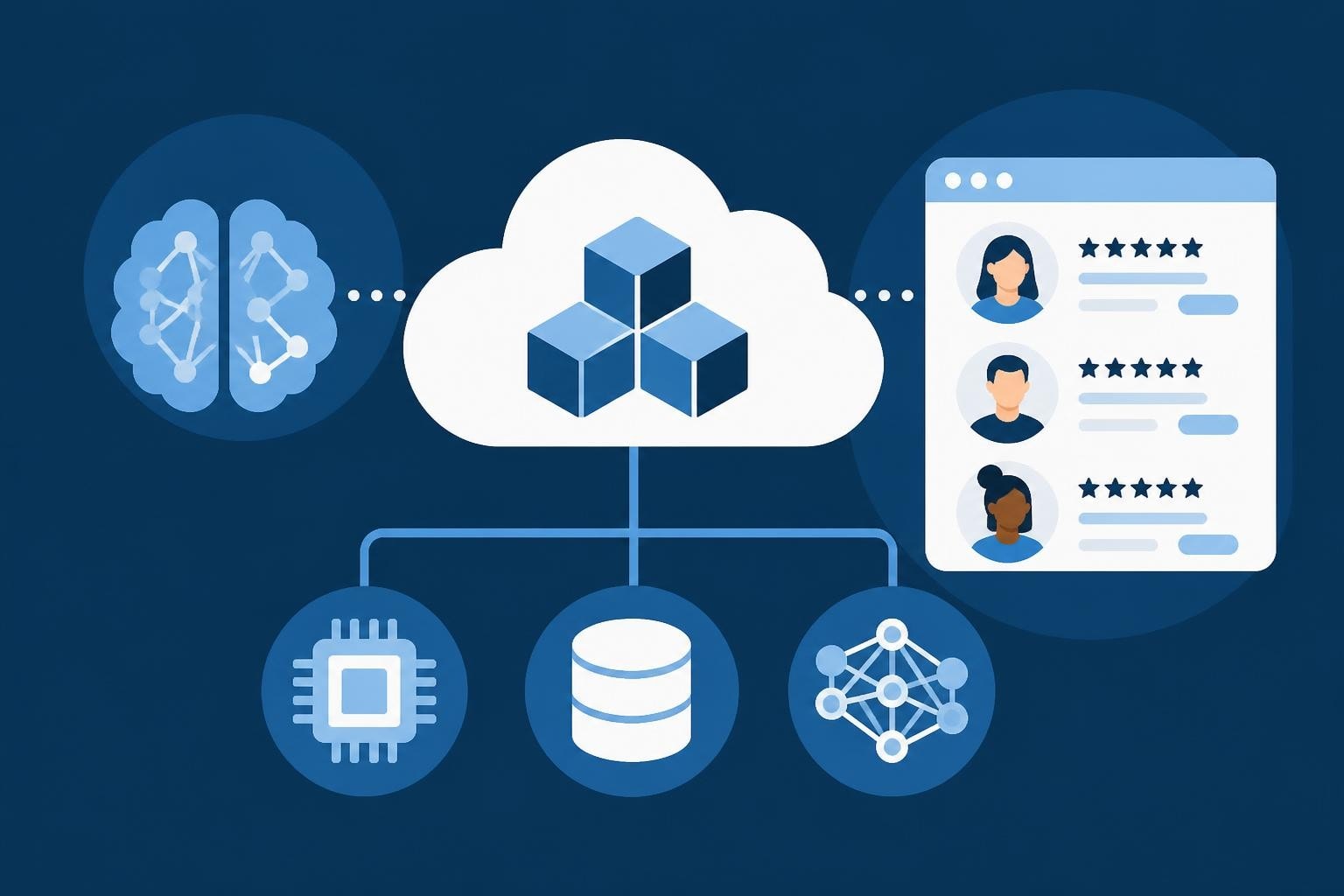
AWS: Building Scalable Infrastructure for AI Talent
Amazon Web Services has fundamentally transformed how businesses build and scale their technology infrastructure. For companies operating in the AI and recruitment space, aws provides the foundational tools necessary to handle massive data processing, maintain security standards, and deliver seamless user experiences. Understanding how to leverage these cloud services effectively can mean the difference between a platform that struggles under load and one that scales gracefully with demand.
Understanding AWS Core Infrastructure Components
The aws ecosystem comprises hundreds of services, but several core components form the backbone of most applications. Compute services like EC2 provide virtual servers that can be configured to match specific workload requirements. Storage solutions such as Amazon S3 offer virtually unlimited capacity for documents, resumes, verification records, and training data.
Compute and Processing Power
AWS offers multiple compute options tailored to different use cases:
- EC2 instances for traditional server-based applications
- Lambda functions for serverless, event-driven processing
- ECS and EKS for containerized applications
- Batch computing for large-scale parallel processing jobs
Organizations building AI-powered platforms benefit from this flexibility. Machine learning model training requires substantial computational resources that can be provisioned on-demand rather than maintaining expensive hardware year-round. Research on AWS Lambda's container loading system demonstrates the engineering sophistication behind serverless architectures that power modern applications.
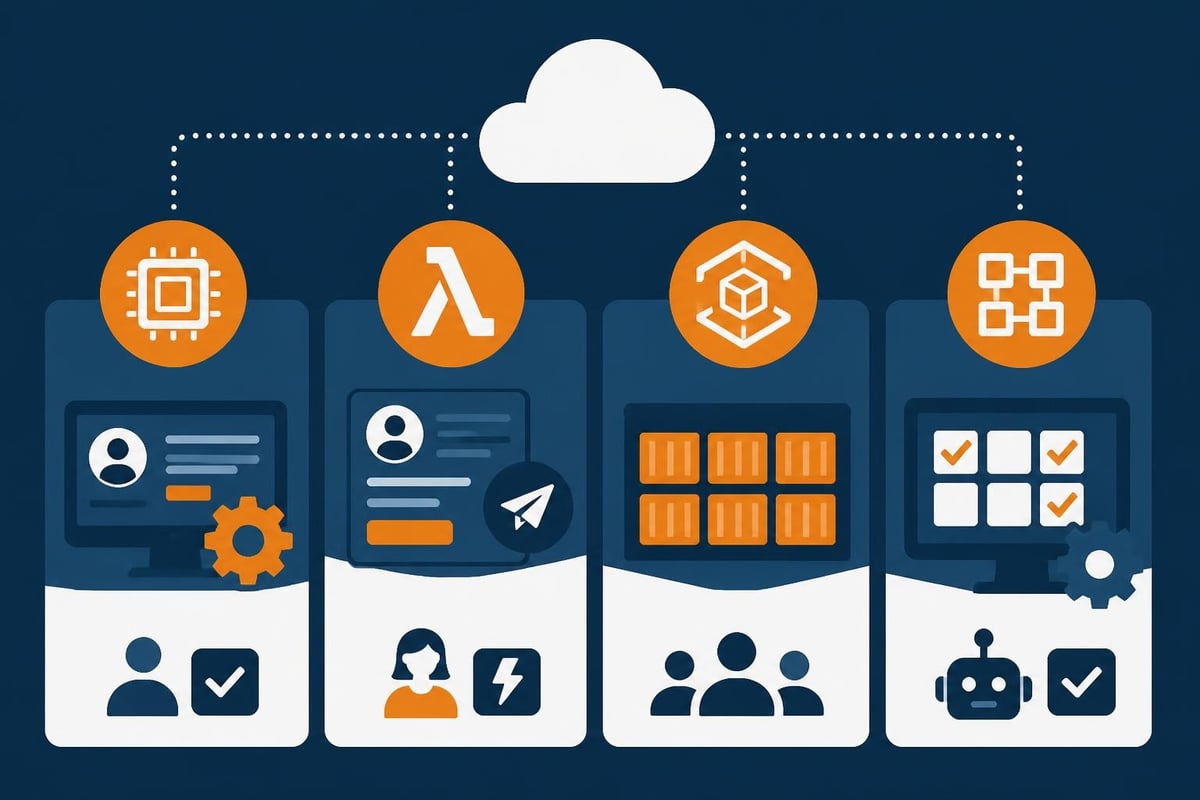
The choice between compute services depends on workload patterns. Candidate verification processes that run continuously benefit from EC2 instances, while document processing triggered by resume uploads works well with Lambda functions. This architectural flexibility allows platforms to optimize costs while maintaining performance.
Data Storage and Management Strategies
Effective data management forms the foundation of any talent marketplace. AWS provides multiple storage tiers designed for different access patterns and retention requirements.
Storage Service Selection Matrix
| Service | Best For | Typical Use Case | Cost Profile |
|---|---|---|---|
| S3 Standard | Frequent access | Active candidate profiles | Higher storage, low retrieval |
| S3 Glacier | Long-term archive | Historical hiring records | Lower storage, higher retrieval |
| EBS | Database volumes | Transactional data | Provisioned capacity |
| EFS | Shared file systems | Document collaboration | Pay per use |
Recruitment platforms handle diverse data types requiring different storage approaches. Resume documents, verification certificates, and assessment results accumulate rapidly. Implementing intelligent lifecycle policies moves older data to cost-effective storage tiers automatically.
Database services on aws include RDS for relational data, DynamoDB for NoSQL workloads, and specialized options like DocumentDB. The selection depends on query patterns and consistency requirements. Candidate profiles with structured fields work well in relational databases, while flexible attribute storage suits DynamoDB's key-value model.
Security and Compliance Infrastructure
Talent marketplaces handle sensitive personal information requiring robust security measures. AWS provides comprehensive tools for implementing defense-in-depth strategies across network, application, and data layers.
Identity and Access Management
Proper IAM configuration ensures that only authorized services and personnel access specific resources. Creating role-based policies prevents accidental data exposure and satisfies audit requirements. AWS supports fine-grained permissions that can restrict access to individual S3 buckets or specific database tables.
Encryption options include:
- At-rest encryption for stored data using AWS KMS
- In-transit encryption via TLS/SSL certificates
- Client-side encryption before data reaches AWS
- Field-level encryption for protecting specific sensitive fields
Compliance frameworks like SOC 2, GDPR, and HIPAA require documented security controls. AWS provides pre-configured compliance templates and continuous monitoring through services like Config and CloudTrail. These audit logs track every API call, creating an immutable record of platform activity.
Organizations connecting verified AI professionals with businesses must demonstrate data handling practices that protect candidate privacy while enabling efficient matching algorithms.
Machine Learning and AI Service Integration
The aws machine learning stack includes services spanning the entire development lifecycle, from data preparation through model deployment and monitoring. SageMaker provides managed Jupyter notebooks, training infrastructure, and one-click deployment capabilities.
Building AI-Powered Matching Systems
Talent matching algorithms require training on historical hiring data to identify patterns between candidate qualifications and successful placements. SageMaker supports popular frameworks including TensorFlow, PyTorch, and scikit-learn without requiring infrastructure management.
The typical workflow involves:
- Data preparation using SageMaker Data Wrangler
- Model training on GPU-accelerated instances
- Hyperparameter tuning with automatic optimization
- Model deployment behind scalable endpoints
- Performance monitoring with real-time metrics
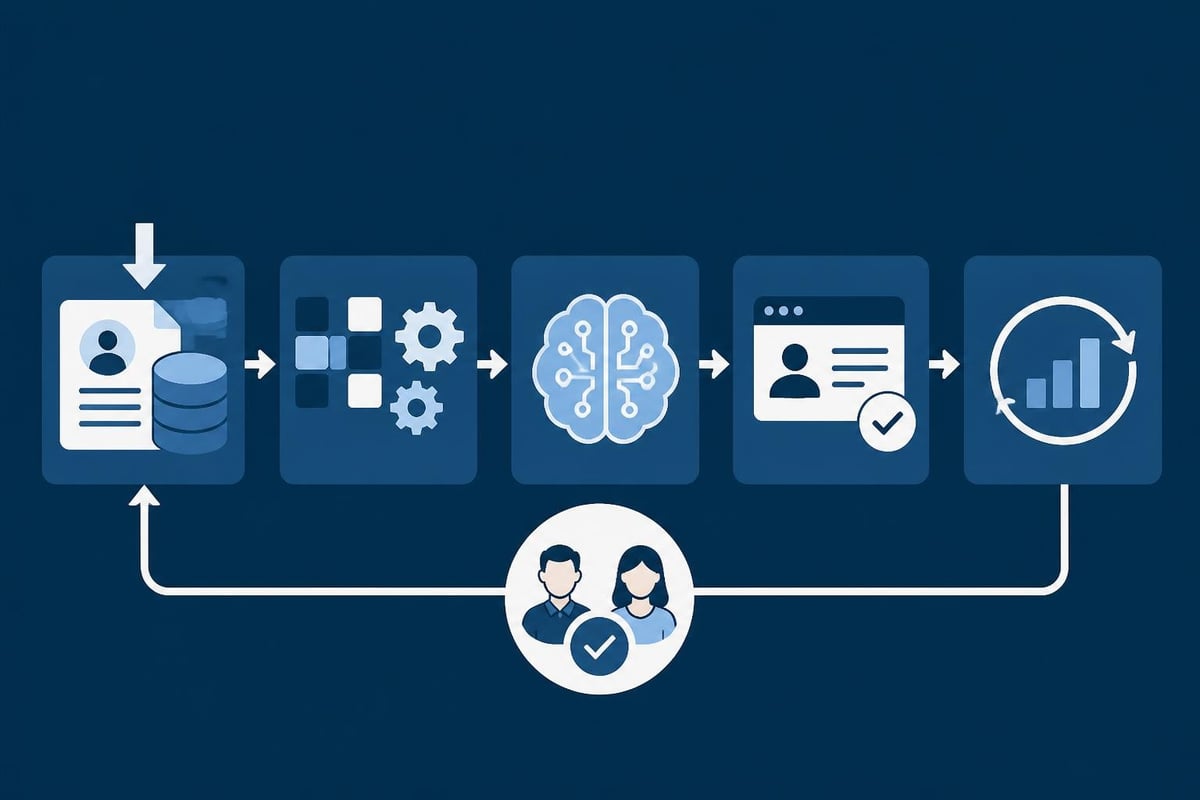
Natural language processing services like Comprehend can extract skills from resume text, while Textract processes scanned documents into structured data. These managed services eliminate the need to build custom extraction models for common tasks.
Fraud detection systems benefit from aws AI services that identify anomalies in candidate submissions. Combining multiple signals-document analysis, behavioral patterns, and verification checks-creates robust screening mechanisms that maintain marketplace quality.
Infrastructure Automation and Scaling
Manual infrastructure management becomes impractical as platforms grow. AWS CloudFormation enables infrastructure-as-code approaches where entire environments are defined in version-controlled templates.
Implementing Auto-Scaling Strategies
Traffic patterns for talent platforms often exhibit significant variation. Application activity increases during business hours, while background processing jobs for candidate verification can run during off-peak periods. Auto-scaling groups automatically adjust capacity based on defined metrics.
Effective scaling strategies monitor:
- CPU utilization across application servers
- Request queue depth for background jobs
- Database connection pool saturation
- API response time latencies
Setting appropriate scaling thresholds prevents both over-provisioning waste and performance degradation. Conservative scale-up policies ensure capacity exists before demand spikes, while gradual scale-down prevents premature resource termination.
Load balancers distribute traffic across multiple instances, providing redundancy and enabling zero-downtime deployments. Application Load Balancers support advanced routing based on request paths, enabling microservices architectures where different components scale independently.
Cost Optimization and Financial Management
Cloud spending can escalate quickly without proper governance. AWS provides multiple mechanisms for controlling costs while maintaining necessary capabilities.
Cost Control Techniques
| Strategy | Implementation | Potential Savings |
|---|---|---|
| Reserved Instances | Commit to 1-3 year terms | 30-70% vs on-demand |
| Spot Instances | Use spare capacity | Up to 90% discount |
| Right-sizing | Match instance size to workload | 20-40% reduction |
| Storage lifecycle | Auto-archive old data | 50-80% on archival |
Analyzing cost allocation reports reveals spending patterns across services and projects. Tagging resources with project identifiers enables precise cost tracking and budget allocation. Setting up billing alerts prevents unexpected charges from runaway processes or misconfigured services.
The AWS Command Line Interface facilitates automated cost optimization scripts that identify idle resources, unused volumes, and oversized instances. Regular reviews ensure infrastructure matches current requirements rather than past needs.
Network Architecture and Content Delivery
Global talent marketplaces serve users across multiple regions, requiring thoughtful network design. Virtual Private Clouds (VPCs) provide isolated network environments with customizable IP addressing and routing.
Multi-Region Deployment Patterns
Deploying infrastructure across multiple aws regions improves both performance and availability. Route 53 DNS service directs users to the nearest regional endpoint, reducing latency for international candidates and employers.
Key network components include:
- VPC peering for secure inter-region communication
- CloudFront CDN for static asset delivery
- Direct Connect for dedicated network links
- Transit Gateway for simplified network management
Content delivery networks cache frequently accessed resources like profile images and company logos at edge locations worldwide. This reduces load on origin servers while dramatically improving page load times for global users.
Monitoring, Logging, and Observability
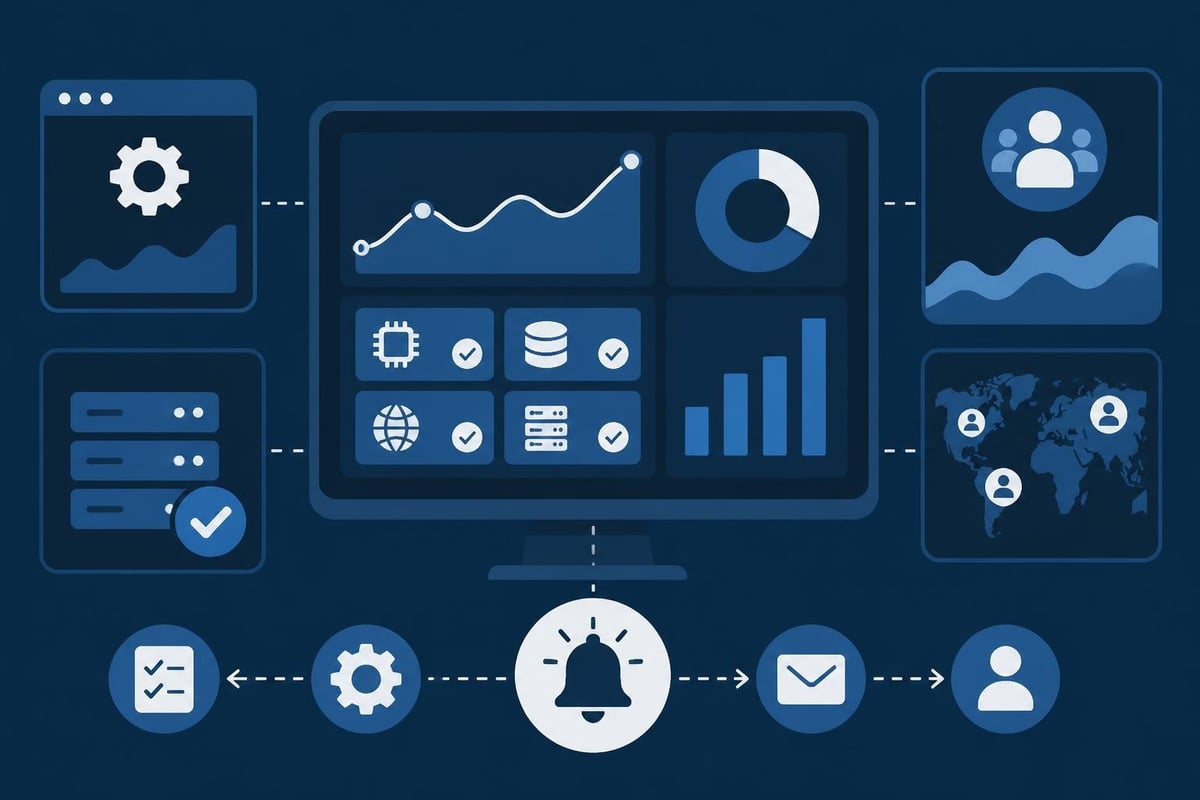
Production systems require comprehensive monitoring to detect issues before they impact users. CloudWatch collects metrics, logs, and events from aws resources and applications.
Building Effective Alert Systems
Alert fatigue undermines monitoring effectiveness when teams receive too many notifications. Designing meaningful alerts focuses on business impact rather than technical metrics. A database CPU spike matters less than increasing application error rates or degraded user experience.
Structured logging enables powerful search and analysis capabilities. CloudWatch Logs Insights queries can identify patterns across millions of log entries, revealing issues that might otherwise remain hidden. Correlation between application logs, infrastructure metrics, and user actions provides complete incident context.
X-Ray distributed tracing follows requests through complex microservices architectures, identifying performance bottlenecks and failed dependencies. This visibility proves invaluable when debugging issues affecting candidate verification workflows.
Disaster Recovery and Business Continuity
Production platforms require strategies for handling failures ranging from individual component outages to complete region unavailability. AWS architectural best practices emphasize designing for failure at every level.
Backup and Recovery Strategies
Automated backups protect against data loss from software bugs, security incidents, or operational errors. RDS databases support point-in-time recovery within configurable retention windows. S3 versioning maintains multiple object versions, enabling recovery from accidental deletions or overwrites.
Recovery objectives guide architecture decisions:
- Recovery Time Objective (RTO): Maximum acceptable downtime
- Recovery Point Objective (RPO): Maximum acceptable data loss
- Availability targets: Percentage uptime commitments
A platform requiring 99.9% availability tolerates approximately 40 minutes of monthly downtime, while 99.99% reduces this to 4 minutes. Achieving higher availability requires eliminating single points of failure through redundant components and multi-region deployments.
Emerging AWS Capabilities and Future Trends
The aws platform continuously evolves with new services and capabilities. Recent announcements include significant investments in AI infrastructure, as evidenced by Amazon's strategic partnerships focused on AI development.
Serverless services eliminate infrastructure management overhead, allowing teams to focus on business logic rather than server administration. Step Functions orchestrate complex workflows involving multiple aws services and external APIs. This proves particularly valuable for multi-stage verification processes that combine automated checks with human review.
Recent developments like AWS's commitment to cloud modernization initiatives demonstrate the platform's role in large-scale digital transformation projects. Organizations can leverage this proven infrastructure for their own modernization efforts.
The regulatory landscape continues evolving as cloud providers face scrutiny over market dominance. Discussions around potential gatekeeper designations highlight the importance of understanding compliance implications when building on aws infrastructure.
DevOps and Continuous Integration Practices
Modern development practices emphasize rapid iteration and automated deployment pipelines. AWS CodePipeline orchestrates the complete release process from code commit through production deployment.
Integration with popular tools includes:
- GitHub and GitLab for source control
- Jenkins and CircleCI for build automation
- Docker and Kubernetes for containerization
- Terraform for infrastructure provisioning
Automated testing at multiple stages ensures code quality before reaching production. Unit tests verify individual components, integration tests confirm service interactions, and end-to-end tests validate complete user workflows. This layered approach catches issues early when fixes cost less than production incidents.
Blue-green deployments maintain two identical production environments, allowing instant rollback if problems arise. Traffic shifts gradually from the old version to new, enabling validation with real user behavior before complete cutover.
Building scalable infrastructure on aws requires understanding not just individual services but how they combine to create resilient, performant systems. For organizations developing AI-powered talent solutions, these cloud capabilities provide the foundation for growth without infrastructure constraints. Augmnt leverages advanced cloud infrastructure to connect businesses with verified AI professionals, ensuring platform reliability and security throughout the recruitment lifecycle. Explore how intelligent matching combined with robust technical foundations can transform your hiring process.