
ATS for Small Business: A Complete 2026 Guide
Finding the right talent remains one of the most critical challenges for small businesses in 2026. With limited resources and fierce competition from larger enterprises, small companies need every advantage in the recruitment process. An applicant tracking system (ATS) provides that edge by automating manual tasks, organizing candidate information, and ensuring no qualified applicant falls through the cracks. While ATS platforms were once reserved for corporations with dedicated HR departments, modern solutions have become accessible, affordable, and essential for small businesses looking to build competitive teams.
Why Small Businesses Need an ATS
The recruitment landscape has fundamentally changed. Small businesses now receive hundreds of applications for single positions, making manual resume review impossible. An ats for small business transforms this overwhelming volume into a manageable, structured process.
Time savings represent the most immediate benefit. Recruiters spend an average of 23 hours screening resumes for a single hire when working manually. An ATS reduces this to just a few hours by automatically filtering candidates based on predetermined criteria, highlighting the most qualified applicants, and organizing information in searchable databases.
Beyond efficiency, compliance protection matters significantly. Applicant tracking systems help businesses maintain proper documentation of their hiring processes, ensuring equal opportunity compliance and protecting against discrimination claims. For small businesses without legal departments, this automated record-keeping provides essential protection.
Cost-Effectiveness for Smaller Teams
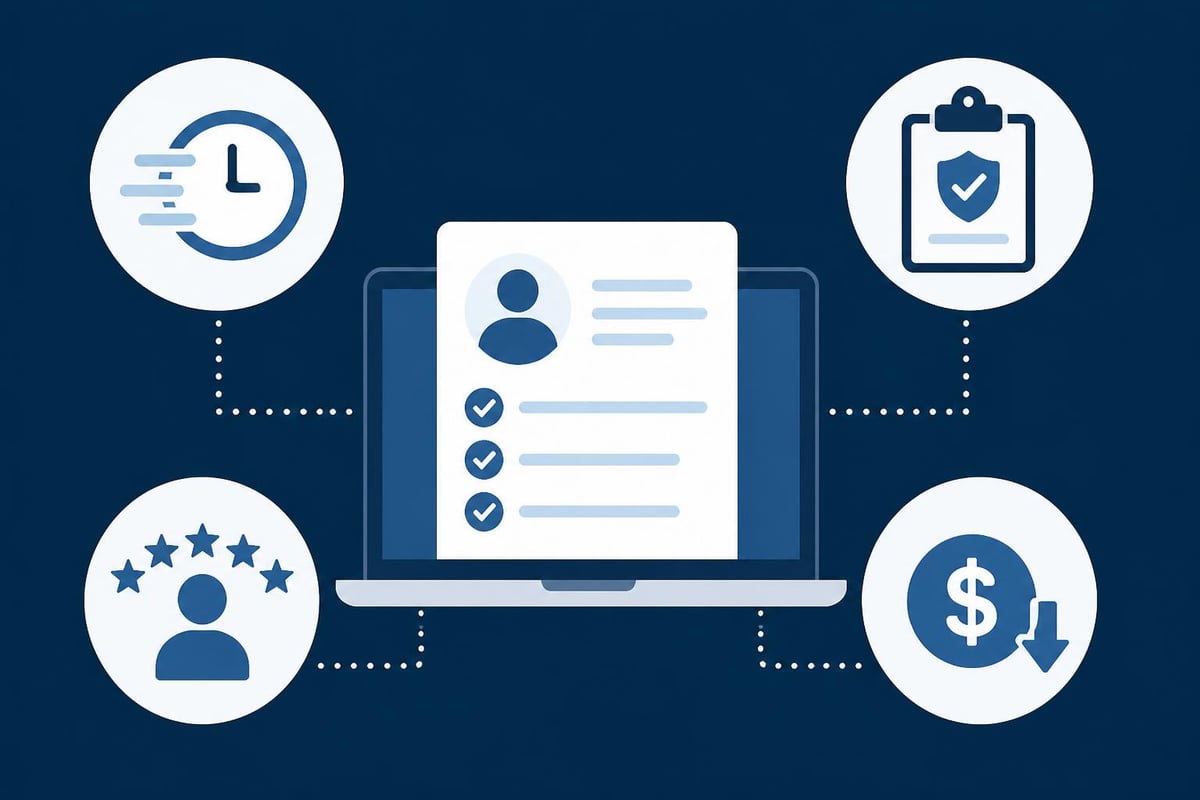
Many business owners assume ATS platforms exceed their budgets. However, modern recruitment platforms offer tiered pricing models specifically designed for small businesses, with options starting under one hundred dollars monthly.
Consider the math: A single bad hire costs companies approximately 30% of that employee's first-year salary. For a position paying fifty thousand dollars annually, that represents a fifteen thousand dollar mistake. An ATS that costs twelve hundred dollars annually easily pays for itself by improving hiring accuracy and reducing turnover.
| Cost Factor | Without ATS | With ATS | Savings |
|---|---|---|---|
| Time per hire (hours) | 23 | 8 | 15 hours |
| Average time-to-hire (days) | 42 | 28 | 14 days |
| Cost per hire | $4,500 | $3,200 | $1,300 |
| Bad hire rate | 18% | 8% | 10% reduction |
The return on investment extends beyond direct hiring costs. Faster time-to-hire means open positions impact productivity for shorter periods, while better candidate matches lead to improved retention rates and team performance.
Essential Features in an ATS for Small Business
Not all applicant tracking systems deliver equal value. Small businesses require specific functionality that balances power with simplicity, automation with personal touch, and comprehensive features with manageable complexity.
Resume Parsing and Candidate Database
Automated resume parsing extracts information from applications and populates structured candidate profiles. This feature eliminates manual data entry and creates searchable databases where recruiters can quickly find candidates with specific skills, experience levels, or qualifications.
The database becomes increasingly valuable over time, building a talent pool for future openings. When a new position opens, recruiters can search existing candidates before posting externally, dramatically reducing time-to-hire for subsequent positions.
Job Posting Distribution
Multi-channel job posting represents another critical feature. The best ats for small business solutions integrate with major job boards, allowing recruiters to post openings to dozens of sites simultaneously rather than managing each platform individually.
- Indeed
- Glassdoor
- Industry-specific boards
- Social media platforms
This distribution capability ensures maximum candidate reach without multiplying administrative burden, particularly valuable for small teams managing multiple open positions.
Communication Automation
Candidate communication consumes significant recruiter time. An effective ATS automates acknowledgment emails, status updates, interview scheduling, and rejection notifications while maintaining personalization through customizable templates.
Business Management Daily emphasizes that automated communication improves candidate experience even for rejected applicants, protecting employer brand and maintaining professional relationships with potential future candidates.
Selecting the Right ATS for Your Business
The abundance of options creates decision paralysis for many small business owners. A systematic evaluation process ensures you select a solution matching your specific needs, budget, and growth trajectory.
Assessing Your Hiring Volume and Complexity
Begin by analyzing current recruitment patterns. Companies hiring fewer than ten employees annually have different needs than those filling thirty positions. Similarly, businesses hiring for diverse roles across multiple departments require more sophisticated filtering than those repeatedly filling similar positions.
Questions to consider:
- How many positions do we fill annually?
- How many applications do we typically receive per opening?
- Do we hire for similar roles or diverse positions?
- What percentage of hires come from external versus internal candidates?
- Do we need multi-location or remote hiring capabilities?
Your answers guide feature prioritization. High-volume recruiters need robust automation and screening, while companies hiring occasionally benefit more from simplicity and strong candidate relationship management.

Integration Requirements
An ats for small business should enhance your existing workflow, not create isolated processes. Examine current tools and identify necessary integrations.
| Integration Type | Purpose | Priority Level |
|---|---|---|
| Email platforms | Seamless communication | High |
| Calendar systems | Interview scheduling | High |
| HRIS/payroll | Employee onboarding | Medium |
| Background check services | Pre-employment screening | Medium |
| Skills assessment tools | Candidate evaluation | Low to Medium |
Systems that connect with your existing ATS integrations create unified workflows where data flows automatically between platforms, eliminating redundant data entry and reducing error opportunities.
User Experience for All Stakeholders
The best system balances recruiter efficiency with candidate experience and hiring manager involvement. Test platforms from multiple perspectives before committing.
For recruiters: Does the interface feel intuitive? Can you accomplish common tasks quickly? Are reporting and analytics easily accessible?
For candidates: Is the application process mobile-friendly? Does it require reasonable time and information? Do candidates receive timely updates?
For hiring managers: Can they easily review candidates, provide feedback, and participate in scheduling without extensive training?
Rippling's comprehensive review of small business ATS options highlights that user adoption determines system success more than feature lists. A powerful platform that confuses users delivers less value than a simpler system that teams embrace enthusiastically.
Implementing Your ATS Successfully
Purchasing an ats for small business represents just the first step. Successful implementation requires planning, configuration, and team preparation to maximize return on investment.
Data Migration and System Configuration
Most small businesses have existing candidate data in spreadsheets, email folders, or previous systems. Determine what historical information merits migration versus starting fresh. Recent candidates and those in active pipelines warrant the effort, while older data may not justify migration complexity.
Configuration priorities include:
- Customizing your hiring workflow stages to match your actual process
- Creating email templates for common communications
- Setting up user permissions appropriate to each team member's role
- Configuring job posting integrations with your preferred boards
- Establishing evaluation criteria and scorecards for consistent candidate assessment
Invest time in proper initial configuration. Systems configured to match your workflow require minimal adjustment as team members use them, while poorly configured platforms generate ongoing frustration and workarounds.
Training and Change Management
Even intuitive systems require training. Schedule hands-on sessions where team members practice common tasks using sample data. Address questions immediately and document solutions to recurring issues.
Training should cover:
- Creating and posting job openings
- Reviewing and rating candidates
- Moving candidates through pipeline stages
- Scheduling interviews and coordinating feedback
- Running reports and analyzing recruitment metrics
- Managing candidate communications
Designate a system champion-someone enthusiastic about the platform who can provide peer support as colleagues develop proficiency. This person bridges the gap between vendor support and day-to-day user questions.
Advanced ATS Capabilities for Growing Businesses
As your small business expands, advanced features become increasingly valuable. Understanding these capabilities helps you select a platform that grows with your needs rather than requiring replacement as you scale.
AI-Powered Screening and Matching
Artificial intelligence has transformed applicant tracking systems beyond simple keyword matching. Modern platforms like Augmnt ATS leverage AI combined with human insight to identify qualified candidates while detecting resume fraud-a growing concern as application volumes increase and verification becomes more challenging.
Research published in academic journals demonstrates that AI-enhanced ATS platforms using large language models can significantly improve screening accuracy and candidate shortlisting efficiency compared to traditional keyword-based approaches.
These systems analyze candidate qualifications holistically, considering factors beyond exact keyword matches and identifying transferable skills that human reviewers might overlook in high-volume scenarios.
Analytics and Reporting
Data-driven recruitment requires visibility into metrics that matter. An effective ats for small business provides actionable insights without overwhelming users with excessive data.
Key metrics to track:
- Time-to-hire by position and department
- Source effectiveness (which job boards yield quality candidates)
- Candidate pipeline conversion rates
- Hiring manager satisfaction scores
- Cost-per-hire across different recruitment channels
- Diversity metrics throughout the hiring funnel
These analytics help identify bottlenecks, optimize job posting strategies, and demonstrate HR's value to business leadership through quantifiable results.
Collaborative Hiring Features
Modern recruitment succeeds as a team effort. Look for platforms that facilitate collaboration without creating email chaos or version control problems.
Features supporting collaborative hiring include shared candidate scorecards, structured feedback forms, interview panel coordination, and centralized communication threads where all stakeholders see previous discussions and decisions. This transparency improves decision quality while documenting the rationale behind hiring choices.

Common Mistakes When Implementing an ATS
Learning from others' missteps saves time, money, and frustration. These common errors trip up many small businesses adopting their first applicant tracking system.
Over-Complicating the Initial Setup
The temptation to configure every available feature and create elaborate workflows often backfires. Start simple with core functionality, then add complexity as your team gains proficiency and identifies specific needs.
A five-stage pipeline (Applied, Screening, Interview, Offer, Hired) serves most small businesses better than a fifteen-stage workflow that confuses team members and creates administrative burden. You can always add stages later; removing them after candidates populate the system creates data complications.
Neglecting Mobile Optimization
More than 60% of job seekers use mobile devices during their search. If your application process frustrates mobile users, you lose quality candidates before they complete applications. Test the candidate experience on smartphones and tablets, ensuring forms load quickly and submit reliably.
Focusing Exclusively on Features
Feature lists seduce buyers, but usability determines success. A platform with fifty features you never use delivers less value than one with fifteen features you leverage daily. Prioritize systems that excel at your most critical functions rather than those offering the longest feature lists.
Ignoring Candidate Privacy and Data Security
An ats for small business handles sensitive personal information including social security numbers, contact details, employment history, and sometimes background check results. Verify that platforms maintain appropriate security certifications, encrypt data both in transit and at rest, and comply with relevant privacy regulations.
Ask vendors about their data handling practices, backup procedures, and disaster recovery plans. Your reputation depends on protecting candidate information properly.
Optimizing Your ATS for Maximum ROI
Implementing an applicant tracking system represents the beginning, not the destination. Continuous optimization ensures you extract maximum value from your investment.
Regular Process Audits
Quarterly reviews of your recruitment process identify improvement opportunities. Examine metrics for patterns: Do certain job boards consistently yield better candidates? Which interview stages take longest? Where do qualified candidates drop out?
Use these insights to refine your approach. Eliminating one unnecessary interview round can reduce time-to-hire by a week or more. Focusing budget on high-performing job boards while cutting underperforming ones improves cost-per-hire without sacrificing candidate quality.
Template Refinement
Communication templates should evolve based on candidate feedback and team experience. If candidates frequently ask the same questions after receiving interview invitations, your template likely lacks clarity. If hiring managers struggle to evaluate candidates using standard scorecards, the criteria need adjustment.
Effective templates balance:
- Personalization tokens (candidate name, position, specific details)
- Comprehensive information to prevent confusion
- Concise language that respects reader time
- Clear calls-to-action and next steps
- Brand voice that reflects company culture
Test revised templates with small candidate groups before full deployment, gathering feedback to ensure improvements achieve intended results.
Building Your Talent Community
The most sophisticated use of an ats for small business extends beyond filling immediate openings to cultivating ongoing relationships with quality professionals. Not every great candidate applies at the right time, but maintaining connections ensures you can reach out when appropriate positions open.
Create talent pools organized by skills, experience levels, or departments. Send occasional updates about company news, relevant industry content, or upcoming opportunities. This nurturing transforms your ATS from a transaction tool into a relationship platform that compounds in value over time.
Future-Proofing Your ATS Investment
Technology evolves rapidly, and recruitment tools must keep pace. Consider these factors to ensure your platform selection remains valuable as your business and the broader hiring landscape change.
Vendor Stability and Development Roadmap
Research vendor financial health, customer retention rates, and development activity. Platforms from established companies or well-funded startups with clear growth trajectories represent safer long-term investments than those from vendors showing signs of distress.
Request information about the development roadmap. Are they actively adding features and improving existing ones? How frequently do they release updates? Do they solicit customer feedback in planning future development?
Scalability Considerations
Your needs today differ from those you'll have in three years. Pricing structures should accommodate growth without requiring platform changes or imposing punitive increases.
Examine whether systems charge per job posting, per active user, per hire, or through flat monthly fees. Consider which model aligns with your anticipated growth pattern. Companies planning rapid expansion benefit from per-posting models, while those growing steadily prefer predictable monthly fees.
AI and Automation Trajectory
Artificial intelligence continues transforming recruitment. Platforms incorporating AI thoughtfully-enhancing human decision-making rather than replacing it-will deliver increasing value as technology matures.
Look for vendors demonstrating understanding of AI's appropriate role in hiring: automating administrative tasks, identifying patterns humans might miss, and expanding reach while maintaining human judgment in final decisions, especially for nuanced cultural fit assessments that algorithms struggle to evaluate accurately.
Implementing an ats for small business represents a strategic investment that transforms recruitment from an administrative burden into a competitive advantage. By systematically evaluating options, configuring systems thoughtfully, and optimizing continuously, small businesses can achieve hiring outcomes that rival much larger organizations. When you're ready to take your recruitment process to the next level with verified candidate matching and fraud detection capabilities, Augmnt provides an intelligent marketplace connecting businesses with qualified AI professionals through comprehensive validation and streamlined hiring workflows.