Artificial Intelligence Resume Screening in 2026
The hiring landscape has undergone a dramatic transformation over the past several years, with artificial intelligence resume screening emerging as a cornerstone technology for modern talent acquisition. As organizations receive hundreds or thousands of applications for each open position, manual resume review has become practically impossible. Artificial intelligence offers a solution that processes vast quantities of candidate data quickly while identifying qualified professionals based on specific criteria. However, this technology brings both remarkable opportunities and significant challenges that every hiring team must understand to maximize effectiveness while maintaining fairness.
How Artificial Intelligence Resume Screening Works
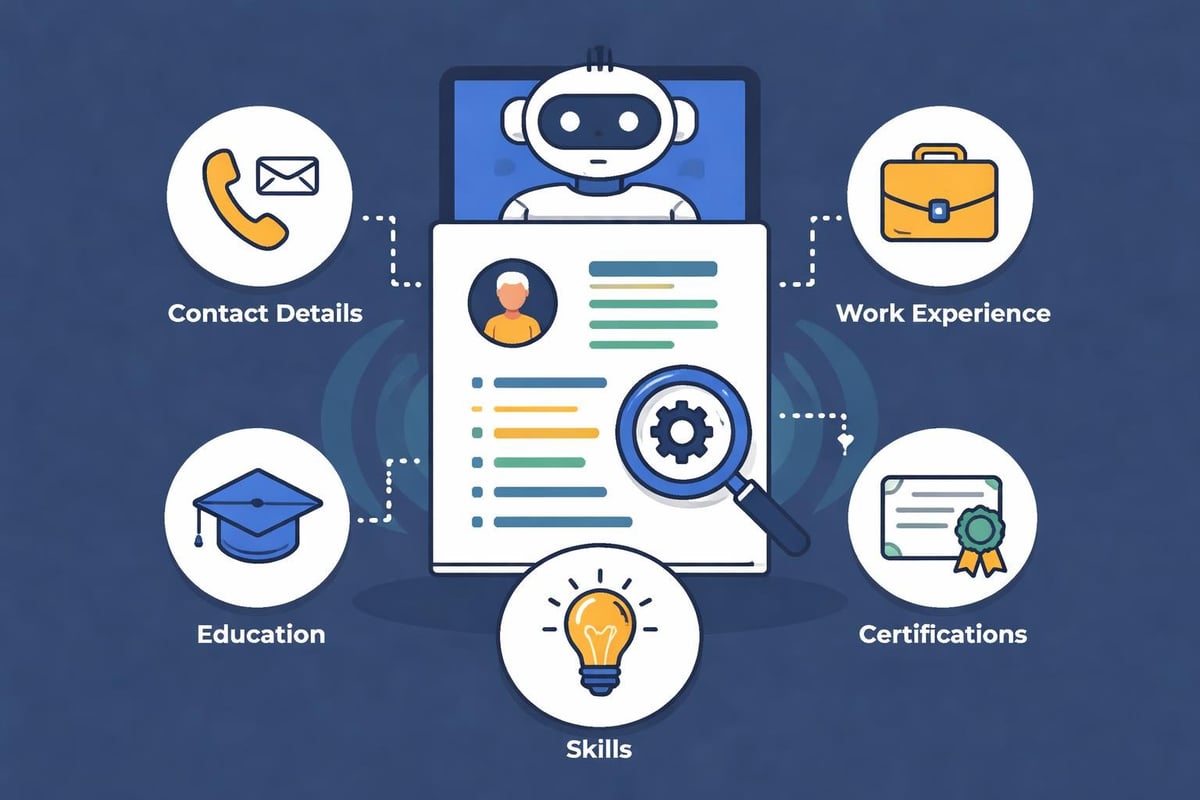
Artificial intelligence resume screening operates through sophisticated algorithms that analyze resumes at multiple levels. The process begins with resume parsing, where AI systems extract structured data from unstructured documents. This includes identifying candidate names, contact information, work history, educational background, skills, and certifications.
The Technical Foundation
Modern AI screening systems utilize natural language processing (NLP) and machine learning models to understand context beyond simple keyword matching. These systems can:
- Recognize synonyms and related terminology across different industries
- Identify skill relevance based on job requirements
- Assess experience levels through timeline analysis
- Detect patterns in career progression
- Evaluate educational credentials against position requirements
Advanced systems go further by implementing semantic understanding. Rather than searching for exact keyword matches, they comprehend the meaning behind phrases and qualifications. This allows the technology to identify candidates who possess equivalent skills described using different terminology.
The machine learning component improves over time. As recruiters provide feedback on candidate quality, algorithms adjust their scoring criteria. This creates increasingly accurate predictions about which applicants will succeed in specific roles.
| AI Screening Capability | Traditional Method | AI-Enhanced Approach |
|---|---|---|
| Resume Processing Time | 5-10 minutes per resume | 30 seconds per resume |
| Consistency | Varies by reviewer | Standardized criteria |
| Volume Capacity | 50-100 daily | Thousands daily |
| Skill Recognition | Exact keyword match | Semantic understanding |
Benefits for Talent Acquisition Teams
Organizations implementing artificial intelligence resume screening experience transformative improvements in their recruitment operations. The efficiency gains alone justify adoption for most high-volume hiring environments.
Speed and Scalability
Time savings represent the most immediate benefit. What previously required days or weeks of manual review now completes in hours. Recruitment teams can process entire applicant pools rapidly, ensuring faster time-to-hire and reducing the risk of losing top candidates to competitors.
Scalability becomes virtually unlimited. Whether handling 100 or 10,000 applications, AI systems maintain consistent performance. This capability proves particularly valuable during:
- Seasonal hiring surges
- Mass recruitment campaigns
- Emergency hiring situations
- Rapid organizational expansion
- Multiple simultaneous job openings
Consistency and Objectivity
Human reviewers inevitably bring unconscious biases and varying standards to resume evaluation. Fatigue, personal preferences, and subjective judgments create inconsistencies. Artificial intelligence resume screening applies identical criteria to every candidate.
This standardization ensures that all applicants receive fair consideration based on objective qualifications. However, research on biased recommendations from AI systems demonstrates that technology itself can perpetuate bias if not carefully designed and monitored.
The solution requires continuous validation and adjustment. Organizations must regularly audit AI screening outcomes to identify and correct any discriminatory patterns that emerge.
Addressing Bias and Fairness Concerns
The promise of objective evaluation faces significant challenges when artificial intelligence resume screening inadvertently amplifies historical biases. Training data often reflects past hiring decisions that may have favored certain demographics over others.
Understanding AI Bias Sources
Machine learning models learn from historical data. If previous hiring decisions demonstrated bias, either conscious or unconscious, the AI system may replicate those patterns. Common bias sources include:
- Historical hiring data favoring specific demographics
- Job descriptions containing gendered language
- Educational institution preferences
- Geographic location assumptions
- Name-based discrimination patterns
Research using frameworks designed to assess racial and gender bias in AI-driven evaluations reveals persistent challenges across many automated screening systems. These studies emphasize the critical importance of fairness testing before deployment.
Mitigation Strategies
Organizations serious about equitable hiring implement multiple safeguards:
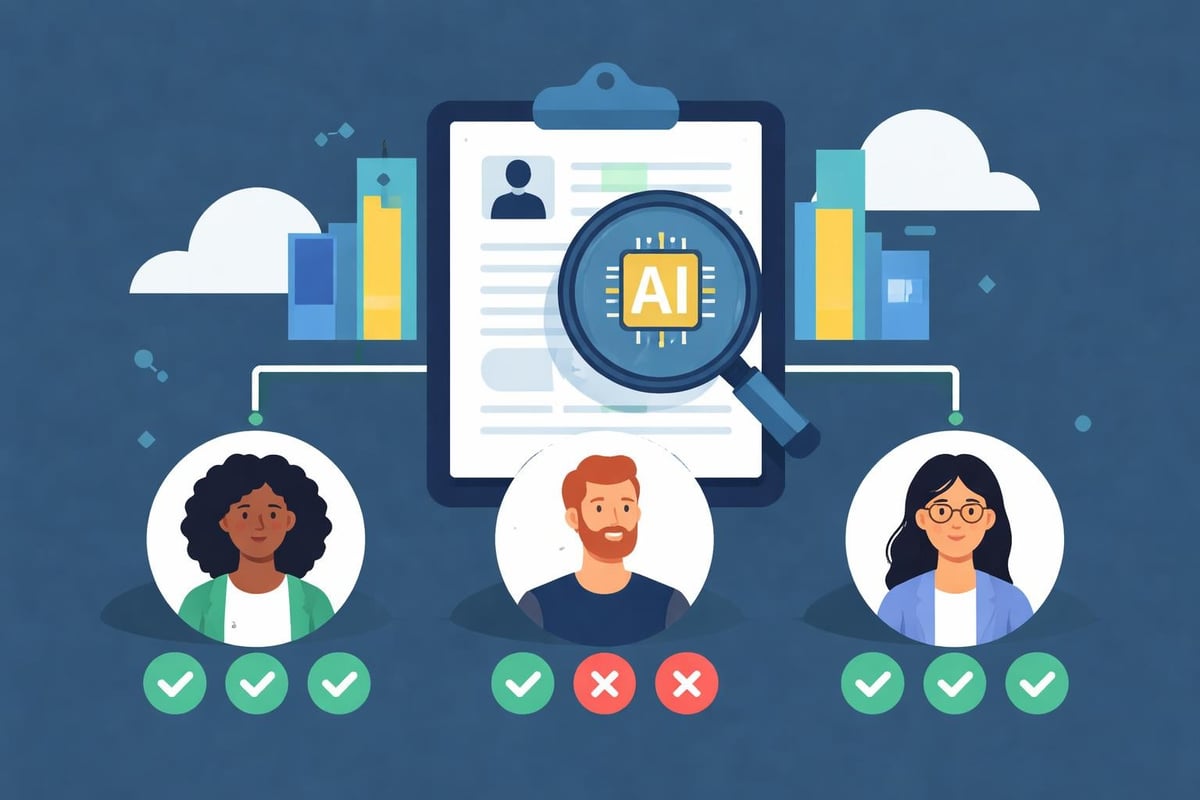
Regular auditing of AI outputs helps identify disparate impact. Compare selection rates across demographic groups to detect potential discrimination. When differences emerge without legitimate job-related justification, algorithm adjustments become necessary.
Diverse training data reduces the risk of perpetuating historical biases. Include successful employees from varied backgrounds in the dataset used to train screening algorithms.
Human oversight remains essential. AI should assist rather than replace human judgment. Recruiters must review AI recommendations critically, especially for borderline cases.
Transparency in screening criteria allows candidates to understand evaluation standards. Clear communication about required qualifications and assessment methods builds trust in the process.
Resume Fraud Detection and Verification
As artificial intelligence resume screening becomes more prevalent, sophisticated candidates have begun optimizing resumes specifically for AI systems. This optimization sometimes crosses into fraudulent territory, requiring robust verification mechanisms.
Common Resume Fraud Tactics
The digital age has made resume fabrication easier than ever. Common fraudulent practices include:
- Skill inflation: Claiming expertise in technologies with minimal actual experience
- Employment date manipulation: Extending tenure or hiding gaps
- Credential fabrication: Inventing degrees or certifications
- Role exaggeration: Inflating responsibilities and achievements
- Experience plagiarism: Copying accomplishments from others
Studies examining truth and authenticity in candidate evaluations demonstrate that linguistic patterns can help identify potential dishonesty. However, technology alone cannot definitively prove fraud.
Validation Through Multiple Data Points
Effective verification requires cross-referencing multiple sources. Advanced platforms integrate:
- Public database verification for educational credentials
- Professional license validation through official registries
- Employment history confirmation via background checks
- Skill assessments to validate claimed expertise
- Reference verification to confirm performance claims
The Augmnt ATS platform exemplifies this comprehensive approach by combining AI-powered screening with verified matching and fraud detection, ensuring that only authenticated candidates advance through the hiring pipeline. This dual-layer validation significantly reduces the risk of fraudulent applications reaching interview stages.
Optimizing the Candidate Experience
While artificial intelligence resume screening primarily benefits employers, thoughtful implementation also improves the candidate experience. Applicants appreciate faster response times and transparent processes.
Communication and Transparency
Prompt feedback becomes possible when AI handles initial screening. Rather than waiting weeks for a response, candidates receive notification within days or even hours. This respect for applicants' time enhances employer brand.
Transparency about AI usage builds trust. Job seekers increasingly seek guidance on formatting resumes for AI screening, demonstrating awareness of these systems. Organizations that acknowledge their use of AI and provide optimization tips demonstrate respect for candidates.
Reducing Application Black Holes
Traditional recruiting often creates "application black holes" where candidates submit materials and never receive any response. Artificial intelligence resume screening enables automated acknowledgment and status updates.
| Candidate Experience Element | Without AI | With AI Screening |
|---|---|---|
| Initial Response Time | 2-4 weeks | 24-48 hours |
| Status Updates | Rarely provided | Automated notifications |
| Application Clarity | Uncertain if reviewed | Confirmed processing |
| Feedback Quality | Generic or none | Criteria-based insights |
Personalized rejection messages become feasible at scale. Rather than generic "we've chosen other candidates" messages, AI can provide specific feedback about qualification gaps.
Best Practices for Implementation
Successfully deploying artificial intelligence resume screening requires careful planning and ongoing management. Organizations that treat AI as a "set it and forget it" solution typically encounter problems.
Define Clear Success Metrics
Before implementation, establish measurable objectives:
- Time-to-hire reduction targets (e.g., 30% decrease)
- Cost-per-hire improvements (e.g., 25% reduction)
- Quality-of-hire metrics (e.g., 90-day retention rates)
- Diversity hiring goals (e.g., proportional representation)
- Candidate satisfaction scores (e.g., 4+ out of 5 rating)
Regular measurement against these benchmarks reveals whether the system delivers intended value.
Train Your Recruitment Team
Recruiters need comprehensive training on:
- System capabilities and limitations to set realistic expectations
- Bias recognition to identify problematic patterns
- Override protocols for exceptional cases
- Candidate communication about AI usage
- Continuous improvement processes for refining algorithms
Understanding when AI-based resume screening actually adds value versus when traditional methods work better prevents misapplication of technology.
Maintain Human-AI Collaboration
The most effective approach combines artificial intelligence resume screening with human expertise. AI excels at:
- Processing large volumes quickly
- Applying consistent criteria
- Identifying clear qualification matches
- Flagging potential concerns
Humans excel at:
- Understanding nuanced context
- Recognizing transferable skills
- Evaluating cultural fit indicators
- Making final selection decisions
- Building candidate relationships
This partnership leverages the strengths of both while compensating for weaknesses. Advanced multi-agent frameworks that combine AI with human oversight demonstrate how context-aware systems can enhance rather than replace human decision-making.
Advanced AI Screening Capabilities
Beyond basic resume parsing and keyword matching, cutting-edge artificial intelligence resume screening systems offer sophisticated analytical capabilities that transform talent acquisition.
Predictive Performance Analytics
Modern AI platforms predict candidate success probability based on historical performance data. By analyzing patterns among top performers, these systems identify traits and experiences that correlate with achievement.
Predictive models consider factors including:
- Career progression velocity
- Skills combination patterns
- Industry transition success rates
- Educational background correlations
- Geographic mobility indicators
These insights help recruiters prioritize candidates most likely to excel in specific roles and organizational cultures.
Skill Gap Analysis
Advanced systems identify not just whether candidates meet requirements, but how closely they align. Gap analysis reveals:
- Which qualifications the candidate possesses
- Which requirements they lack
- How significant each gap is
- Whether gaps can be closed through training
- Alternative qualifications that compensate for gaps
This nuanced assessment enables more informed decisions about candidates who meet 80-90% of requirements rather than automatically disqualifying them.
Dynamic Job Matching
Rather than evaluating candidates against a single position, sophisticated AI systems assess fit across multiple open roles simultaneously. This increases placement efficiency and reduces candidate waste.
Organizations using comprehensive marketplaces that connect businesses with verified professionals benefit from this multi-dimensional matching, ensuring qualified candidates find appropriate opportunities even when their initial application doesn't align perfectly.
Technical Integration Considerations
Implementing artificial intelligence resume screening requires thoughtful integration with existing recruitment technology and workflows. Successful deployment depends on seamless data flow and user adoption.
System Compatibility
Modern recruitment environments typically include multiple platforms:
- Applicant Tracking Systems (ATS) for workflow management
- Human Resources Information Systems (HRIS) for employee data
- Job boards and career sites for sourcing
- Assessment platforms for skill testing
- Interview scheduling tools for coordination
AI screening technology must integrate cleanly with these systems. API connectivity enables automated data exchange without manual intervention. Evaluate potential solutions based on:
- Native integrations with your existing platforms
- API documentation quality and support
- Data security and compliance measures
- Scalability for growing application volumes
- Customization capabilities for unique requirements
Data Privacy and Compliance
Artificial intelligence resume screening involves processing sensitive personal information. Organizations must ensure compliance with relevant regulations:
- GDPR requirements for European applicants
- CCPA standards for California candidates
- EEOC guidelines for non-discrimination
- Industry-specific regulations (e.g., financial services, healthcare)
Data minimization principles suggest collecting only information necessary for hiring decisions. Retention policies should specify how long candidate data remains in systems and when it gets purged.
Understanding the importance of AI resume verification extends beyond fraud detection to encompass data authenticity and regulatory compliance throughout the screening process.
Measuring ROI and Business Impact
Quantifying the return on investment from artificial intelligence resume screening helps justify implementation costs and guides optimization efforts.
Direct Cost Savings
Recruiter time savings translate directly to cost reductions. Calculate hours previously spent on manual resume review multiplied by fully-loaded hourly costs. Organizations typically report 60-75% reduction in screening time.
Improved time-to-hire reduces vacancy costs. Each day a position remains open represents lost productivity. Faster screening accelerates the entire hiring timeline.
Quality Improvements
Better candidate quality manifests in multiple ways:
- Higher offer acceptance rates
- Improved 90-day retention
- Faster time-to-productivity
- Better performance review scores
- Reduced early turnover
| ROI Metric | Calculation Method | Typical Improvement |
|---|---|---|
| Screening Time | Hours saved × hourly cost | 60-75% reduction |
| Time-to-Hire | Days reduced × daily vacancy cost | 30-40% decrease |
| Quality-of-Hire | Performance ratings comparison | 15-25% increase |
| Cost-per-Hire | Total recruiting costs ÷ hires | 20-35% reduction |
Long-Term Strategic Value
Beyond immediate cost savings, artificial intelligence resume screening provides strategic advantages:
- Talent pool insights reveal market availability for specific skills
- Competitive intelligence about compensation expectations
- Diversity analytics track progress toward representation goals
- Process optimization data identifies bottlenecks
These insights inform workforce planning and talent strategy development.
Emerging Trends and Future Developments
The evolution of artificial intelligence resume screening continues rapidly. Understanding emerging trends helps organizations prepare for next-generation capabilities.
Conversational AI Screening
Chatbots and conversational interfaces increasingly handle initial candidate interactions. These systems conduct preliminary screening through natural dialogue, asking clarifying questions and assessing communication skills simultaneously.
Benefits include:
- More natural candidate experience
- Additional data points beyond static resumes
- Real-time qualification clarification
- Reduced recruiter workload for basic questions
Video Resume Analysis
AI systems now analyze video resumes and recorded interviews for insights beyond resume text. While this raises additional bias concerns, the technology can assess:
- Communication effectiveness
- Presentation skills
- Enthusiasm and engagement
- Language proficiency
Careful implementation with bias testing remains essential for these advanced capabilities.
Blockchain Credential Verification
Distributed ledger technology offers tamper-proof credential verification. Educational institutions and certification bodies increasingly issue blockchain-based credentials that AI systems can automatically verify without manual confirmation.
This technology promises to eliminate credential fraud while accelerating the verification process.
Artificial intelligence resume screening has fundamentally transformed how organizations identify and evaluate talent, offering unprecedented speed and scale while requiring careful attention to fairness and accuracy. Success depends on combining technological capabilities with human oversight, continuous validation, and commitment to equitable outcomes. Augmnt addresses these challenges by intelligently connecting businesses with verified AI professionals through a platform that combines sophisticated screening technology with comprehensive fraud detection and human validation, ensuring you find qualified candidates efficiently while maintaining hiring integrity.