AI Recruiting Software for Agencies: 2026 Guide
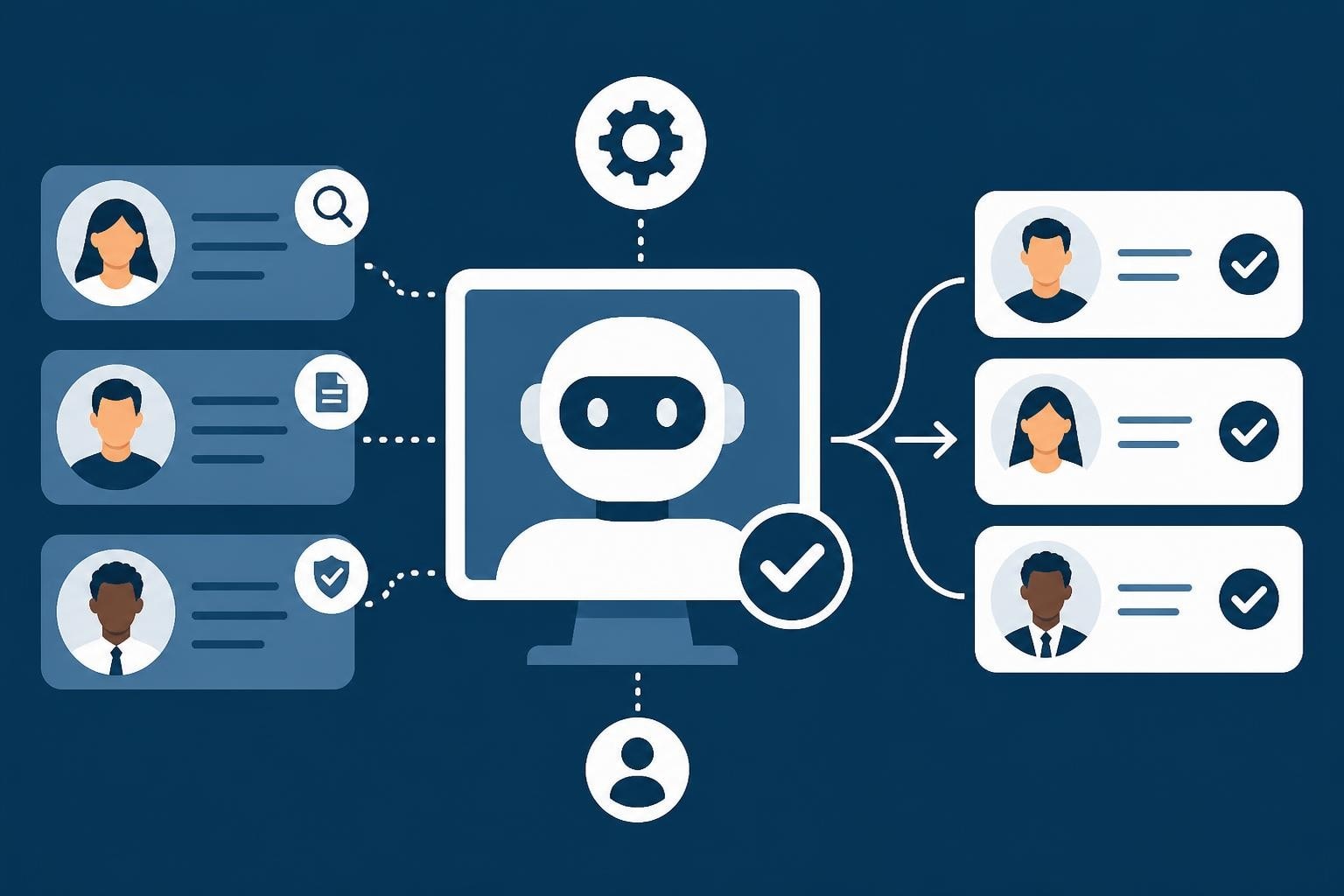
Recruitment agencies face unprecedented challenges in 2026: sourcing qualified candidates faster, verifying credentials accurately, and matching talent to client needs with precision. Traditional methods simply cannot scale to meet demand while maintaining quality standards. AI recruiting software for agencies has emerged as the essential solution, transforming how staffing firms operate by automating time-consuming tasks, detecting fraudulent applications, and delivering superior candidate matches. This technology isn't just a competitive advantage anymore-it's a necessity for agencies looking to thrive in an increasingly complex talent marketplace.
The Evolution of Recruitment Technology
The recruitment industry has undergone a dramatic transformation over the past decade. Manual resume screening and phone-based candidate sourcing have given way to sophisticated platforms that leverage machine learning and natural language processing. Agency recruiters who once spent 40-50% of their time on administrative tasks now redirect that energy toward relationship-building and strategic client consultation.
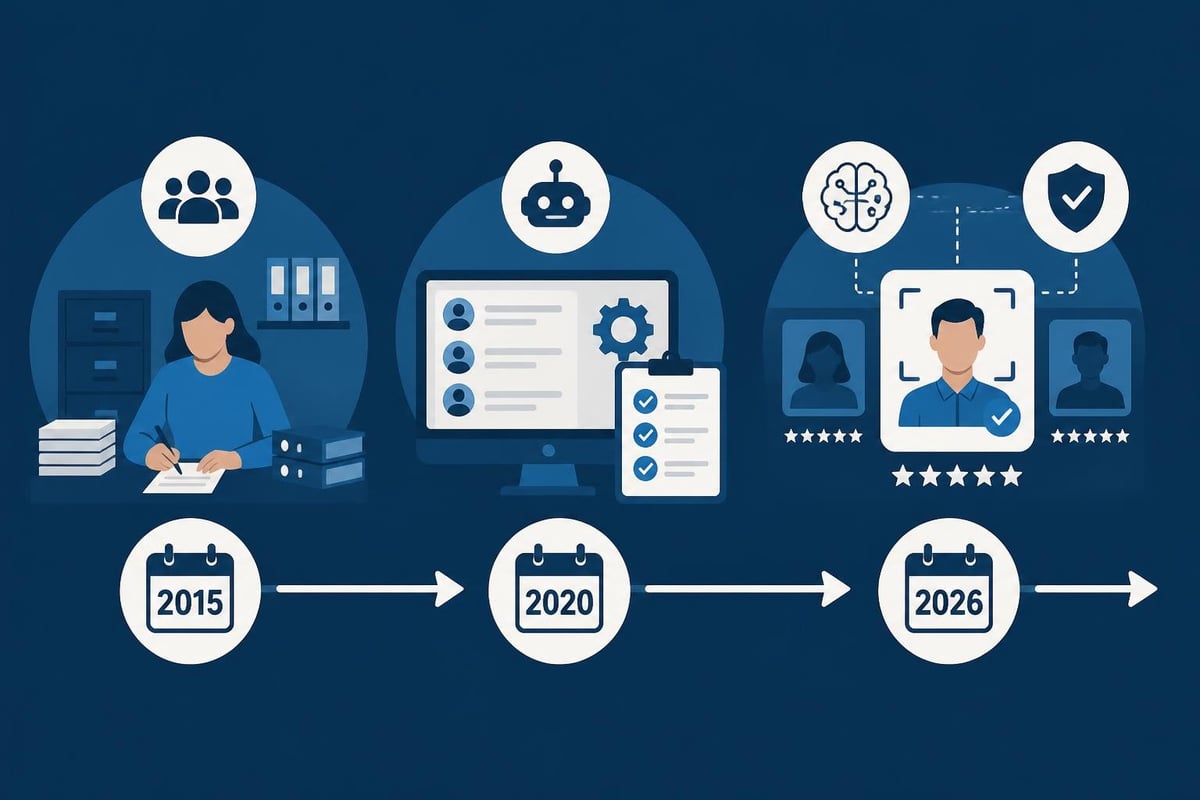
Modern ai recruiting software for agencies encompasses far more than simple applicant tracking. These platforms integrate multiple capabilities:
- Intelligent candidate sourcing across job boards, social networks, and proprietary databases
- Automated resume parsing that extracts and categorizes relevant information
- Skill verification systems that validate candidate qualifications
- Predictive matching algorithms that assess candidate-job fit
- Communication automation for scheduling and candidate engagement
- Fraud detection mechanisms that identify falsified credentials
The best recruitment platforms now combine these features into unified ecosystems that streamline the entire hiring lifecycle. This consolidation eliminates the need for agencies to manage multiple disconnected tools, reducing complexity and improving data consistency across operations.
Critical Features for Agency Success
Automated Candidate Screening
Time-to-fill metrics make or break agency reputations. AI-powered screening processes evaluate hundreds of applications in minutes, ranking candidates based on customizable criteria that align with specific client requirements. These systems analyze not just keywords, but context, experience progression, and skill combinations to identify truly qualified individuals.
Advanced platforms employ semantic analysis to understand candidate qualifications beyond surface-level matches. For instance, a candidate with "Python development" experience may also possess relevant skills in data analysis, machine learning, or web frameworks that traditional keyword matching would miss. This depth of analysis significantly improves placement success rates.
Resume Fraud Detection
The proliferation of fraudulent credentials has become a critical concern for recruitment agencies. Studies indicate that resume fabrication affects 30-40% of applications in certain sectors, creating liability risks and damaging agency credibility. Sophisticated ai recruiting software for agencies now incorporates validation mechanisms that cross-reference claimed credentials against verified databases, detect inconsistencies in employment timelines, and flag suspicious patterns.
| Fraud Type | Detection Method | Accuracy Rate |
|---|---|---|
| Falsified degrees | Academic institution verification | 95-98% |
| Employment gap manipulation | Timeline analysis algorithms | 88-92% |
| Skill exaggeration | Technical assessment integration | 85-90% |
| Identity misrepresentation | Multi-source validation | 93-97% |
Solutions like Augmnt ATS specialize in verified matching and candidate fraud detection, providing agencies with comprehensive validation before presenting candidates to clients. This proactive approach protects both agency reputation and client interests while reducing the risk of costly bad hires.
Intelligent Matching Technology
The most sophisticated ai recruiting software for agencies utilizes multi-dimensional matching algorithms that consider factors beyond simple skill alignment. These systems evaluate:
- Technical competency match between candidate abilities and position requirements
- Cultural fit indicators based on work style preferences and company values
- Career trajectory alignment to ensure mutual long-term benefit
- Compensation expectation compatibility to reduce offer rejection rates
- Geographic and logistical considerations for practical placement success
Research from PeopleSearchBench demonstrates that AI-powered search platforms significantly outperform traditional methods in identifying qualified candidates, particularly for specialized or niche positions. The benchmark evaluation reveals that machine learning models can process nuanced qualification requirements that human recruiters might overlook or underweight.
Integration Capabilities and Workflow Automation
Seamless ATS Integration
Agencies operating with existing applicant tracking systems require AI solutions that enhance rather than replace their current infrastructure. Modern ai recruiting software for agencies offers robust ATS integrations that synchronize data bidirectionally, ensuring candidate information, communication history, and placement status remain consistent across platforms.
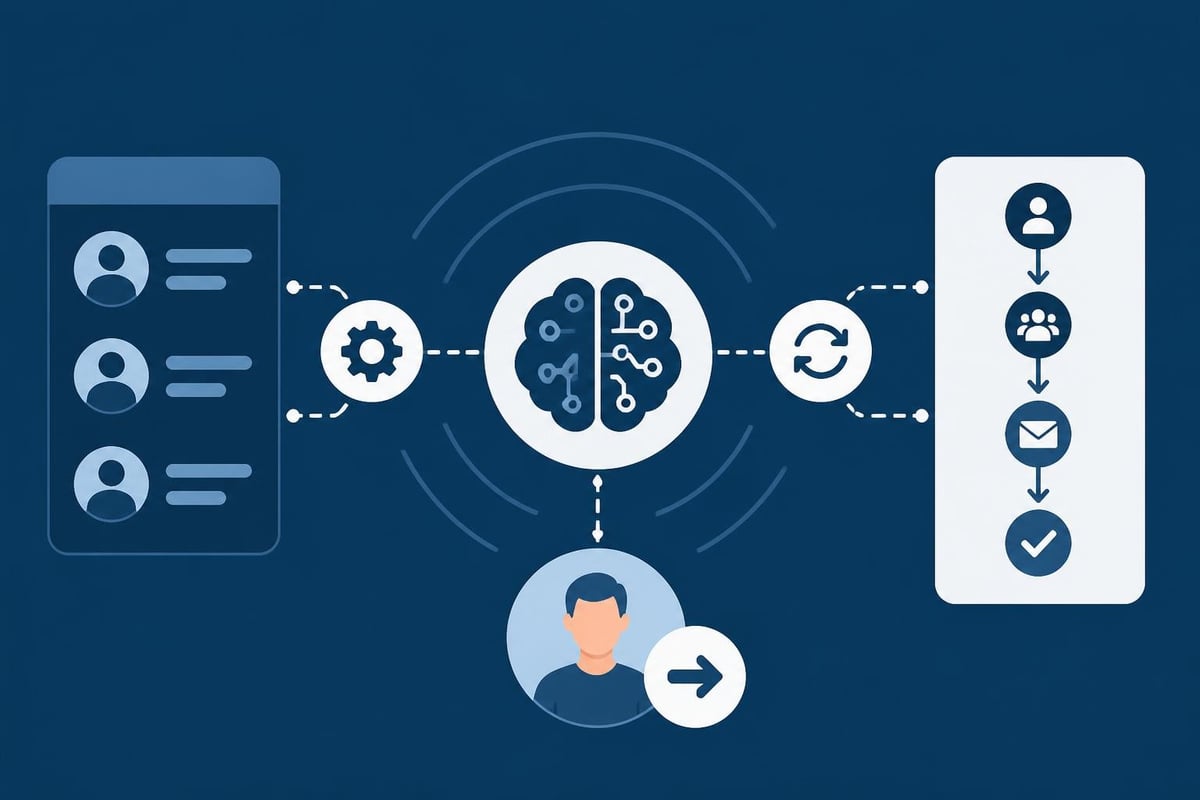
API connectivity enables real-time updates as candidates move through the recruitment pipeline. When a candidate's status changes in the AI platform, the ATS automatically reflects this update, eliminating manual data entry and reducing errors. This seamless integration maintains operational continuity while unlocking advanced AI capabilities.
Communication Automation
Candidate engagement significantly influences acceptance rates and agency reputation. AI-driven communication tools personalize outreach at scale, sending tailored messages based on candidate profile, position details, and interaction history. These systems determine optimal contact timing, channel preference, and message tone to maximize response rates.
Platforms like Candidately demonstrate how AI integration enhances candidate sourcing and communication workflows. Their systems automatically format resumes, draft personalized outreach messages, and schedule follow-up communications based on candidate engagement patterns.
Recent developments in conversational AI have introduced virtual recruiting assistants that handle initial candidate screening conversations. Workday's acquisition of Paradox, an AI-powered conversation platform, highlights the industry's recognition of conversational AI's value in recruitment workflows.
Transparency and Ethical Considerations
Understanding AI Decision-Making
Agencies must comprehend how their ai recruiting software for agencies makes candidate recommendations. The Talent Acquisition and Recruiting AI Index examines transparency issues within AI recruiting systems, revealing significant variation in how platforms explain their matching logic and ranking criteria.
Transparent systems provide recruiters with clear explanations for candidate rankings, identifying which qualifications, experiences, or attributes influenced the AI's assessment. This visibility enables recruiters to validate AI recommendations, adjust weighting factors, and maintain accountability for placement decisions.
Agencies should prioritize platforms that offer:
- Detailed scoring breakdowns showing how candidates were evaluated
- Adjustable weighting for different qualification criteria
- Audit trails documenting AI decision factors
- Human override capabilities for experienced recruiter judgment
- Regular bias testing and fairness assessments
Maintaining Recruiter Agency
Research on generative AI's influence on recruiting workflows reveals concerns about reduced recruiter autonomy when AI systems become too prescriptive. The most effective implementations balance automation with human judgment, using AI to enhance rather than replace recruiter expertise.
Successful agencies implement ai recruiting software for agencies as decision support tools rather than autonomous decision-makers. Recruiters review AI recommendations, apply industry knowledge, and exercise judgment about candidate suitability factors that algorithms cannot fully capture, such as communication style, adaptability, or leadership potential.
Measuring ROI and Performance Metrics
Quantifiable Impact Areas
Investment in ai recruiting software for agencies delivers measurable returns across multiple operational dimensions. Agencies should track these key performance indicators to assess platform effectiveness:
| Metric | Pre-AI Average | Post-AI Average | Improvement |
|---|---|---|---|
| Time-to-fill | 32 days | 19 days | 41% reduction |
| Cost-per-hire | $4,200 | $2,800 | 33% reduction |
| Candidate quality score | 6.8/10 | 8.4/10 | 24% increase |
| Placement success rate | 68% | 84% | 16 percentage points |
| Recruiter productivity | 12 placements/month | 19 placements/month | 58% increase |
These improvements compound over time as AI systems learn from historical placement outcomes, continuously refining their matching algorithms and candidate assessment criteria.
Client Satisfaction Enhancement
Beyond internal efficiency gains, ai recruiting software for agencies directly impacts client relationships. Faster turnaround times, higher-quality candidate shortlists, and reduced mis-hire rates strengthen client confidence and increase contract renewals. Agencies report 25-35% improvement in client satisfaction scores following AI platform implementation.
The ability to provide clients with verified, pre-screened candidates differentiates agencies in competitive markets. Clients increasingly value agencies that can guarantee credential authenticity and skill validation, reducing their internal vetting burden and accelerating hiring decisions.
Implementation Best Practices
Phased Deployment Approach
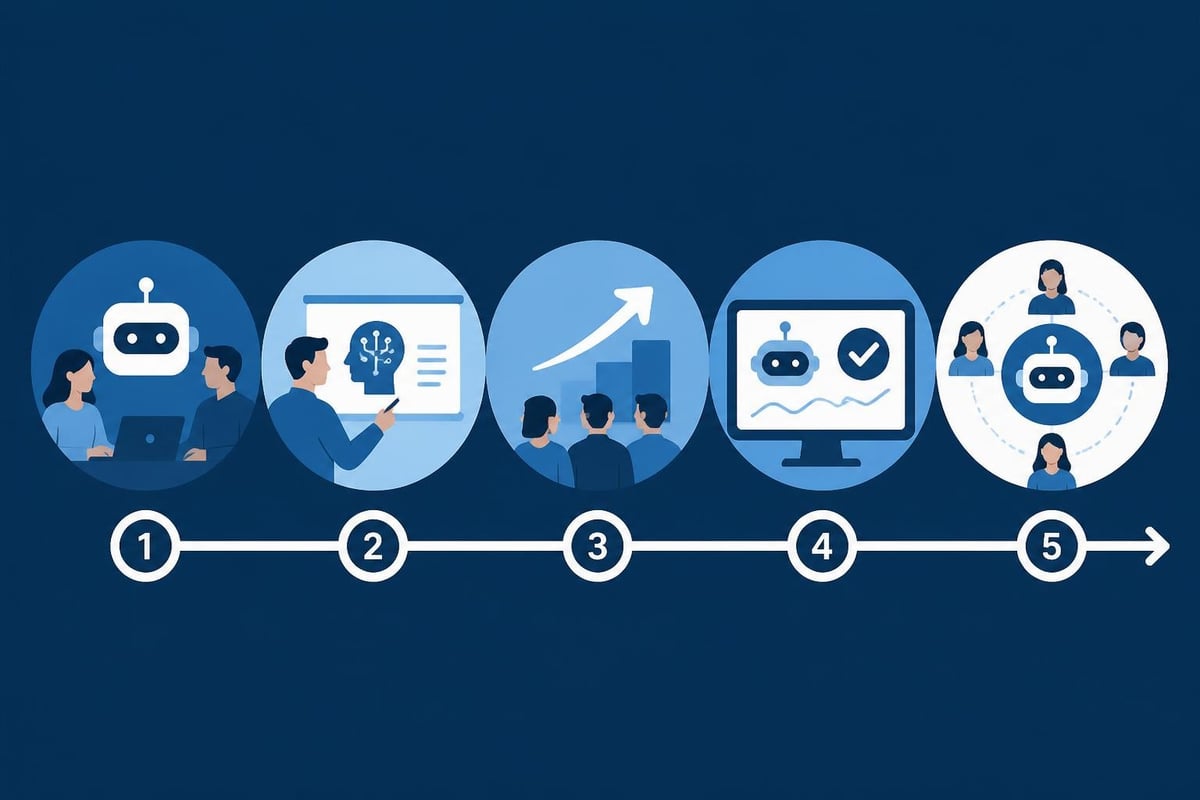
Successful ai recruiting software for agencies implementations follow structured rollout plans rather than attempting complete transformation overnight. Recommended phases include:
- Pilot program with one high-volume client or job category
- Performance assessment comparing AI-assisted versus traditional workflows
- Recruiter training on platform capabilities and optimal usage patterns
- Gradual expansion to additional client accounts or position types
- Continuous optimization based on placement outcomes and user feedback
This methodical approach allows agencies to identify integration challenges, refine processes, and build internal expertise before full-scale deployment.
Data Quality Foundation
AI systems perform only as well as the data they process. Agencies must establish rigorous data hygiene practices before implementation:
- Standardize candidate profile formats to ensure consistent information capture
- Cleanse existing databases by removing duplicates and correcting errors
- Establish data entry protocols that maintain quality standards
- Implement validation rules that prevent incomplete or inaccurate records
- Regular database audits to identify and correct degradation over time
High-quality data enables AI algorithms to identify meaningful patterns and generate accurate predictions. Conversely, inconsistent or incomplete data produces unreliable recommendations that undermine platform value.
Future Trends and Emerging Capabilities
Multi-Agent AI Systems
Research into multi-agent AI systems for recruitment demonstrates promising capabilities for managing complex hiring scenarios. These systems deploy specialized AI agents for different recruitment tasks: one agent handles candidate sourcing, another manages communication, a third assesses technical skills, and a fourth evaluates cultural fit.
This distributed approach mirrors how human recruitment teams function, with specialists focusing on their areas of expertise. The coordination between agents creates more nuanced candidate assessments than single-model systems can achieve.
Predictive Workforce Planning
Advanced ai recruiting software for agencies increasingly incorporates predictive analytics that forecast client hiring needs before requisitions arrive. By analyzing client growth patterns, industry trends, seasonal fluctuations, and historical hiring cycles, these systems alert agencies to proactively build talent pipelines for anticipated demand.
This proactive capability transforms agencies from reactive order-takers to strategic workforce planning partners. Clients value agencies that anticipate their needs and present qualified candidates before urgent hiring pressures emerge.
Enhanced Skill Verification
Traditional credential verification confirms degrees and employment history but provides limited insight into actual capabilities. Emerging ai recruiting software for agencies platforms integrate technical assessment tools, portfolio analysis systems, and simulation-based evaluations that validate real-world skills.
For specialized fields like AI and machine learning, comprehensive verification becomes particularly critical. Platforms must distinguish between candidates with superficial familiarity and those with deep expertise-a challenge that requires sophisticated assessment methodologies beyond resume review.
Selecting the Right Platform
Essential Evaluation Criteria
Agencies evaluating ai recruiting software for agencies options should assess platforms across these dimensions:
Core functionality: Does the platform address your specific pain points-whether candidate sourcing, screening efficiency, fraud prevention, or matching accuracy?
Integration compatibility: Will the system work seamlessly with your existing ATS, CRM, and communication tools, or require disruptive workflow changes?
Scalability: Can the platform handle your current volume while accommodating growth in client accounts, candidate database size, and user numbers?
Support and training: Does the vendor provide comprehensive onboarding, ongoing training resources, and responsive technical support?
Pricing structure: Are costs transparent, predictable, and aligned with your business model-whether per-user licenses, placement fees, or subscription tiers?
Comprehensive reviews like those found in evaluations of Workable provide insights into how different platforms perform across these criteria in real-world agency environments. Workable's AI-driven candidate sourcing and automated workflows exemplify the capabilities agencies should expect from modern solutions.
Vendor Partnerships and Industry Expertise
The vendor's understanding of recruitment agency operations significantly impacts implementation success. Providers with staffing industry backgrounds design features that align with agency workflows, terminology, and business models. Generic HR software adapted for recruitment often misses agency-specific requirements around client management, candidate ownership, and multi-client placement scenarios.
Agencies should request case studies from similar-sized firms in comparable market segments. Implementation timelines, adoption challenges, and realized benefits from peer agencies provide realistic expectations and identify potential obstacles.
Competitive Differentiation Through AI
Building Specialized Expertise
Ai recruiting software for agencies enables boutique firms to compete effectively against larger competitors by developing deep expertise in specific industries or job categories. AI's ability to process vast candidate pools and identify niche qualifications allows smaller agencies to match or exceed the sourcing capabilities of firms with larger recruiter teams.
Specialization in high-demand areas like artificial intelligence, cybersecurity, or healthcare technology positions agencies as category experts. The combination of specialized knowledge and AI-powered efficiency creates compelling value propositions that transcend firm size.
For agencies focused on AI talent marketplaces, the meta-challenge of recruiting AI professionals while using AI recruiting tools creates unique opportunities. Deep understanding of AI roles enables better algorithm configuration, more relevant matching criteria, and superior candidate assessment.
Brand Reputation Through Quality
Consistently delivering verified, high-quality candidates builds agency reputation more effectively than any marketing campaign. Ai recruiting software for agencies that emphasizes credential validation and skill verification enables agencies to guarantee candidate quality, differentiating them from competitors who conduct minimal vetting.
Client decision-makers increasingly prioritize risk mitigation over speed alone. Agencies that eliminate resume fraud, verify technical capabilities, and provide comprehensive candidate validation command premium fees and secure long-term client relationships.
Training and Change Management
Recruiter Skill Development
Successful ai recruiting software for agencies implementation requires recruiter skill evolution. Traditional sourcing and screening capabilities remain valuable, but recruiters must develop new competencies:
- Interpreting AI-generated candidate rankings and match scores
- Configuring platform parameters to reflect client preferences
- Validating AI recommendations using professional judgment
- Leveraging data insights to improve client consultation
- Managing candidate expectations about AI-assisted processes
Training programs should address both technical platform operation and strategic AI utilization. Recruiters who understand how AI systems work make better decisions about when to trust recommendations and when to apply human override.
Addressing Implementation Resistance
Some recruiters resist AI adoption, fearing job displacement or doubting algorithmic judgment. Effective change management addresses these concerns through:
- Transparent communication about AI's role as enhancement rather than replacement
- Early involvement of recruiters in platform selection and configuration
- Success celebration highlighting improved placement outcomes and reduced frustration
- Ongoing feedback mechanisms that incorporate recruiter insights into optimization
- Career development pathways showing how AI skills advance professional growth
Research shows that implementations with strong change management support achieve 60-70% faster adoption and higher sustained utilization rates than those treating AI as purely technical deployment.
AI recruiting software for agencies has evolved from experimental technology to essential infrastructure for competitive staffing operations in 2026. The combination of automated screening, fraud detection, intelligent matching, and workflow optimization delivers measurable improvements in efficiency, quality, and client satisfaction. As recruitment complexity increases and talent scarcity intensifies across specialized fields, agencies that leverage AI capabilities will dominate their markets while those relying on traditional methods will struggle to compete. Augmnt provides agencies with access to verified AI professionals through intelligent matching technology that combines artificial intelligence with human expertise, ensuring only qualified, fraud-free candidates reach your clients while streamlining your entire recruitment process.