AI Recruiting Software: Transform Your Hiring in 2026
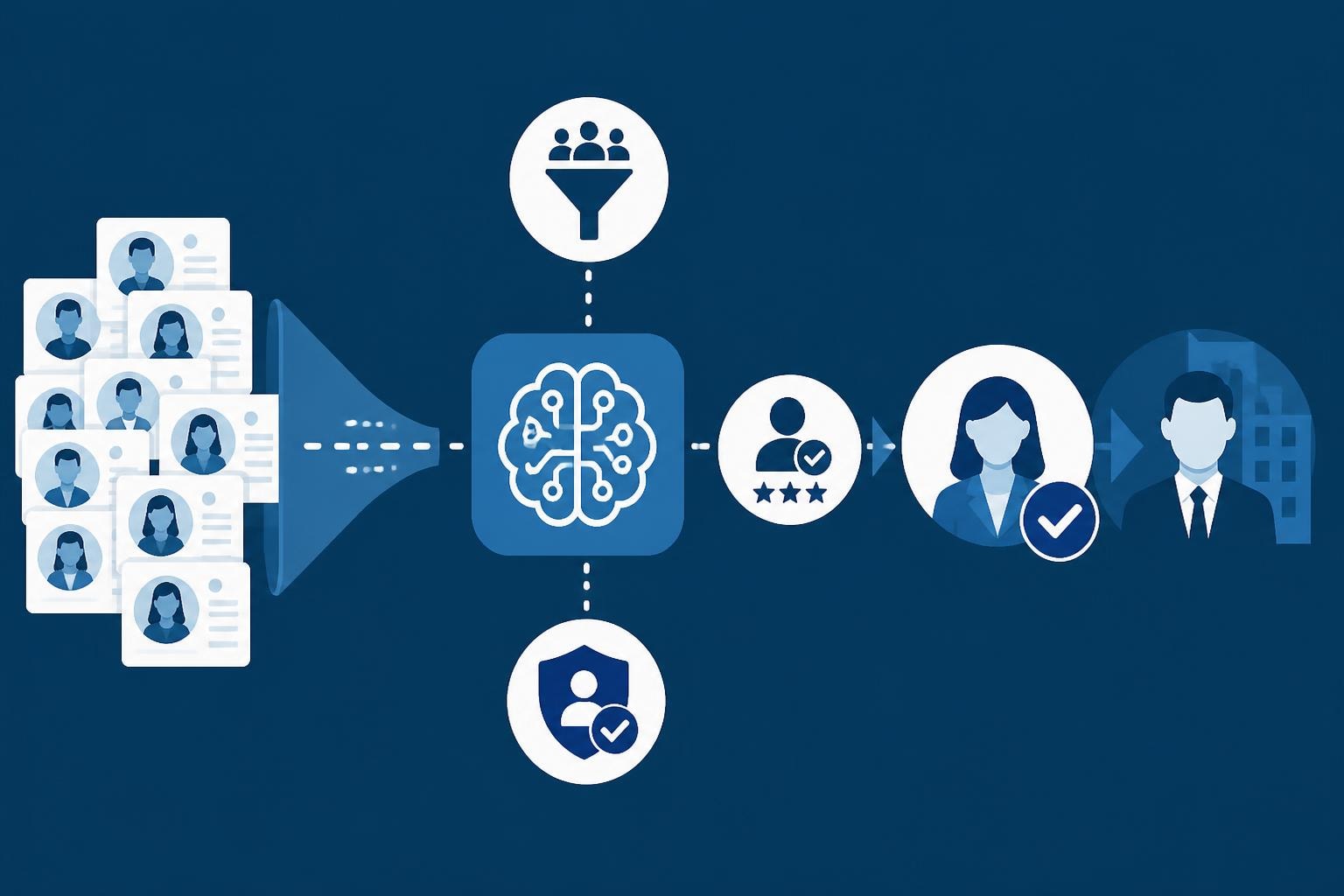
The recruitment landscape has transformed dramatically over the past few years, with artificial intelligence becoming the cornerstone of modern talent acquisition strategies. AI recruiting software has evolved from a futuristic concept into a practical necessity for organizations seeking to compete for top talent in an increasingly competitive market. These intelligent platforms leverage machine learning, natural language processing, and predictive analytics to automate time-consuming tasks, reduce hiring bias, and identify candidates who truly match role requirements. As businesses face growing challenges in verifying candidate credentials and managing high application volumes, understanding how to effectively deploy AI recruiting software has become essential for building strong, reliable teams.
The Evolution of Recruitment Technology
Traditional recruitment methods relied heavily on manual resume screening, subjective evaluations, and gut instinct. Recruiters would spend countless hours sifting through applications, conducting phone screens, and coordinating interview schedules. This approach not only consumed valuable time but also introduced unconscious bias and limited the talent pool to those who happened to catch a recruiter's attention.
The introduction of ai recruiting software has fundamentally changed this paradigm. Modern platforms can process thousands of applications in minutes, identifying patterns and qualifications that human reviewers might miss. According to recent research on AI in job interviews, these technologies are reshaping how companies evaluate candidates, though they also raise important questions about transparency and fairness.
Key Technological Advances
Several breakthrough technologies have converged to make intelligent recruitment possible:
- Natural Language Processing (NLP) enables software to understand job descriptions and resumes contextually, matching candidates based on skills and experience rather than just keywords
- Machine Learning algorithms continuously improve matching accuracy by learning from successful hires and recruiter feedback
- Predictive analytics forecast candidate success rates and potential tenure based on historical data
- Computer vision analyzes video interviews for communication skills and cultural fit indicators
- Blockchain integration verifies credentials and employment history with unprecedented accuracy
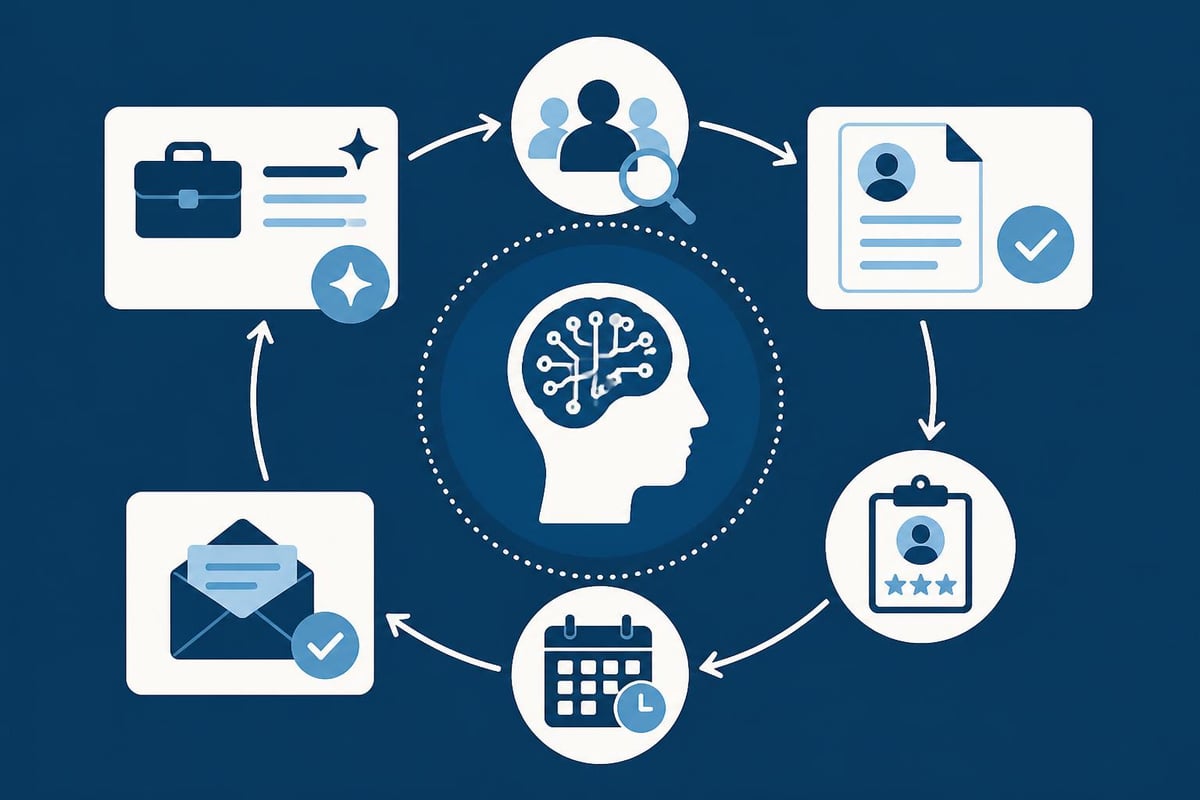
These technologies work together to create comprehensive platforms that handle every stage of the recruitment lifecycle.
Core Functions of Modern AI Recruiting Platforms
AI recruiting software delivers value across multiple dimensions of the hiring process. Understanding these core functions helps organizations select the right solution for their specific needs.
Intelligent Candidate Sourcing
Rather than waiting for applications to arrive, modern platforms actively search for qualified candidates across multiple channels. They scan professional networks, job boards, and talent databases to identify individuals whose skills match open positions. This proactive approach expands the talent pool significantly and reaches passive candidates who might not be actively job hunting.
The PeopleSearchBench research provides valuable insights into how AI-powered people search platforms evaluate and rank candidates, demonstrating the sophistication of modern sourcing algorithms.
Automated Resume Screening and Ranking
Perhaps the most transformative feature is automated screening. AI systems analyze resumes against job requirements, scoring candidates based on multiple criteria:
| Evaluation Criteria | AI Assessment Method | Benefits |
|---|---|---|
| Skills match | NLP analysis of technical and soft skills | Identifies qualified candidates regardless of resume format |
| Experience level | Career progression and tenure analysis | Filters for appropriate seniority levels |
| Education verification | Credential validation against databases | Reduces fraud and misrepresentation |
| Cultural fit indicators | Language analysis and value alignment | Predicts long-term success and retention |
This automation reduces time-to-screen by up to 75% while improving the quality of shortlisted candidates.
Fraud Detection and Credential Verification
Resume fraud has become an increasingly serious problem, with studies showing that up to 40% of resumes contain some form of embellishment or falsehood. AI recruiting software addresses this challenge through multiple verification layers. Advanced systems cross-reference claimed credentials against educational institutions, certification bodies, and previous employers. They detect inconsistencies in employment dates, identify fabricated companies, and flag suspicious patterns in career progression.
Platforms like Augmnt ATS combine AI-powered analysis with human expertise to ensure verified matching and comprehensive candidate fraud detection, giving employers confidence that they're evaluating genuine qualifications.
Enhancing the Candidate Experience
While efficiency matters, candidate experience remains crucial for employer branding and acceptance rates. Modern ai recruiting software enhances rather than dehumanizes the application process when implemented thoughtfully.
Conversational AI and Chatbots
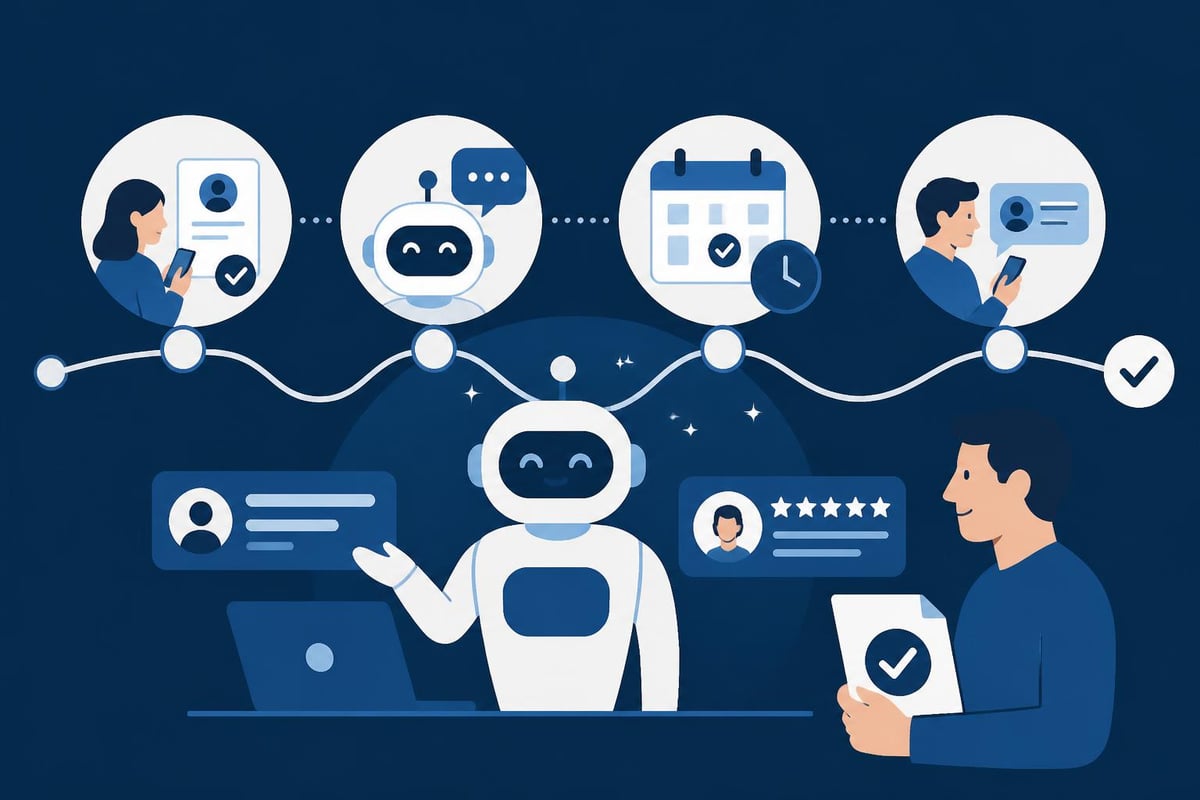
AI-powered chatbots handle initial candidate inquiries, answer frequently asked questions, and guide applicants through the submission process. These virtual assistants operate 24/7, ensuring candidates receive immediate responses regardless of time zones or business hours. Workday's acquisition of Paradox, an AI-powered conversational recruitment platform, demonstrates the industry's recognition of this technology's importance.
The most sophisticated chatbots can schedule interviews, send reminders, collect additional information, and even conduct preliminary screening conversations that feel remarkably natural.
Personalized Communication
Generic mass emails damage employer brand and reduce engagement rates. AI systems personalize communication based on candidate profiles, interaction history, and stage in the hiring process. They determine optimal send times, craft messages that resonate with specific candidate segments, and maintain consistent touchpoints throughout the recruitment journey.
Transparency remains essential. Research on AI systems guiding job seekers emphasizes that candidates value understanding how AI influences hiring decisions. Clear communication about how algorithms evaluate applications builds trust and improves the candidate experience.
Reducing Bias and Improving Diversity
One of the most compelling promises of ai recruiting software is its potential to reduce unconscious bias and improve workforce diversity. Traditional hiring processes are susceptible to numerous biases related to gender, age, ethnicity, educational background, and even name recognition.
How AI Addresses Bias
Well-designed AI systems can mitigate bias through several mechanisms:
- Blind screening removes identifying information like names, photos, and demographic data from initial evaluations
- Structured evaluation criteria ensure all candidates are assessed against identical, job-relevant standards
- Diverse training data exposes algorithms to successful employees from various backgrounds
- Regular auditing identifies and corrects algorithmic bias that may emerge over time
- Standardized interviews use consistent questions and evaluation rubrics across all candidates
However, AI is not automatically unbiased. The Talent Acquisition and Recruiting AI Index highlights how AI systems reflect the data and decisions used to train them, making contextual transparency and regular monitoring essential.
Implementation Best Practices
Organizations must actively manage AI systems to realize diversity benefits:
- Establish diverse hiring panels to review AI recommendations
- Monitor demographic outcomes across the recruitment funnel
- Regularly audit algorithms for disparate impact
- Maintain human oversight for final hiring decisions
- Provide transparency to candidates about AI's role in evaluation
These practices ensure that technology enhances rather than undermines diversity goals.
Integration with Existing HR Technology
AI recruiting software delivers maximum value when seamlessly integrated with existing human resources systems. Standalone solutions create data silos and duplicate work, while integrated platforms streamline workflows and provide comprehensive insights.
Common Integration Points
Modern AI recruitment platforms connect with multiple systems:
- Applicant Tracking Systems (ATS) for centralized candidate data management and workflow coordination
- Human Resource Information Systems (HRIS) for employee onboarding and record keeping
- Payroll systems for seamless transition from candidate to employee
- Background check providers for automated verification requests and result processing
- Assessment platforms for skills testing and personality evaluations
- Video interview tools for remote candidate evaluation
Organizations can explore ATS integration options to understand how different platforms connect and share data across the recruitment technology stack.
API Capabilities and Data Flow
Robust APIs enable bidirectional data flow between systems. When a candidate advances stages in the ATS, the AI platform receives updates and adjusts communication accordingly. When background checks complete, results automatically populate candidate profiles. This integration eliminates manual data entry, reduces errors, and ensures all systems reflect current information.
| Integration Type | Key Benefits | Implementation Complexity |
|---|---|---|
| Single Sign-On (SSO) | Unified access, enhanced security | Low |
| Data synchronization | Real-time updates across platforms | Medium |
| Workflow automation | Triggered actions based on status changes | Medium-High |
| Custom API development | Tailored functionality for unique needs | High |
Security and Compliance Considerations
The sensitive nature of candidate data makes security paramount in ai recruiting software selection and implementation. Platforms handle personally identifiable information (PII), employment history, salary expectations, and sometimes assessment results that require careful protection.
Data Protection Requirements
Organizations must ensure their AI recruitment tools comply with relevant regulations:
- GDPR for candidates in the European Union, requiring explicit consent, data portability, and right to deletion
- CCPA for California residents, mandating disclosure of data collection and usage
- EEOC guidelines prohibiting discrimination in employment decisions
- SOC 2 compliance demonstrating appropriate security controls and processes
- Industry-specific regulations for healthcare, finance, and other regulated sectors
A recent security flaw in McDonald's AI recruiting platform serves as a cautionary tale about the importance of robust security measures. Organizations should thoroughly vet vendors' security practices before deployment.
Data Retention and Candidate Rights
Clear policies around data retention protect both organizations and candidates. AI systems should automatically purge candidate data after defined periods unless candidates explicitly consent to talent pool retention. Candidates should easily access their data, understand how it's used, and request deletion when desired.
Transparency about AI's role in hiring decisions is both an ethical imperative and, increasingly, a legal requirement. Organizations should clearly communicate which decisions AI makes autonomously versus which require human review.
Measuring ROI and Performance Metrics
Implementing ai recruiting software represents a significant investment that requires quantifiable justification. Organizations should establish clear metrics before deployment and track them consistently to demonstrate value.
Key Performance Indicators
Essential metrics for evaluating AI recruitment platforms include:
- Time-to-hire measuring days from job posting to offer acceptance
- Cost-per-hire calculating total recruitment expenses divided by number of hires
- Quality-of-hire assessing new employee performance and retention rates
- Source effectiveness identifying which channels produce the best candidates
- Candidate satisfaction scores gathered through post-application surveys
- Recruiter productivity tracking number of roles managed per recruiter
- Diversity metrics monitoring demographic composition of applicants and hires
Establishing Baselines and Benchmarks
Before implementing AI tools, document current performance across these metrics. This baseline enables accurate before-and-after comparisons. Additionally, research industry benchmarks to understand whether your organization performs above or below average in specific areas.
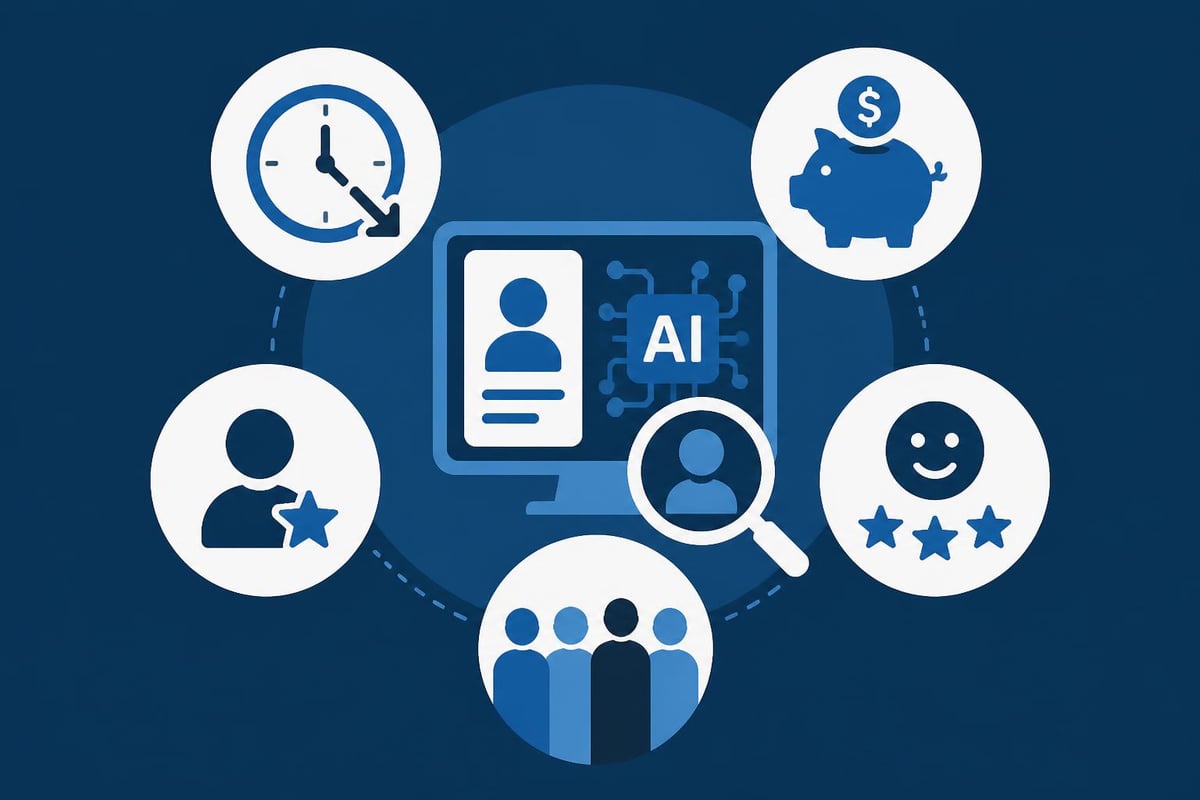
Most organizations see measurable improvements within the first quarter after implementation:
| Metric | Typical Improvement | Timeline to Realize |
|---|---|---|
| Time-to-hire | 30-50% reduction | 1-2 months |
| Cost-per-hire | 20-40% reduction | 2-3 months |
| Recruiter productivity | 40-60% increase | 1-2 months |
| Candidate quality | 15-25% improvement | 3-6 months |
| Application completion rate | 20-35% increase | Immediate |
Training and Change Management
Technology alone doesn't guarantee success. Organizations must invest in proper training and change management to help recruiters and hiring managers effectively leverage ai recruiting software.
Building AI Literacy
Research on HR managers' AI literacy reveals that understanding how AI systems work significantly impacts their effective use. Comprehensive training programs should cover:
- How AI algorithms evaluate candidates
- Interpreting AI-generated recommendations and scores
- Recognizing algorithmic limitations and potential biases
- When to override AI suggestions with human judgment
- Best practices for writing job descriptions that AI can optimize
This knowledge empowers recruiters to partner effectively with AI rather than simply accepting its outputs uncritically.
Addressing Resistance and Concerns
Some team members may fear that AI will replace their roles. Transparent communication about AI's purpose-augmenting human decision-making rather than replacing it-addresses these concerns. Highlight how automation of routine tasks frees recruiters to focus on relationship-building, candidate engagement, and strategic talent planning.
Involve recruiters in vendor selection and implementation planning. Their practical insights improve tool configuration and increase adoption rates. Early champions within the recruiting team can demonstrate value to skeptical colleagues and provide peer support during the transition.
Selecting the Right AI Recruiting Platform
The market offers dozens of ai recruiting software solutions, each with different strengths, features, and pricing models. Systematic evaluation ensures you select the platform that best fits your organization's needs.
Essential Evaluation Criteria
When comparing platforms, consider these factors:
- Deployment model: Cloud-based SaaS versus on-premises installation
- Scalability: Ability to handle your hiring volume and growth projections
- Customization: Configuration options for your unique workflows and requirements
- User experience: Interface intuitiveness for both recruiters and candidates
- Integration capabilities: Compatibility with your existing technology stack
- Vendor stability: Company financial health and market position
- Support quality: Training resources, documentation, and customer service responsiveness
- Pricing structure: Per-user, per-hire, or flat fee models
Platforms like Workable offer comprehensive feature sets that appeal to mid-market companies, while Paylocity integrates recruiting with broader HR and payroll functions.
Trial Periods and Proof of Concept
Most vendors offer trial periods or pilot programs. Use these opportunities to test the platform with real job openings and actual candidates. Involve multiple recruiters in the evaluation and gather their feedback systematically. Pay attention to edge cases and unique scenarios your organization encounters regularly.
Request references from similar organizations in your industry and size category. Ask specific questions about implementation challenges, ongoing support quality, and realized benefits versus initial promises.
Future Trends in AI Recruitment
AI recruiting software continues to evolve rapidly, with several emerging trends poised to reshape talent acquisition in the coming years.
Advanced Predictive Analytics
Next-generation platforms will predict not just candidate suitability for specific roles but long-term career trajectories within organizations. They'll identify high-potential employees likely to excel in leadership positions, suggest personalized development paths, and forecast retention risks before employees begin job searching.
Voice and Sentiment Analysis
AI tools increasingly analyze video interviews for communication effectiveness, emotional intelligence, and authenticity. While this technology raises privacy considerations, it promises to provide richer candidate insights than text-based interactions alone.
Skills-Based Hiring
The shift from credentials to competencies continues accelerating. AI platforms will focus less on where candidates went to school or their previous job titles and more on demonstrable skills and learning agility. This approach expands talent pools and supports career transitions for workers from non-traditional backgrounds.
Organizations can prepare by investing in robust skills assessment capabilities and focusing job descriptions on required competencies rather than preferred pedigrees. Hiring managers interested in this approach can explore resources and guidance tailored to skills-based evaluation.
Ethical AI and Algorithmic Transparency
Regulatory pressure and candidate expectations will drive increased transparency around AI decision-making. Platforms will provide clearer explanations of why candidates were selected or rejected, allow candidates to challenge automated decisions, and undergo third-party audits for bias and fairness.
Modern recruitment demands efficiency, accuracy, and fairness at scales impossible to achieve through manual processes alone. AI recruiting software delivers on these requirements by automating routine tasks, improving candidate matching, and providing data-driven insights that enhance hiring outcomes. However, realizing these benefits requires thoughtful implementation, ongoing monitoring, and commitment to maintaining human oversight where it matters most. Augmnt addresses these challenges by intelligently connecting businesses with verified AI professionals through a combination of advanced technology and human expertise, ensuring you hire qualified, fraud-free candidates efficiently and confidently.