
AI Consulting Business: Build Success in 2026
The artificial intelligence revolution has created unprecedented demand for specialized expertise, making an ai consulting business one of the most promising ventures in 2026. Organizations across every sector recognize AI's transformative potential but lack the internal capabilities to harness it effectively. This gap between ambition and execution has opened a lucrative market for consultants who can bridge technical innovation with strategic business outcomes. Whether you're a seasoned AI professional considering independent consulting or building a consultancy firm from the ground up, understanding the landscape, service models, and operational requirements is essential for sustainable success.
Understanding the AI Consulting Market Landscape
The ai consulting business sector has matured significantly over the past few years, evolving from experimental pilots to mission-critical implementations. Companies no longer question whether to adopt AI but rather how to do so strategically and efficiently. This shift has expanded the total addressable market while simultaneously raising client expectations.
Current market dynamics include:
- Enterprise clients seeking end-to-end AI transformation rather than isolated projects
- Mid-market companies pursuing specific use cases with measurable ROI
- Startups requiring AI strategy validation before significant investment
- Industry-specific demand in healthcare, finance, manufacturing, and retail
The strategic application of AI within unique business contexts requires consultants to blend technical depth with domain expertise. Generalist consulting approaches rarely deliver the specialized insights clients need to achieve competitive advantages through AI adoption.

Service Portfolio Development
Building a successful ai consulting business demands careful service portfolio design that balances breadth and specialization. Clients approach consultants at various stages of AI maturity, requiring different intervention levels.
Core consulting services typically include:
- AI Strategy and Roadmap Development - Assessing organizational readiness, identifying high-value use cases, and creating phased implementation plans
- Solution Architecture and Design - Specifying technical requirements, selecting appropriate models and platforms, and designing scalable infrastructure
- Implementation and Integration - Building proof-of-concepts, developing production systems, and integrating AI capabilities with existing workflows
- Training and Change Management - Upskilling teams, establishing governance frameworks, and driving organizational adoption
- Performance Optimization and Maintenance - Monitoring model performance, retraining algorithms, and ensuring ongoing value delivery
The most profitable consultancies package these services strategically rather than offering everything to everyone. Specialization in specific industries, use cases, or technology stacks often commands premium rates and generates stronger referrals.
Building Your Service Delivery Model
Your operational approach determines both client satisfaction and business scalability. The ai consulting business model you choose impacts everything from pricing to talent acquisition to growth trajectory.
| Delivery Model | Strengths | Challenges | Best For |
|---|---|---|---|
| Boutique Solo Practice | Low overhead, high flexibility, direct client relationships | Limited capacity, single point of failure | Deep specialists with strong networks |
| Small Team (3-10) | Diverse expertise, manageable collaboration, quality control | Scaling challenges, key person dependencies | Industry-focused consultancies |
| Partnership Network | Expanded capabilities, risk sharing, resource flexibility | Coordination complexity, quality consistency | Multi-discipline AI practices |
| Full-Service Firm (10+) | Enterprise credibility, comprehensive offerings, stable revenue | Higher overhead, management complexity | Broad market positioning |
Many successful consultancies begin as solo or small team operations before expanding strategically based on proven demand patterns. This evolution allows founders to validate service-market fit before committing to larger operational structures.
Pricing Strategies That Reflect Value
Pricing an ai consulting business requires balancing competitive positioning with value capture. The industry has moved beyond simple hourly billing toward models that align consultant incentives with client outcomes.
Common pricing approaches include:
- Hourly or daily rates ($150-$500+ per hour depending on expertise and market) for well-defined scopes
- Project-based fixed fees for deliverables with clear specifications and timelines
- Retainer arrangements providing ongoing advisory support and priority access
- Value-based pricing tied to measurable business outcomes or performance improvements
- Hybrid models combining base fees with success bonuses
Transitioning AI projects from pilot stages to scalable solutions often requires phased pricing that de-risks initial investments while ensuring consultant commitment through the full implementation lifecycle. Transparent pricing structures build trust and facilitate smoother sales cycles.
Talent Acquisition and Team Building
The success of any ai consulting business fundamentally depends on assembling the right talent mix. The scarcity of qualified AI professionals makes recruitment one of the most critical and challenging operational aspects.
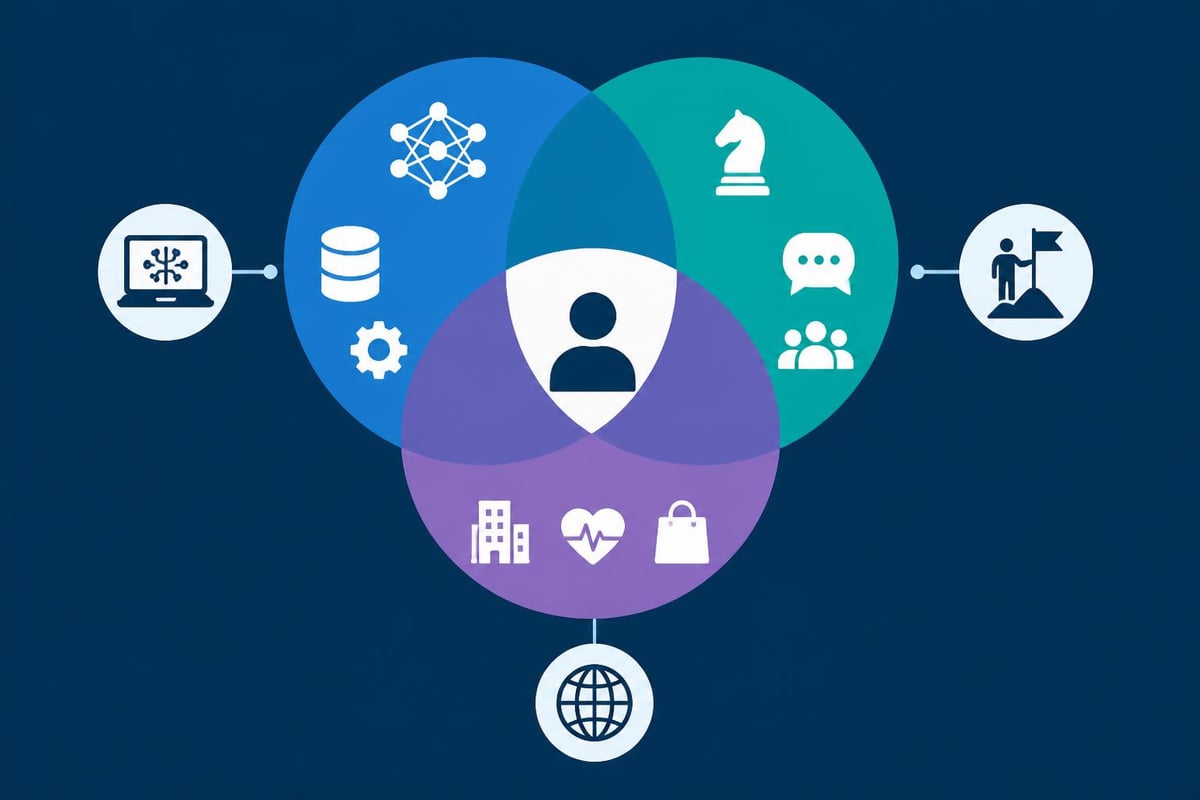
Your team composition should reflect the services you deliver and markets you serve. A computer vision consultancy targeting manufacturing clients requires different expertise than a natural language processing practice serving financial institutions.
Essential roles in a growing AI consultancy:
- Machine learning engineers with production deployment experience
- Data scientists who translate business questions into analytical frameworks
- AI architects who design scalable, maintainable systems
- Domain specialists who understand industry-specific challenges and regulations
- Project managers skilled in technical delivery and stakeholder communication
Finding verified, fraud-free AI professionals can be streamlined through specialized platforms. Augmnt ATS provides comprehensive candidate validation including resume fraud detection and skill verification, ensuring your consultancy builds teams with genuine expertise rather than inflated credentials.
Continuous Learning and Capability Development
The rapid evolution of AI technologies demands that consultancies invest heavily in ongoing learning. Yesterday's cutting-edge techniques become today's baseline expectations, and tomorrow's innovations emerge constantly.
Building a learning culture within your ai consulting business ensures sustained relevance and competitive advantage. This includes allocating time and budget for experimentation with new tools, certifications in emerging platforms, conference attendance, and contribution to research or open-source projects.
Client Acquisition and Business Development
Marketing an ai consulting business differs significantly from traditional professional services. Clients seek proof of technical credibility combined with business acumen, making thought leadership and demonstrated results essential to effective positioning.
High-performing acquisition channels include:
- Content marketing - Publishing case studies, whitepapers, and technical articles that showcase expertise
- Speaking engagements - Presenting at industry conferences and client events
- Strategic partnerships - Collaborating with complementary service providers and technology vendors
- Referral networks - Leveraging satisfied clients and professional connections
- Direct outreach - Targeted engagement with companies showing clear AI readiness signals
Understanding that 70% of AI value comes from rethinking how people work positions consultants as change agents rather than mere technology implementers. This perspective resonates with executive buyers who recognize that technology alone cannot drive transformation.
Establishing Credibility Through Validation
New ai consulting business ventures face skepticism from potential clients who've encountered consultants overpromising and underdelivering. Building credibility requires demonstrating both technical competence and practical implementation experience.
Effective validation mechanisms include:
- Portfolio of completed projects with quantified business outcomes
- Client testimonials from recognized organizations or executives
- Technical certifications from major AI platforms and vendors
- Published research or patents demonstrating innovation leadership
- Team credentials highlighting collective experience and accomplishments
Reviewing real-world case studies helps prospective clients visualize how AI consulting transforms operations across different contexts. Transparency about methodologies, timelines, and realistic expectations builds trust more effectively than aspirational marketing claims.
Operational Excellence and Delivery Management
Delivering consistent value determines whether an ai consulting business generates one-time transactions or builds long-term client relationships. Excellence in project execution requires robust methodologies, clear communication, and disciplined risk management.
Project Lifecycle Management
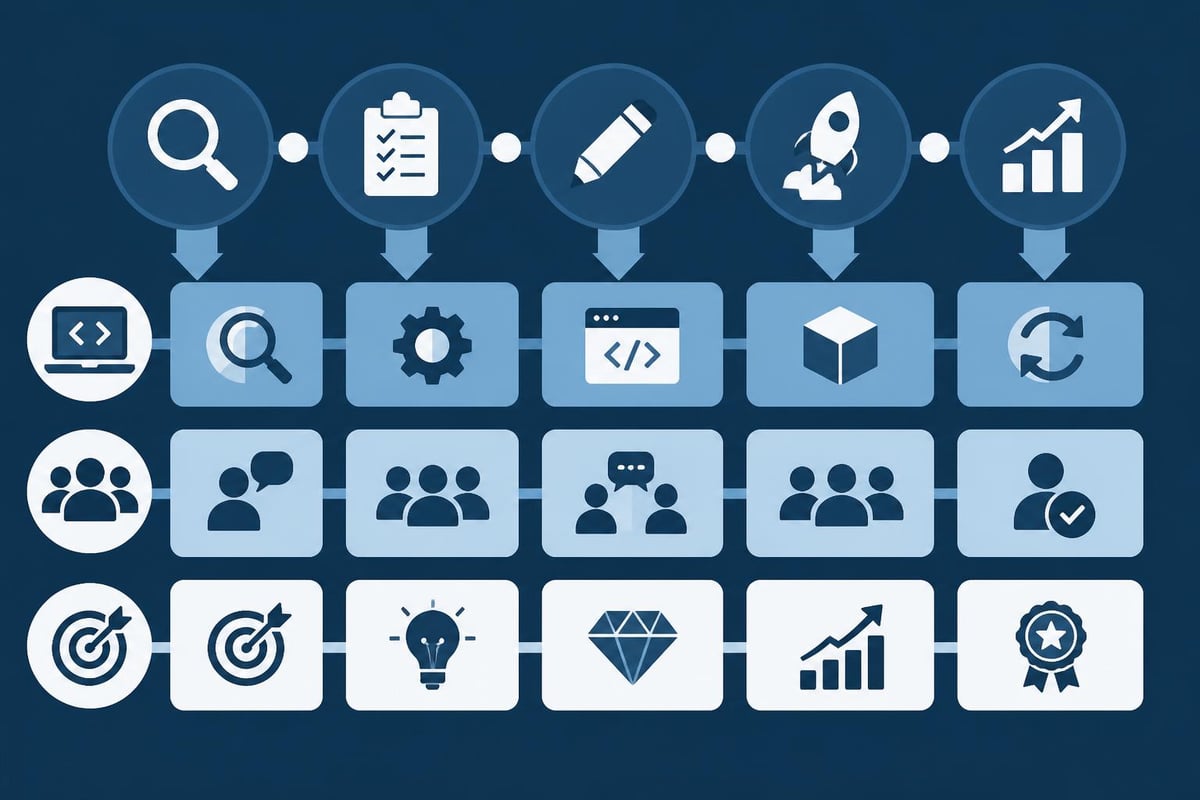
Successful AI consulting engagements follow structured phases that balance exploration with accountability. While specific methodologies vary, effective frameworks share common elements.
| Phase | Key Activities | Duration | Success Metrics |
|---|---|---|---|
| Discovery | Stakeholder interviews, data assessment, use case prioritization | 2-4 weeks | Aligned objectives, feasibility validation |
| Design | Solution architecture, technology selection, project planning | 3-6 weeks | Approved design, secured resources |
| Development | Model building, testing, iteration | 8-16 weeks | Performance benchmarks met, stakeholder approval |
| Deployment | Integration, user training, rollout | 4-8 weeks | Adoption rates, operational stability |
| Optimization | Monitoring, refinement, scaling | Ongoing | Sustained performance, business value |
Understanding what to expect in the first 90 days of an AI consulting engagement helps both consultants and clients set realistic expectations. Early wins build momentum while maintaining focus on sustainable, long-term value creation.
Specialization Strategies for Competitive Advantage
The ai consulting business landscape has become increasingly crowded, making differentiation essential for premium positioning. Specialization allows consultancies to develop deeper expertise, command higher rates, and generate more qualified referrals.
Effective specialization dimensions include:
- Industry vertical focus - Healthcare diagnostics, financial fraud detection, manufacturing quality control
- Technical specialty - Computer vision, natural language processing, reinforcement learning, MLOps
- Use case expertise - Predictive maintenance, customer churn prevention, demand forecasting
- Implementation approach - Rapid prototyping, enterprise transformation, regulatory compliance
- Technology stack - Specific cloud platforms, open-source frameworks, or vendor solutions
Consultancies attempting to serve all markets with all technologies often struggle against focused competitors who demonstrate proven track records in specific domains. Strategic specialization doesn't limit growth but rather accelerates it through clearer positioning and stronger reputation.
Building Industry-Specific Expertise
Industry specialization requires investing in domain knowledge that extends beyond AI technical capabilities. Healthcare AI consultants must understand regulatory requirements like HIPAA and clinical workflows. Financial services specialists need expertise in compliance frameworks and risk management principles.
This domain expertise transforms consultants from external technologists into trusted advisors who speak clients' language and understand their unique constraints. The investment in industry-specific knowledge creates barriers to entry that protect margins and competitive positioning.
Risk Management and Quality Assurance
Operating an ai consulting business involves managing technical, operational, and reputational risks that can undermine client relationships and business sustainability. Proactive risk management distinguishes professional consultancies from amateur operations.
Critical risk categories include:
- Technical risks - Model performance failures, data quality issues, scalability limitations
- Project risks - Scope creep, timeline delays, resource constraints
- Compliance risks - Regulatory violations, privacy breaches, ethical concerns
- Business risks - Client dissatisfaction, payment disputes, talent attrition
Establishing clear governance frameworks, testing protocols, and quality gates throughout project lifecycles minimizes these risks. Documentation, version control, and transparent communication ensure problems get identified and addressed quickly.
Ethical AI Practice and Responsible Development
The growing awareness of AI's societal impacts creates both obligations and opportunities for consultancies. Clients increasingly demand consultants who prioritize fairness, transparency, and accountability alongside technical performance.
Implementing responsible AI practices includes bias testing, explainability requirements, privacy protection, and ongoing monitoring for unintended consequences. Consultancies that lead in responsible AI development and deployment position themselves as forward-thinking partners rather than vendors focused solely on technical implementation.
Scaling Your Consulting Practice
Growth strategies for an ai consulting business must balance revenue expansion with quality maintenance and team satisfaction. Premature scaling often destroys the client relationships and delivery excellence that enabled initial success.
Sustainable scaling typically follows this progression:
- Prove service-market fit with 5-10 successful client engagements
- Document methodologies and create reusable frameworks
- Hire strategically to expand capacity in proven service areas
- Develop training programs to replicate expertise across team members
- Build operational infrastructure for consistent project delivery
- Expand offerings based on validated client demand patterns
Recognizing that successful AI implementation requires focusing on outcomes over ownership helps consultancies design team structures and incentives that prioritize client success over individual contributions. Cross-functional collaboration and knowledge sharing become cultural priorities.
Leveraging Technology for Operational Efficiency
Ironically, many ai consulting business operations rely on manual processes that could benefit from the very automation they recommend to clients. Strategic technology adoption improves delivery efficiency, team coordination, and financial management.
High-impact operational technologies include:
- Project management platforms for transparent tracking and collaboration
- Knowledge management systems for capturing and sharing institutional expertise
- Financial management tools for accurate forecasting and resource allocation
- Communication platforms for distributed team coordination
- Learning management systems for continuous capability development
For consultancies building teams, exploring marketplace options can streamline talent acquisition while ensuring access to verified AI professionals who meet technical and ethical standards.
Financial Management and Business Sustainability
Running a profitable ai consulting business requires disciplined financial management that balances growth investment with sustainable margins. The project-based nature of consulting revenue creates cash flow variability that demands careful planning.
Key financial metrics to monitor:
| Metric | Target Range | Why It Matters |
|---|---|---|
| Utilization Rate | 65-80% | Revenue productivity without burnout |
| Average Project Value | Increasing trend | Market positioning and client quality |
| Client Acquisition Cost | <20% project value | Marketing efficiency |
| Gross Margin | 50-70% | Service profitability and scalability |
| Cash Reserves | 3-6 months operating expenses | Business resilience and flexibility |
Maintaining healthy financial metrics enables consultancies to invest in capability development, weather market fluctuations, and make strategic decisions from positions of strength rather than desperation.
Pricing for Profitability and Growth
Many consultancies underprice services early in their development, creating client expectations and internal cost structures that become difficult to adjust. Strategic pricing balances market competitiveness with the true cost of delivering excellence.
Effective pricing considers direct labor costs, overhead allocation, profit margins, market positioning, and value delivered to clients. Regular pricing reviews ensure services remain profitable as costs evolve and market conditions change.
Building a successful ai consulting business in 2026 requires technical excellence, business acumen, and operational discipline working in concert to deliver measurable client value. The organizations that thrive combine specialized expertise with proven methodologies, ethical practices, and scalable delivery models. If you're looking to build or expand your AI consulting team with verified professionals who bring genuine expertise, Augmnt connects you with fraud-free candidates through comprehensive validation and skill verification, ensuring your practice maintains the quality standards that drive client success and business growth.