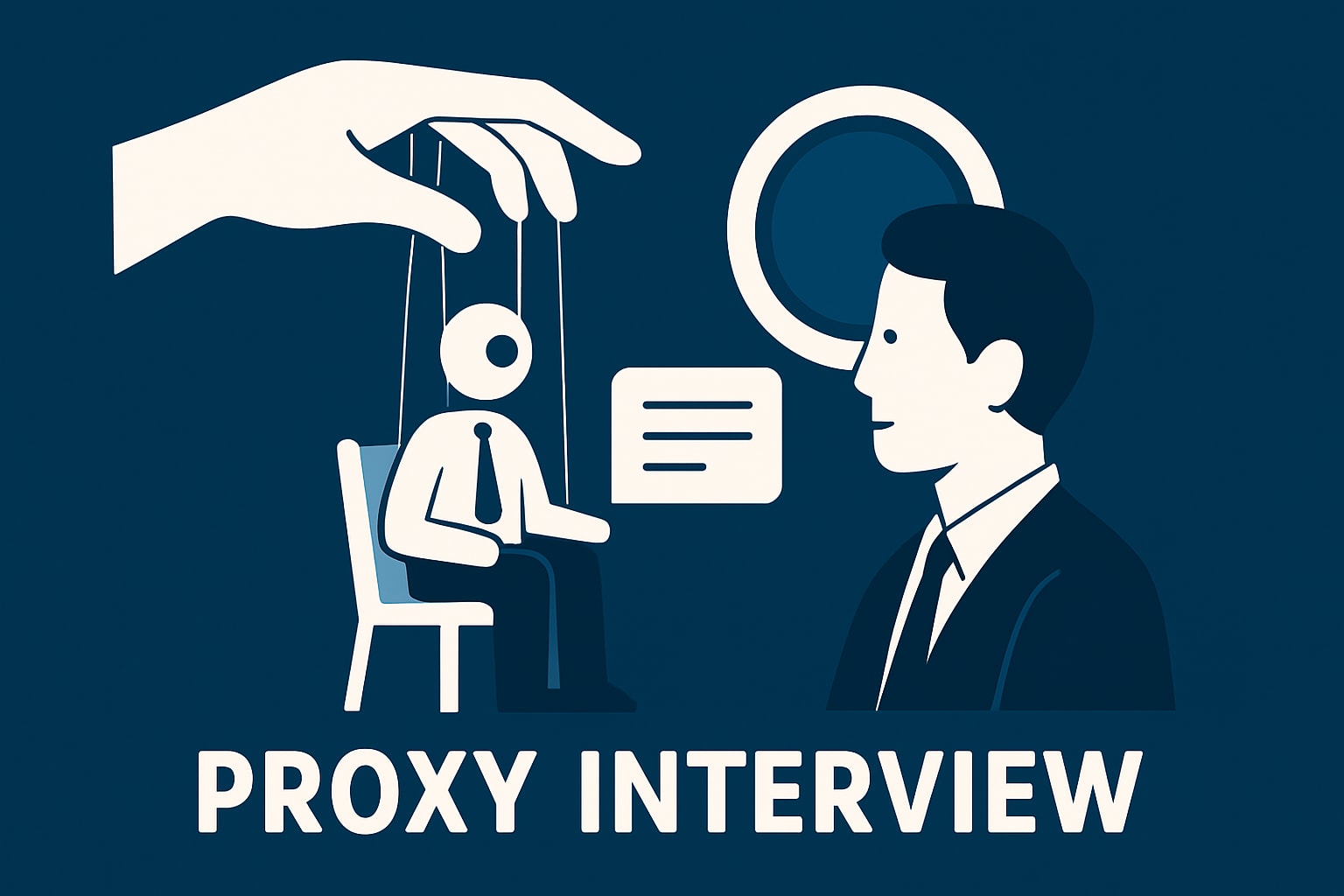
Proxy Interview Guide: Insider Tips and Best Practices 2026
Remote hiring is transforming the recruitment world, but it brings new challenges like the threat of the proxy interview. In a proxy interview, imposters pose as real candidates, making even experienced hiring teams vulnerable.
This guide breaks down the basics of proxy interviews, reveals tactics behind this rising fraud, and offers practical steps to protect your hiring process in 2026. Discover what proxy interviews are, why they are increasing, and the latest detection strategies.
Get ready to uncover hidden risks, learn why top companies can fall victim, and gain actionable insights to keep your recruitment secure. Equip your team today with the tools and confidence to spot and stop proxy interviews.
Understanding Proxy Interviews: What They Are and Why They Matter
Remote hiring has opened new doors for talent acquisition, but it has also introduced new vulnerabilities. One growing concern is the proxy interview, a practice that is quietly undermining the integrity of recruitment across industries.
Definition and Evolution of Proxy Interviews
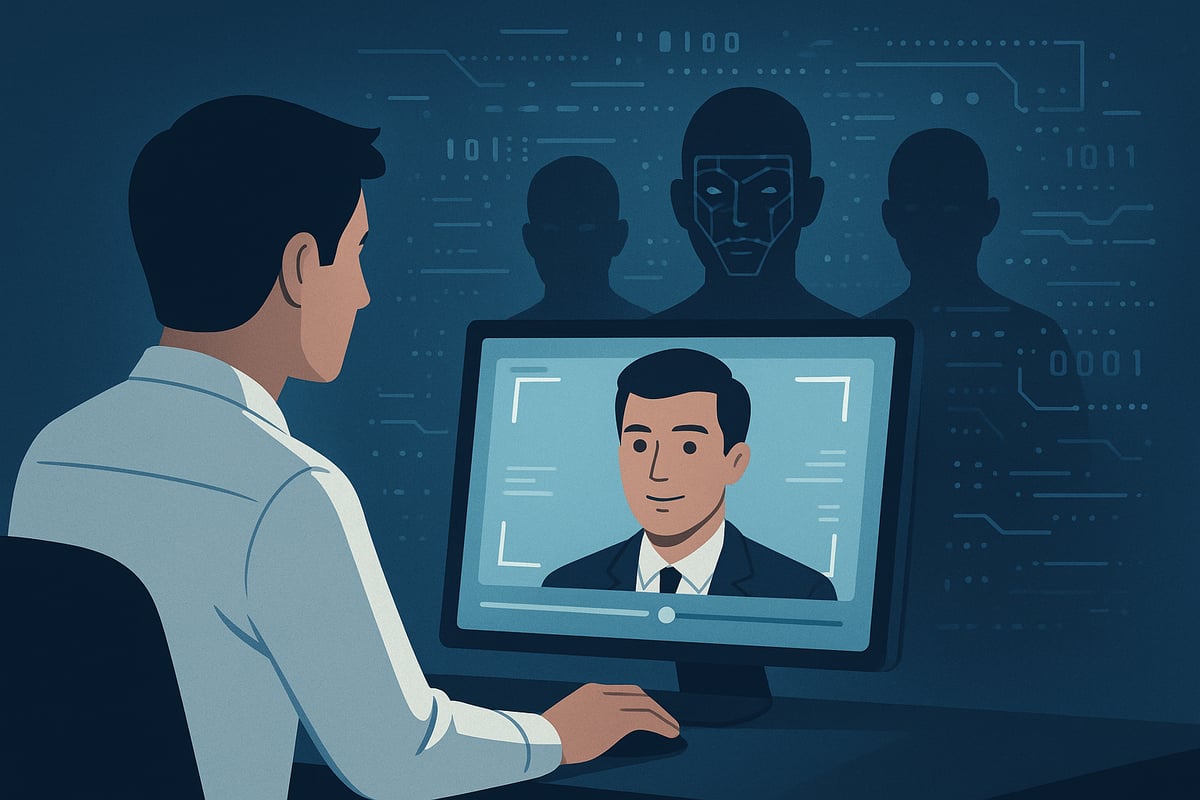
A proxy interview occurs when someone other than the actual applicant participates in the hiring process, impersonating the real candidate. This deception is not new, but its frequency and sophistication have evolved rapidly due to the shift toward virtual hiring.
Historically, proxy interview schemes were rare and limited to high-stakes roles. However, since 2020, the adoption of remote work and virtual interviews has made it easier for imposters to slip through the cracks. According to industry sources, there has been a marked increase in reported cases, particularly within technology and AI-related positions.
Proxy interview methods now span a wide range of tactics. These include remote impersonation via video or voice, in-person substitutes for freelance or contract roles, and shadow proxies who feed answers to the candidate during the interview. Technological advancements have enabled even more elaborate schemes, such as the use of deepfake video, voice-changing applications, and AI-generated responses.
| Form of Proxy Interview | Description | Example Scenario |
|---|---|---|
| Remote Video Impersonation | Imposter appears on camera for candidate | Deepfake video for developer role |
| Voice Substitution | Voice changer masks real identity | AI voice modulator in phone screen |
| Shadow Proxy | Collaborator feeds live answers | Earpiece in technical interview |
| In-Person Substitute | Stand-in attends interview physically | Freelance project bid meeting |
A recent example involves a remote developer position where a candidate used deepfake technology to mimic facial expressions and even lip movements. As explained in Proxy Interview Explained, the ease of access to such tools has contributed to the surge in these incidents.
Motivations and Risks
Why do candidates resort to a proxy interview? The motivations are varied. Some applicants lack confidence in their technical or language skills. Others may feel pressured after repeated rejections or face urgent financial needs following layoffs. In many cases, the complexity of technical assessments drives candidates to seek outside help in real time.
For employers, the risks of a proxy interview are significant. When a candidate's true abilities are misrepresented, organizations may hire individuals who cannot perform as promised. This leads to wasted resources, project delays, and potential legal or compliance violations. The repercussions often ripple through teams, causing disruption and eroding trust.
Employers have reported instances where job performance fell short of expectations, only to discover later that a proxy interview had occurred. The ethical implications are equally concerning, as this practice undermines fairness and transparency in hiring.
Industries most affected include data science, cloud computing, and software engineering, where technical expertise is crucial. The proxy interview phenomenon is not just a technical challenge; it is a threat to the credibility of modern recruitment, demanding urgent attention and robust countermeasures.
Common Proxy Interview Tactics and Real-World Examples
The evolution of the proxy interview has introduced a wave of sophisticated deception techniques. As remote and hybrid work models become the norm, organizations face increasing challenges in detecting these elaborate schemes. Understanding the full range of tactics is essential to protect your hiring process and uphold recruitment integrity.
Technological Approaches
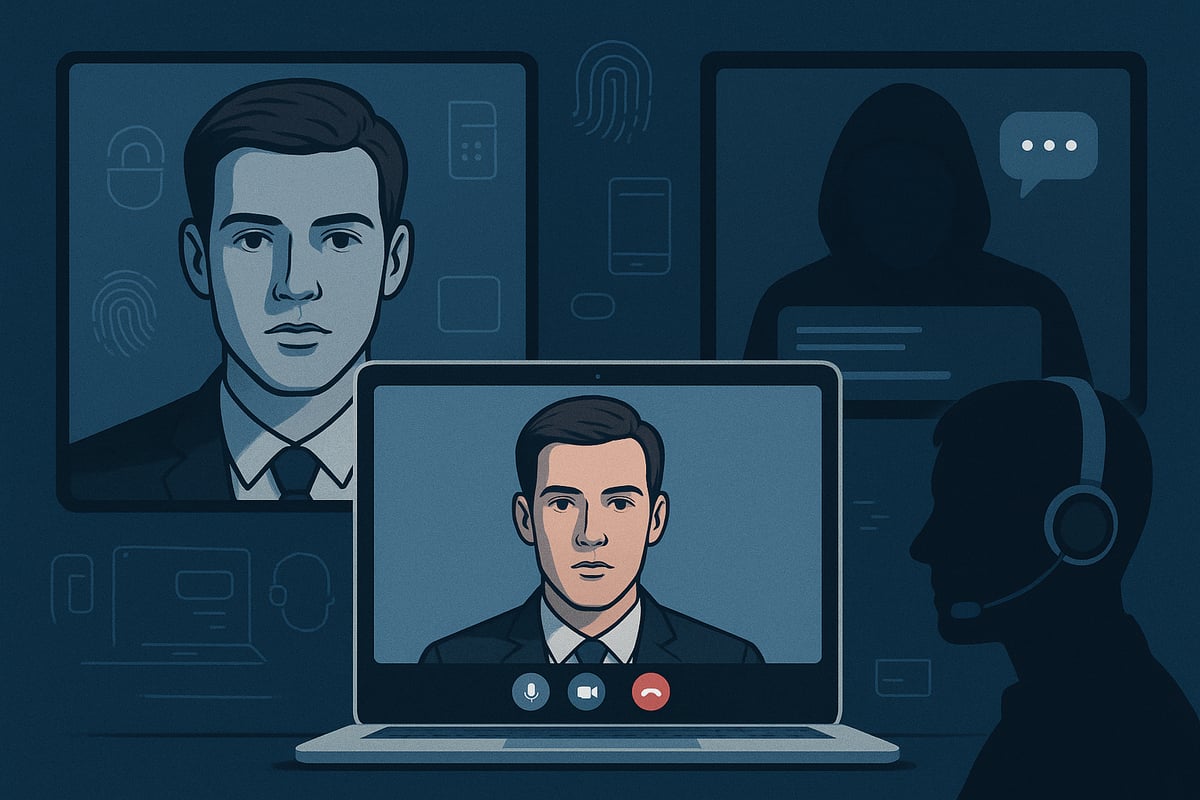
Technology is at the heart of many proxy interview strategies, enabling imposters to bypass even advanced screening processes. One prevalent method involves video and voice alteration tools. Candidates may use static video loops or deepfake software to convincingly mimic someone else's appearance or speech patterns. Voice changers, such as Voicemod, can mask accents or gender, making it difficult for interviewers to detect inconsistencies.
Remote access tools like AnyDesk and TeamViewer allow a third party to control the interviewee’s device in real time. This enables skilled proxies to answer technical questions or solve coding challenges on behalf of the candidate. In some cases, AI-generated voices synthesize responses that sound natural, further complicating detection.
A striking example involves a remote developer role where a proxy interview was conducted using a pre-recorded video loop. The candidate's responses were so seamless that only a careful review revealed subtle lip-sync issues. For deeper insight into how deepfake technology is shaping these threats and strategies for early detection, see Deepfake Interviews and Fake Candidates.
Human-Assisted Methods
While technology plays a major role, human involvement remains central in many proxy interview schemes. Imposters often rely on Bluetooth earpieces or other discreet audio devices, allowing a collaborator to feed answers in real time. This approach is especially common in high-stakes interviews where rapid, accurate responses are required.
In-person substitutes are another tactic, particularly for freelance or contract roles. Here, a stand-in physically attends the interview, presenting as the actual candidate. Shadow proxies take it a step further by guiding candidates remotely through chat or audio, providing context-specific answers that help them navigate complex questions.
For instance, in a business analyst interview, the candidate was observed repeating answers almost verbatim, a red flag for a proxy interview. Careful questioning and observation revealed that a shadow proxy was relaying information through a concealed earpiece. These scenarios highlight the importance of vigilance and layered verification.
Credential and Digital Manipulation
Beyond live deception, many proxy interview cases involve manipulating digital credentials and online presence. Outsourced portfolios have become increasingly common, with freelancers creating impressive GitHub repositories or LinkedIn profiles that do not reflect the candidate’s real abilities. Resume fraud, where experience or skills are fabricated, can be difficult to detect without thorough cross-checks.
Biometric spoofing is also emerging as a concern. Candidates may attempt to bypass facial or fingerprint verification using sophisticated replicas or deepfake images. For example, a sudden spike in GitHub activity limited to hiring periods can indicate outsourced work or staged contributions. This form of manipulation erodes trust and requires robust validation procedures.
Environmental and Psychological Tactics
Proxy interview tactics extend to manipulating the candidate’s environment and leveraging psychological tricks. Virtual backgrounds are frequently used to obscure the presence of collaborators off-camera or to hide signals of remote assistance. Environmental anomalies, such as inconsistent lighting or suspicious background noises, often suggest multiple people are present during the interview.
Psychological manipulation is another layer. Some candidates craft elaborate personal stories to explain technical glitches or inconsistencies, aiming to disarm the interviewer’s suspicions. For example, citing persistent connectivity issues can serve as a cover for lip-sync delays or audio mismatches, both common in proxy interview scenarios. These tactics make it vital to approach each interview with a healthy degree of scrutiny.
Step-by-Step Guide: How to Detect and Prevent Proxy Interviews in 2026
Detecting and preventing proxy interview fraud requires a layered, proactive approach. As remote hiring evolves, so do the tactics of those attempting to bypass fair recruitment. The following step-by-step guide provides actionable strategies, real-world examples, and proven tools to protect your hiring process in 2026.
Step 1: Pre-Interview Screening and Verification
Begin every hiring process with thorough pre-interview screening. This foundational step is crucial to reducing proxy interview risk before candidates even reach the interview stage.
Start by conducting comprehensive background checks. Validate each candidate’s education, work history, and claimed certifications. Use digital footprint analysis to compare resumes with public profiles on LinkedIn or GitHub. Look for inconsistencies, such as skills listed on a resume but missing online, or activity spikes during hiring seasons, which may signal proxy interview intent.
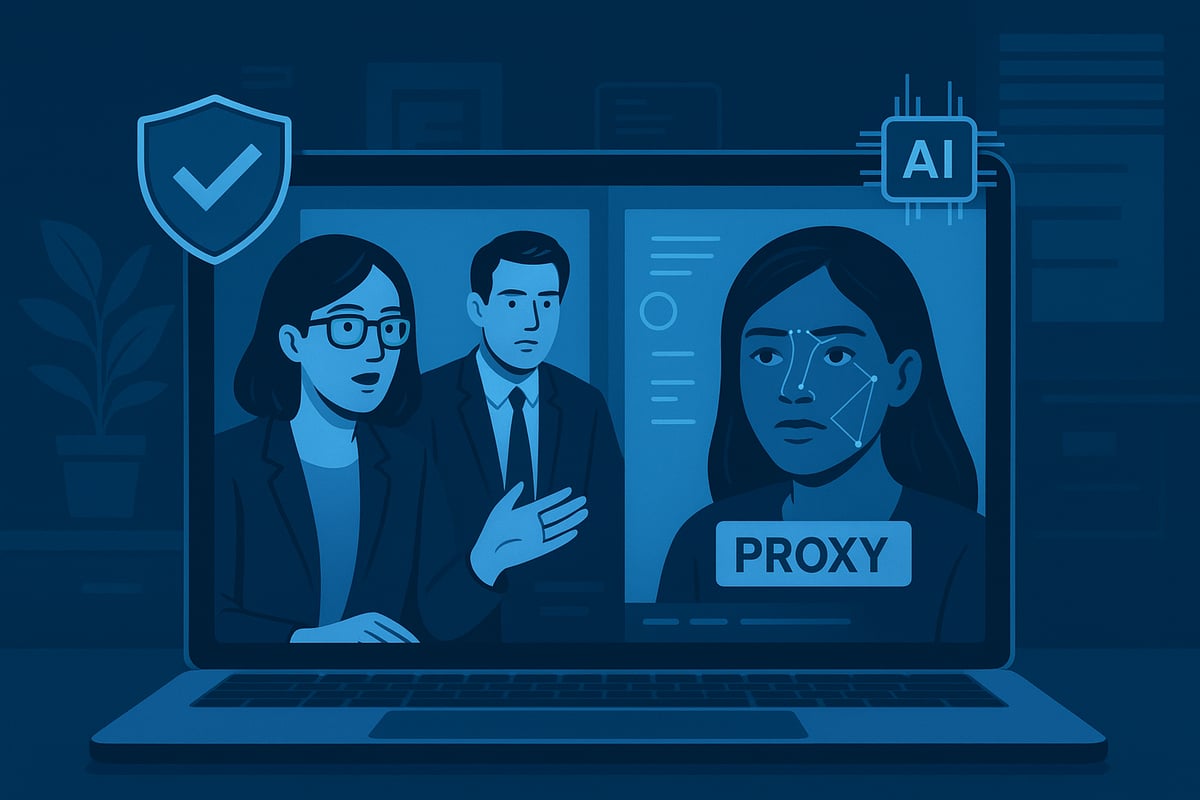
Implement real-time video ID verification. Ask candidates to show government-issued identification during a live video call, matching their face to official documents. This tactic helps confirm that the person applying is the same as the one on record, significantly decreasing proxy interview occurrences.
For example, if you discover a candidate’s resume lists advanced Python skills, but their GitHub shows little related activity, flag this for further review. These early checks create a strong first line of defense against proxy interview fraud.
Step 2: Conducting Secure and Authentic Interviews
Once candidates pass initial screening, focus on making interviews secure and authentic. Use video interviews as your default to assess non-verbal cues and ensure live interaction. This method makes it harder for a proxy interview to go undetected.
Incorporate live skills assessments, such as real-time coding challenges or problem-solving exercises, to verify expertise in action. Behavioral questioning is equally important. Ask spontaneous, job-specific follow-ups that disrupt scripted or relayed answers, forcing candidates to demonstrate genuine understanding.
Change technical tasks mid-interview to test adaptability, a tactic that reveals whether responses are authentic or externally fed. These strategies are highlighted in Secure Interviews and Hiring Best Practices, which outlines the importance of using AI tools and identity verification to further minimize proxy interview risk.
For instance, if a candidate’s answers suddenly become vague when you alter the challenge, it may indicate reliance on outside help. Secure, dynamic interviews are essential for exposing proxy interview attempts.
Step 3: Monitoring for Red Flags During Interviews
Stay vigilant throughout each interview for warning signs of a proxy interview. Carefully observe audio and visual synchronicity. Lip-sync issues, unnatural delays, or robotic speech can all suggest the use of pre-recorded content or voice-changing technology.
Pay attention to body language and microexpressions. Genuine candidates display natural reactions and consistent eye contact, while proxies may exhibit nervousness or lack of engagement. Watch for technical anomalies, such as multiple cursors, remote desktop icons, or frequent device switching, which are common in proxy interview scenarios.
Environmental clues also matter. Inconsistent backgrounds, suspicious noises, or mismatched accents may indicate assistance from a collaborator. If a candidate’s video freezes during challenging questions, consider the possibility of a pre-recorded segment. Recognizing these red flags during the interview is vital for timely proxy interview detection.
Step 4: Post-Interview Validation
After the interview, reinforce your defense by validating candidate authenticity. Conduct reference checks by directly contacting previous employers to confirm work history and technical skills. This step can uncover discrepancies that a proxy interview may have masked.
Compare candidate responses across multiple interview rounds. Consistency is key; repeated shifts in knowledge or communication style can signal that different people are participating. Maintain a feedback loop by engaging candidates post-interview to clarify any outstanding issues or technical concerns.
For example, a reference might reveal that a candidate outsourced a project listed as their own, which is a classic proxy interview tactic. These post-interview checks help ensure only genuine candidates progress further in your hiring process.
Step 5: Ongoing Team Training and Policy Updates
Build a culture of vigilance by regularly training your recruitment team on new proxy interview trends and detection techniques. Stay informed about emerging fraud tactics through industry webinars, HR forums, and collaboration with peer organizations.
Clearly communicate verification processes and expectations to candidates. Outline the consequences of fraud in your recruitment documentation to deter proxy interview attempts. Update policies regularly to reflect the latest risks and best practices.
For instance, after attending a workshop, your HR team might identify a new proxy interview scheme and quickly adapt your process. Consistent training and policy updates are essential for maintaining a resilient, fraud-resistant recruitment strategy.
Leveraging Technology and AI Tools to Combat Proxy Interviews
The rise of the proxy interview has forced recruiters to rethink their tech stack. As fraudsters employ more advanced tactics, organizations are turning to innovative technology and AI tools to stay ahead. By blending artificial intelligence, biometric verification, and behavioral analytics, employers can better protect their hiring process from deception.
AI-Powered Interview Platforms
Modern interview platforms now harness AI to detect the proxy interview in real time. These solutions analyze eye movement, typing patterns, and voice characteristics to ensure the person on the call matches the expected behavior.
For example, platforms can flag delayed responses, inconsistent typing speeds, or unusual gaze direction. Integration with applicant tracking systems (ATS) streamlines documentation and supports a seamless workflow for hiring teams.
Key features:
- Real-time video analysis
- Automated suspicious activity alerts
- Seamless ATS integration
By leveraging these smart platforms, companies can quickly spot signs of a proxy interview and take action before making a costly hiring mistake.
Advanced Identity Verification Solutions
To counter the proxy interview threat, many employers use advanced identity verification. These tools compare a candidate's live video or audio with official documents, using facial and voice recognition to confirm authenticity.
Biometric authentication methods, such as fingerprint or facial scans, add another security layer. This is especially important for high-value technical roles where proxy interview attempts are common.
Comparison Table:
| Verification Method | Use Case | Strengths |
|---|---|---|
| Facial recognition | Video interviews | Fast, user-friendly |
| Voice recognition | Phone/video screening | Hard to replicate |
| Biometric scans | Secure onboarding | High accuracy |
These solutions help ensure that only genuine candidates make it through the hiring pipeline.
Proctoring and Monitoring Software
Online proctoring tools play a vital role in preventing the proxy interview by monitoring the candidate's environment throughout the assessment. These systems detect off-camera collaborators, unauthorized device usage, or remote access tools.
For instance, if a candidate attempts to use a second device or allows someone else to guide them, the software can issue alerts. Device monitoring features can identify multiple logins or suspicious software running during the interview.
Benefits:
- Monitor environment for third-party assistance
- Detect remote desktop or dual device usage
- Prevent unauthorized help during assessments
With these protections, organizations can maintain interview integrity and reduce the risk of falling victim to a proxy interview.
Data Analytics and Pattern Recognition
Data analytics and behavioral pattern recognition are powerful tools against the proxy interview. By analyzing candidate performance, communication style, and digital activity across platforms, AI can spot anomalies that suggest fraud.
For example, a sudden improvement in coding test results or inconsistent communication patterns across interview rounds can trigger further investigation. Cross-referencing activity on LinkedIn, GitHub, and other sites helps verify resume claims.
Pattern recognition use cases:
- Detecting abrupt skill improvements
- Spotting mismatched digital footprints
- Identifying irregular interview behavior
These insights help recruiters make informed decisions and spot red flags linked to the proxy interview.
Limitations and Future Trends
While technology is a strong ally, the proxy interview landscape is evolving rapidly. As detection methods improve, so do the tactics used by fraudsters, including deepfakes and synthetic voices. Privacy concerns also require careful balancing of robust screening with a positive candidate experience.
Looking ahead, predictive analytics and blockchain-based credential verification are poised to transform the field. For a deeper dive into rising interview fraud and proven defense strategies, review the Interview Fraud Detection Guide 2025.
To stay ahead, organizations must continuously update their processes and invest in both human and technological expertise to combat the proxy interview.
Best Practices for Building a Fraud-Resistant Recruitment Process
Creating a fraud-resistant recruitment process is essential to outsmart modern proxy interview threats. Companies must take a holistic approach that combines technology, human oversight, and clear communication. By layering best practices, organizations can close loopholes and ensure only genuine candidates progress through their hiring funnel.
Multi-Layered Candidate Validation
A robust proxy interview defense begins with multi-layered candidate validation. Combine AI-driven screening, manual resume checks, and human interviews to uncover inconsistencies early.
- Use automated tools to analyze digital footprints and flag anomalies.
- Cross-check resumes with LinkedIn, GitHub, and other public profiles.
- Conduct live skills assessments alongside in-depth reference checks.
This layered strategy makes it much harder for a proxy interview scheme to slip through undetected. By integrating technology and human expertise, you significantly reduce the risk of fraudulent candidates entering your organization.
Structured Interview Design
Designing your interviews with structure and variability is key to exposing proxy interview attempts. Mix technical, behavioral, and situational questions to disrupt rehearsed or scripted responses.
- Incorporate real-time problem-solving exercises.
- Ask candidates to walk through past project decisions, not just results.
- Use scenario-based tasks that require genuine expertise.
This approach ensures that only those with authentic skills and experience can succeed. A well-structured interview makes it challenging for a proxy interview participant to maintain their deception across multiple formats.
Transparent Communication with Candidates
Transparency is a powerful deterrent against proxy interview fraud. Set clear expectations with candidates about your verification processes and the consequences of dishonesty.
- Clearly outline all stages of the hiring process.
- Inform candidates that skills and identity checks will be conducted.
- Explain the organization's zero-tolerance policy for fraud.
When candidates know that a proxy interview will be detected and penalized, they are less likely to attempt it. Open communication also builds trust with genuine applicants, making your process more attractive to top talent.
Continuous Training and Knowledge Sharing
The fight against proxy interview schemes is ongoing and requires continuous learning. Regularly update your hiring teams on emerging fraud tactics and detection techniques.
- Schedule monthly HR roundtables to discuss new threats.
- Share case studies and lessons learned across departments.
- Attend industry webinars and partner with peer organizations.
Keeping your team informed ensures that everyone is prepared to recognize the latest proxy interview risks. This proactive culture fosters vigilance and adaptability in your recruitment process.
Collaboration with Trusted Partners
Partnering with reputable talent marketplaces and external screening providers adds an extra layer of proxy interview prevention. These organizations specialize in fraud detection and candidate validation for niche roles.
- Use platforms that vet candidates through AI and human checks.
- Leverage third-party background verification services.
- Collaborate with industry groups focused on recruitment integrity.
By working with trusted partners, you gain access to specialized tools and expertise, making it even harder for proxy interview tactics to succeed.
How Verified Talent Marketplaces Like Augmnt Enhance Proxy Interview Prevention
Verified talent marketplaces such as Augmnt offer a powerful safeguard against proxy interview threats. These platforms connect employers with pre-validated, fraud-free AI professionals, dramatically reducing risk.
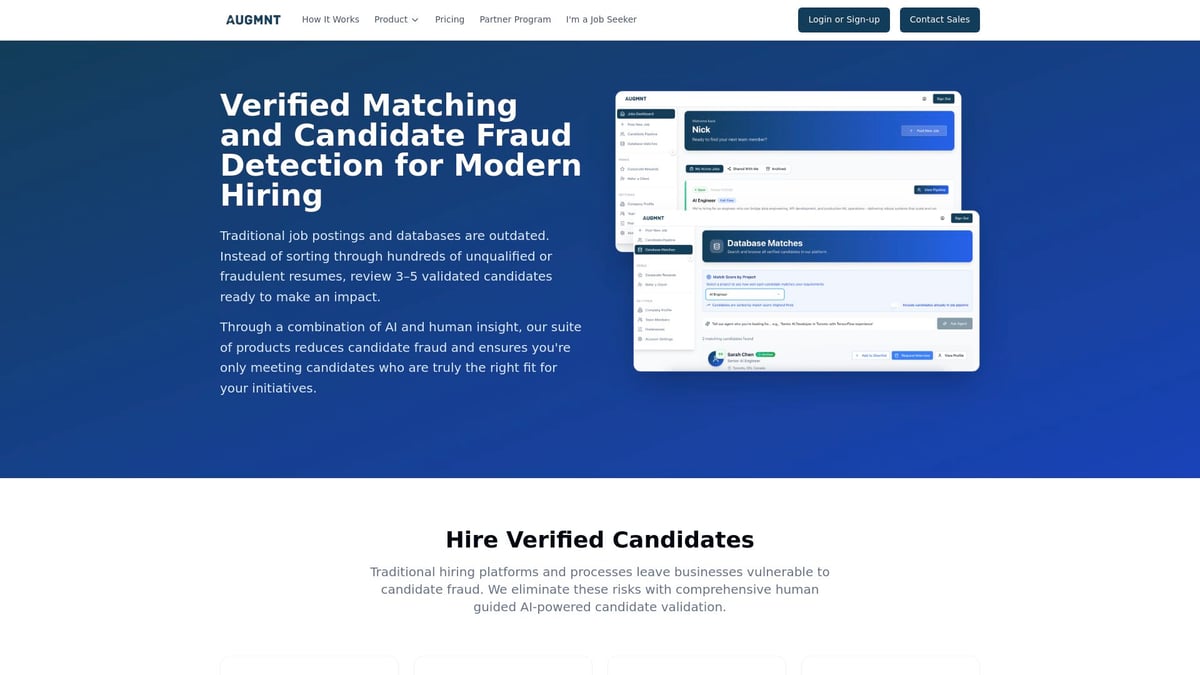
- Augmnt uses both AI and human insight for resume and skills verification.
- Comprehensive background checks ensure only genuine candidates reach the interview stage.
- Employers report faster hiring cycles and fewer proxy interview incidents.
For tech and AI roles, where proxy interview fraud is most common, Augmnt provides added confidence and efficiency. Leveraging a trusted marketplace streamlines recruitment while maintaining the highest standards of candidate integrity.
The Future of Proxy Interview Detection and Recruitment Integrity
The landscape of proxy interview detection is evolving rapidly. As organizations continue to embrace remote hiring, the need to stay ahead of increasingly sophisticated fraud tactics has never been greater.
Evolving Threat Landscape
The threat of the proxy interview is not static. Advanced technologies like deepfake video, AI-driven voice synthesis, and real-time collaboration tools are fueling the next generation of candidate impersonation. These innovations allow imposters to convincingly mimic genuine applicants, making detection more challenging for hiring teams.
For example, deepfake tools can now replicate facial expressions and speech patterns with near-perfect accuracy. In high-stakes roles, a proxy interview might involve multiple layers, such as AI-generated voices and remote desktop manipulation. As remote work remains the norm, organizations must anticipate that proxy interview tactics will continue to become more complex and adaptive.
Innovations in Detection and Prevention
To counter the evolving proxy interview threat, companies are investing in cutting-edge solutions. Predictive analytics platforms can flag unusual behavior patterns, such as sudden spikes in technical performance or inconsistent communication styles. Blockchain-based credential verification is emerging as a secure way to confirm education and work history, making it harder for imposters to fabricate backgrounds.
Enhanced behavioral AI tools now analyze microexpressions, typing rhythms, and even eye movements during the interview process. These technologies help recruiters distinguish between authentic candidates and those attempting a proxy interview. As detection capabilities improve, it is crucial for organizations to regularly update their systems and protocols.
Legal and Regulatory Considerations
The legal landscape surrounding proxy interview fraud is tightening. Regulators are introducing stricter penalties for agencies and individuals facilitating fraudulent interviews. Employment laws are being updated to address the unique challenges posed by digital deception in recruitment.
Data privacy remains a top priority. Companies must ensure that their fraud prevention tools comply with regulations such as GDPR and CCPA. Maintaining a balance between robust proxy interview checks and candidate rights is essential to avoid legal pitfalls and protect organizational reputation.
Building a Culture of Trust and Accountability
Beyond technology and regulation, fostering a culture of integrity is vital in the fight against proxy interview schemes. Encouraging open communication about verification processes builds trust with candidates and discourages dishonest behavior. Transparent hiring practices, combined with clear consequences for fraud, reinforce organizational values.
Candidate education also plays a role. Informing job seekers about the risks and repercussions of participating in a proxy interview helps deter unethical actions. Companies can highlight success stories where authentic hiring led to positive outcomes, promoting honesty and fairness across the recruitment process.
Strategic Recommendations for 2026 and Beyond
Looking ahead, organizations should adopt a multi-pronged approach to safeguard recruitment integrity:
- Invest in AI-driven detection tools tailored to proxy interview threats.
- Regularly train hiring teams on emerging fraud tactics and prevention strategies.
- Update recruitment policies to reflect new legal and technological developments.
- Foster collaboration between HR, IT, and compliance departments to ensure a unified response.
- Conduct annual audits to assess the effectiveness of proxy interview detection methods.
By staying proactive and adaptive, companies can maintain a robust defense against proxy interview risks and build a future-ready hiring process.
Now that you know how proxy interviews are evolving and what it takes to protect your hiring process, why not see these best practices in action? At Augmnt, we blend AI with real human insight to ensure you meet only genuine, qualified candidates—no imposters or resume fraud slipping through. If you’re ready to level up your recruitment strategy and add another layer of confidence to every hire, let’s explore how our platform can help you stay ahead of the game.
Request a Demo